Microsoft giving 100GB of OneDrive storage to Bing Rewards members


When Microsoft was forced to change the name of its cloud storage from SkyDrive, many people thought it was unfair -- myself included. After all, SkyTV is an entirely different product. But oh well, what's done is done. Truth be told, I like the OneDrive name better; it was a blessing in disguise.
By default, the service comes with 7 GB -- more than enough for the average user to store documents. However, users can get an additional 3 GB for enabling auto-backup for pictures on their mobile device. Today though, Microsoft announces a way to get a 100GB for free, with Bing Rewards. That is a lot of space!
As Seen on TV: ThreeDrive, from CringeCo


My e-mail inbox this morning contains 118,306 messages totaling about seven gigabytes. I really should so something about that but who has the time? So I keep a lot of crap around longer than I should. I have, for example, every message I have sent or received since 1992 when I registered cringely.com. Those obviously occupy a lot more than seven gigabytes, though interestingly enough the total is less than 20 GB. My storage strategy has been a mixed bag of disks and cloud services and probably stuff I’ve forgotten along the way. So I’ve decided to clean it up by standardizing on Microsoft’s OneDrive (formerly SkyDrive) cloud storage service, just relaunched with its new name. I need about 30 GB of storage right now but I don’t want to pay for anything.
No problemo.
SkyDrive relaunches as OneDrive, adds new features

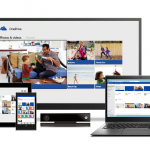
Following a legal battle with satellite broadcaster BskyB, Microsoft was forced to change the name of its popular cloud storage service SkyDrive, opting to go with OneDrive. The name change was unveiled three weeks ago, but today the update begins rolling out across all compatible devices.
Microsoft hasn’t simply just changed the name and logo of its product, and switched the web address to onedrive.com, it’s added some additional features too, and to celebrate the launch is giving away a grand total of 10 petabytes of free storage.
SkyDrive is no more -- say hello to OneDrive

After running into legal problems with the name SkyDrive -- satellite television provider Sky sued for trademark infringement -- Microsoft announced last July it was going to change the name of its cloud storage service. Sky generously gave Microsoft some time to come up with an alternative and today we learn the new name is… drumroll… OneDrive.
Let’s hope One Direction aren’t feeling litigious.
Microsoft updates SkyDrive for iOS with camera backup and more

While Microsoft has its own mobile operating system with Windows Phone 8, the company generously supports its competitor's products too. After all, with its own OS having such a small user base comparatively, it would be insane not to.
Back in June, the company's flagship non-OS software, Office 365, was released for Apple's iOS to the surprise of many. Today, while less of a surprise, Microsoft announces some major changes to its cloud-storage SkyDrive app.
Microsoft shows off SkyDrive on the Xbox One
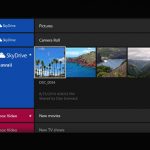
There’s not long to go now until Microsoft’s next generation console is released, and the software giant is continuing to push the many non-gaming things you’ll be able to do with it. The latest update covers SkyDrive, with a new video showing how the cloud storage integration works.
As the description accompanying the video says, "SkyDrive on Xbox One provides a seamless way to enjoy your photos and videos, or those shared with you, on the big screen. The app also takes advantage of exclusive Xbox One features: You can open photo albums from channels in the OneGuide, play music alongside your slide show with Xbox Music, and control the whole app with gestures and voice, courtesy of Kinect".
Microsoft adds real-time co-authoring to Office Web Apps


Microsoft has introduced a major update for Office Web Apps, meant to improve collaboration on documents. At the same time, the latest update also allows the service to better compete against its arch-rival, Google Docs.
The Excel, PowerPoint and Word cloud apps are getting real-time co-authoring, a feature that has been available for quite some time in Google Docs. Put simply, this means that users can perform simultaneous edits, with the said cloud apps also informing folks whenever someone else is altering a certain part of the document. The real-time co-authoring is augmented by the ability to see text and formatting changes in files as they are being made.
The good and bad of Outlook.com, more than one year after its launch [Review]
In late-July 2012, Microsoft launched Outlook.com, a new consumer-oriented email service set to replace the cluttered and dated Hotmail. Its long-term mission would be to take on Google's prevalent Gmail and establish itself as a product with widespread appeal. By grandfathering-in those who used Hotmail, Microsoft announced, in early-May 2013, Outlook.com had reached 400 million users.
I delivered my review of Outlook.com two days after its launch. My impressions were positive for a product that, at the time, was still undergoing testing (the official public launch happened in late-February 2013). Still, I concluded that the service was not up to par with Gmail, because it was missing key functionality. But lots of things have changed in the meantime, which is why I decided to write this long-term review of Outlook.com, outlining the most important changes and detailing the positives and negatives of the service, now that it has reached maturity.
How to easily migrate to SkyDrive from Google Drive, including your Google Docs


Google Docs and Google Drive were all I knew when it came to personal cloud document storage until this summer. I never got on the Dropbox bandwagon, and was so entrenched in the Google ecosystem that SkyDrive didn't interest me at first when it came out. While I have nothing personally against Google Drive, as it has served my company and myself quite well, I had to take a deep dive into SkyDrive territory to prepare for an Office 2013 class I taught this past summer. I was pleasantly surprised with the service, so much so that I began using it side by side next to Google Drive for my personal needs.
Fast forward to when Windows 8.1 went RTM, and I subsequently moved my primary Thinkpad X230 Tablet over to the new OS. One of the least publicized aspects of 8.1 has to be hands-down the tight integration between the OS and SkyDrive, meaning you didn't need a standalone app anymore to save/open files on the service. Some have called it Microsoft going too far, but I completely disagree. The service is 100 percent optional (you can still save locally as you would expect) and if you are using a local account instead of a MS account for your computer login on 8.1, the service is a moot point at best.
10 reasons why you should consider Windows Phone

With Android handsets and iPhones taking the lion's share of the smartphone market, Windows Phone is quite often overlooked by most consumers in their purchasing decisions. The popularity, or lack thereof, of devices running Microsoft's mobile OS likely plays an important part but it also detracts folks from getting the smartphone that may be right for them. Ask yourselves how many of your acquaintances have been in this position.
Many do not even take Windows Phone into consideration and the ones that do easily find a couple of reasons to dismiss the platform and jump on the Android or iPhone bandwagon. Yes, Windows Phone may not be the right answer for everyone but it might be for more people than naysayers think. And I have got 10 good reasons why consumers should give Windows Phone a chance.
Microsoft officially launches Windows 8.1
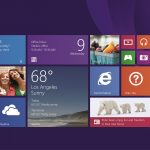
Today, Microsoft officially launches Windows 8.1 to the public, after almost two months since its new operating system reached the RTM status. The latest release is packed with many new features and improvements over its controversial predecessor, Windows 8, including the revival of the Start button and the much-awaited option to boot straight to the Desktop and avoid the Modern UI.
Just like Windows 8, Windows 8.1 is available to consumers in just two editions: base and Pro. The former is aimed at home users while the latter also includes features such as BitLocker encryption and hosting Remote Desktop Connections that are suitable for business use. There are also pricing differences between the two.
Microsoft unveils SkyDrive for Windows 8.1 Smart Files


It is no secret that with the introduction of Windows 8.1, SkyDrive, the Microsoft cloud-based storage solution, will get much deeper integration. But now the company is detailing a bit more than what had already been gleaned from the RTM, announcing a new Smart Files feature, incorporating Bing with it.
Smart Files has been merged into SkyDrive in version 8.1 of Windows, but the company has revealed more details about how it will work and what customers can expect.
SkyDrive swells to even greater size

Microsoft has taken over the tech news today with its Surface 2 launch, but the company doesn't stop there, keeping the ball rolling with a bit more news, this time from the cloud. SkyDrive has become tightly integrated with today's marquee products, Windows and Office, as well as being a competitor to rival services from Google and Amazon. Now the company announces a new storage tier.
"Today, we are happy to introduce a new storage option to add 200 GB of additional storage to your SkyDrive for $100 per year", says Omar Shahine, Group Program Manager for SkyDrive. For perspective, Microsoft describes this as enough space to store one photo per hour from birth through college graduation -- this obviously depends on average image size, which continues to grow.
SkyDrive can now 'read' your photos
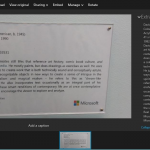
Microsoft has been busy beefing up SkyDrive this week, first with added storage for Pro accounts, bumping them to 25 GB free, and now with optical character recognition. OCR is generally a desktop software associated with scanners and used to translate copied documents into editable pages.
Now Microsoft wishes to bring that same functionality to the web, built right into its cloud storage service. "Today, in partnership with the Bing team, we’re excited to release the first of several features that will make your SkyDrive photos smarter by using OCR to extract the text from photos in your camera roll when you view them on SkyDrive.com", says company representative Mona Akmal.
Microsoft upgrades SkyDrive Pro accounts
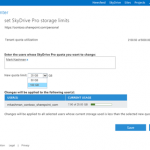
When Microsoft first launched SkyDrive, the company offered 25 GB of storage to everyone willing to sign up. As the service grew and was increasingly integrated into more places, like Windows 8 and Office 2013, that free ride came partially to an end. Free storage was downgraded to seven gigabytes, but those who met certain criteria were grandfathered in.
Now that 25 GB threshold breaths new life, though not quite for everyone. This time around the extra cloud space goes to Pro users -- business customers. "Today, we're pleased to announce three new significant improvements to SkyDrive Pro for Office 365 business subscribers - to help you be more productive", the Office 365 team announces.
Recent Headlines
© 1998-2024 BetaNews, Inc. All Rights Reserved. Privacy Policy - Cookie Policy.