Windows Phone 8 won't be available on anything out today, but that's okay, right?

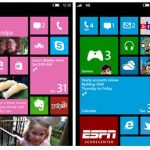
Microsoft revealed its plans for the next generation of Windows Phone on Wednesday, which includes broadening hardware support, revising the user interface, and adding a couple of new features that bring Windows Phone up to speed with the Android platform.
Unfortunately, though, no current Windows Phone devices will receive an upgrade to the new operating system. Instead, they will receive the graphical overhaul of the new Start screen in a sub-update called "Windows Phone 7.8."
Samsung Galaxy S III HSPA+ hands-on review

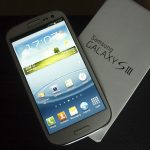
I got my shiny new Galaxy S III about ten days ago -- my first phone upgrade for quite a while. Although I’ve been watching smartphone developments with great interest, I used my Nokia N900 for nearly three years. Nothing out there really looked much better. But suddenly the flagship phones of this generation seem to be a significant improvement over their predecessors.
So was it worth the wait? Absolutely. There are plenty of reviews which give you all the numbers. This is a personal account of what it’s like to use the beast for real (with my contract committing me to it for two years).
Microsoft's Windows Phone Summit Liveblog: Introducing Windows Phone 8

Microsoft sure is busy this week! Join BetaNews starting at 12 pm EDT for our liveblog of the Windows Phone Developer Summit in San Francisco. We're expecting the debut here of Windows Phone 8, the next version of Microsoft's mobile operating system.
Windows Phone 8 is expected to have a host of new features, including Near Field Communications, support for multicore processors, new screen resolution support, improved Skype application (although still seperate), and the replacement of the Zune PC client with something that's closer to ActiveSync, Mary Jo Foley reports.
Rise of the quad star -- Samsung Galaxy S III [review]


Editor's Note: This is the first of two reviews we will run over the next day, as the first Galaxy S IIIs go on sale here in the United States. However, these reviews cover the international models, which offer faster processors but no LTE.
Starting at the end of May, Samsung is in the process of launching worldwide its new flagship smartphone, Galaxy S III, or i9300 as it's designated internationally. Customers in Europe get the HSPA+ (21Mbps download, 5.76Mbps upload) model, while those in the United States and Canada will get the LTE variant. So what’s it like to live with a Samsung Galaxy S III? Just awesome. I know that's a spoiler, but you must have expected it.
Samsung unveils new enterprise-safe Android brand, Galaxy S III first to sport it
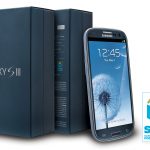
In the world of Android-powered smartphones, Samsung is the reigning king. It sells approximately 40 percent of all the Android smartphones going to consumers today, and Forrester Research predicts proprietary Android builds (such as Samsung's TouchWiz) will actually surpass Google's Android ecosystem within three years. Of course, this fragments the market and causes trouble for developers and enterprises looking to create and deploy software for Android.
Monday, Samsung unveiled a new brand that will be applied only to Android devices that have been approved for enterprise use: SAFE, or "Samsung Approved for Enterprise." It's similar to Motorola's line of Enterprise Android devices called Motorola Business Ready, which debuted earlier this year.
Four stories you should read this Sunday, June 10


Three years ago, my Sunday mornings started with the New York Times. Now it's Feedly, which appealingly presents my RSS feeds synced from Google Reader. I mainly use the app on a tablet, and I highly recommend it. This morning, as Apple's developer conference approaches tomorrow, there are loads of punditry -- and much of it pointless.
Four posts caught my attention enough to write about them and all published over the weekend. Interestingly, the majority are guest posts rather than regular staff pieces.
I'm boycotting Apple
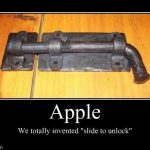
Patent bullying and ongoing competition by litigation and intimidation are reasons why. For me the last straw came earlier this week when Apple sought to ban importation of Samsung Galaxy S III (the request for preliminary injunction is before a judge and a ruling could come as early as next week). The phone launched in 28 countries on May 29 and goes on sale from five US carriers within the next 30 days. Many tech reviewers and pundits have called Galaxy S III an iPhone 4S killer. Apple doesn't have a competitive product in market so instead seeks to block Samsung's -- all under the guise of protecting innovations.
Apple is an amazing marketer that manages perceptions very well. One of these regards innovation and the idea that other companies imitate Apple, often badly, and its trendy ideas must be protected. Perception is one thing. Reality is another. Apple isn't as innovative as its corporate "reality distortion field" would have everyone believe. But the company has gotten quite good at something: Unleashing a torrent of suits to secure patents and to defend them -- and many cover processes that should never have been awarded patents in the first place. Apple has gotten quite good at gaming the patent system. I want no part of it.
iPhone kills carrier profits


Second in a series. Two days ago, I established that iPhone's market share is heavily dependent on carrier subsidies. Now let's take a look how iPhone subsidies affect carriers and the potential impact this could have on Apple.
To Summarize, under iPhone's current subsidy structure, it is practically impossible for carriers to break-even. Even when factoring higher churn rate of other smartphones and lower cost of retaining iPhone users, Apple's device still costs carriers too much to be really profitable compared to other smartphones. Essentially, Android, BlackBerry and Windows Phone users subsidize iPhone owners. Carriers make more money from non-iPhone smartphone owners, while raising data and early-termination fees to offset iPhone costs.
Microsoft gives back to Android, but users say 'no thanks'
Thanks to some smart lawyering or perhaps fears CEO Steve Ballmer will show up unannounced, Microsoft has negotiated envious patent fee payments from nearly all major Android licensees. So there's something fitting about the software giant giving a little something back to Android, by way of an exclusive app -- well for now -- on{X}. Or perhaps it's a Trojan Horse to undo Android phones, chopping up performance or draining battery life. Or maybe Microsoft sees Android users as easy beta testers, considering the more rigorous standards for getting into Apple's App Store than Google Play.
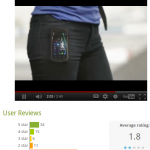
One thing is certain: Early on{X} users despise the app, which has some of the worst reviews you'll see at Google Play. As I post, the app has average rating of 1.8 stars out of five. Among the 244 reviewers, 178 give the app a single star. Ouch! I had planned to grab this one, which is available in beta, but skipped after seeing the scathing response.
Sony Playstation Mobile wants certified third-party Android devices in the gaming ecosystem starting with HTC

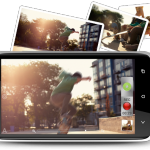
At the the Electronic Entertainment Expo 2012 Sony Press Conference, Sony announced a big push for their mobile phone gaming platform for Android powered mobile devices. Once called Sony Playstation Suite, Sony is first changing the name to Playstation Mobile. The whole idea is about making it possible to allow access to PlayStation Classic games and other PlayStation titles on "PlayStation Certified" devices. This move expands the selection of access to Playstation games for mobile beyond the current Sony made Xperia phone and tablet line of Android devices.
Sony Computer Entertainment of Europe (SCEE) president, Andrew House, announced this on stage during the briefing as a big move, "That is promoting PlayStation Mobile for third-party Android Cellphone makers". House also unveiled the initiative's first third-party hardware partner is HTC. Not much more in the way of details besides this has been released. It's interesting that Sony would jump into this kind of bed.
iPhone market share heavily depends on carrier subsidies
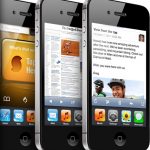
First in a series. Recently, there have been some articles stating that carrier subsidies may pose a risk to Apple. But before we accept or reject this assertion at face value, it would be prudent to find out just how much of an impact they have. We can do this by delving into a statistical analysis to isolate the key drivers of the iPhone's country-wise market share. So let's dive right in.
To start off with the analysis, we need to create a shortlist of a few key drivers that could have a major impact on the iPhone's market share. If these inputs do not have much of an impact, then the analysis would show us as much, so this initial shortlist doesn't have any bearing on the actual outcome of the analysis. My shortlist:
Android isn't in trouble
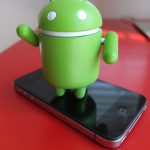
Asymco's Horace Dediu asks an interesting question today: "Trouble with the Robot?" -- referring to Android. He hones in on two seemingly convergent trends: a slight sequential dip in US Android share and sharp decline in US subscribers switching from feature phones to smartphones.
Based on his analysis of April data, iPhone sales remain fairly constant, while Android disproportionally declines. "Broken out by platforms, we see signs that the slowing in smartphone growth seems to be attributable to a slowing in Android adoption", Dediu explains. Stated differently, referring to comScore data he adds: "We see the lowest user growth for Android since 2009". The easy interpretation -- Android is now declining before iPhone -- would be wrong.
Okay, Americans, Samsung Galaxy S III preorders start this week from major carriers
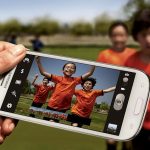
If you're ogling Galaxy S III and thinking "I want", perhaps you should be asking "i what?" Galaxy S III arrives on these shores from all major carriers this month. As for iPhone 4S, well, whatever. Preorders start tomorrow (from Sprint, T-Mobile); June 6 (from Verizon).
But to get lower-cost, subsidized US models, many buyers will gain in network connectivity but lose in raw processing power. US models, also from AT&T, Sprint and US Cellular, are dual-core -- not the quad-core beauts shipping overseas. To get one those babies, unlocked, expect to plunk down at least $650. US, locked, contractual commitment S3s start at $199.99.
Techies, June will be the most amazing month EVER

Save your greenbacks now. During these thirty days you'll hear about lots of innovative and imitative products coming for the holidays. There's no coal in Santa's stocking this year, just too much tech to fit your gift list.
Not since the late 1990s, when seemingly every day some vendor announced a new PC that was ever-so-better than the one you bought the week before, is there so much new tech coming so close together. The cloud connected-device era ushers in a storm of tech. Save up now so you don't break the bank account or exceed credit card limits later.
Is Intel Inside iPad, iPhone a pipedream?


Intel CEO Paul Otellini told investors this month that Apple could build its iPad and iPhone lineup on the Atom family of microprocessors any time it wants to. And he’s going to do everything in his power to make that prospect so enticing that Apple can’t refuse. Pipedream? Not hardly.
Now, I understand why some of you would consider this to be pure fantasy. Intel has been trying to pry its way into the smartphone and tablet markets for five years now, and until this year the company has had little to show for it.
Recent Headlines
Most Commented Stories
BetaNews, your source for breaking tech news, reviews, and in-depth reporting since 1998.
© 1998-2025 BetaNews, Inc. All Rights Reserved. About Us - Privacy Policy - Cookie Policy - Sitemap.