Why aren't you reading this story on Samsung Galaxy S III?


If you live in parts of Europe, the Middle East or Asia, arguably the hottest smartphone on the planet is selling out fast, and, whoa, it's not iPhone 4S. May 29 dawned on the continent to a new day for Samsung smartphones and sunset for Apple's flagship, which is oh-so similar to the one released in early 2010. Buyers looking for freedom from the walled garden or simply stunning software innovation can choose to "think different", borrowing the long-discarded Apple marketing phrase.
Twenty-six days ago, I asked: "Is iPhone 4 obsolete?" Nearly 2,000 of you answered "Yes" -- that's 65 percent -- by saying you will buy Galaxy S III. Now remains the question: How many of you planning to buy, really will do so?
Smartphones put privacy on the tsunami hazard map


Now, finally, the tide of public opinion on Internet privacy begins to flow in the other direction. Consumers are becoming more hesitant to share their data and are less tolerant when those with access to their data violate trust. That presents a tremendous threat to some of the titans of our day -- and an equally monstrous opportunity for others. Apple, Google, are you listening?
Honestly, I’m amazed that the issue was ever able to germinate and flower, particularly here in the United States, a country that distinguishes itself on the right to privacy. And a country that spent much of the last century wringing its collective hands over the Orwellian nightmare that awaited us down the road of technological advancement.
Sorry, you can't mail your iPhone or iPad overseas 'til next year

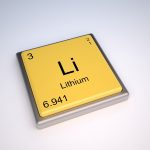
The United States Postal Service has put a ban the international shipment of lithium-based batteries (Lithium Metal, Lithium Alloy, and Lithium ion.) This ban includes electronic equipment with lithium batteries permanently installed such as mp3 players, tablets and smartphones, and will stay in place until January 1, 2013.
Because of the issues that Lithium batteries have with short circuiting, overheating, and exploding, special regulations have been placed on their transport for the last five years.
Who will buy Samsung Galaxy S III?

Samsung starts selling its third-generation S Series smartphone next week -- May 29, although some locales are expected to get it a day earlier (if not sooner). Our BetaNews poll, "Will you buy Samsung Galaxy S III", has enough responses -- 2,361, as I write -- to report results. Cut to the point: 36.59 percent of you won't buy the S3. At least among our tech community, there is huge interest in the smartphone, which is now available for preorders here, including Amazon.
Some of you have preordered, or will do so: 15.37 percent. Another 32.57 percent plan to order within 3 months and 9.45 percent within 6 months. Those willing to wait are likely to pay less, as national cellular carriers offer Galaxy S 3, albeit locked. The pricier, unlocked models are carrier and contract free. The poll results corroborate last week's report of 9 million preorders. In the United Kingdom, Carphone Warehouse reports strong preorder demand for the S3.
IT embraces bring your own device in corporate deployment, despite risks


While the bring-your-own-device phenomenon in IT presents a fair amount of risk to enterprise security, most companies are warming up to the idea anyway. A Cisco-sponsored survey of 600 IT and business leaders found that 95 percent of their companies allow employee-owned devices on the corporate network.
Of all companies surveyed, 36 percent support all BYOD devices, while 48 percent support a select list of devices. An additional 11 percent tolerate employee-owned devices on enterprise networks, but will offer no IT support.
iPhone meets its match
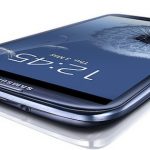
Finally, initial sales of another smartphone smoke iPhone -- that is if leaked numbers prove true. Samsung Galaxy S III goes on sale in 11 days, but preorders reportedly already top 9 million. By comparison, the much-lauded iPhone 4S sold 4 million units, including preorders, during its first three days of availability. At this pace, Galaxy S III is poised to be the biggest smartphone launch to date.
Samsung announced the smartphone on May 3, when I asked: "Is iPhone 4S obsolete?" Surely someone thinks so, and their answer should chill the hearts of Apple apologists and investors. Samsung, not Apple, is the rising star in the cloud-connected device firmament. Perhaps iPhone 5 will change matters. But for now, Samsung, propelled by the Galaxy S brand, broad channel distribution and smart software innovation, is brightest star.
Windows Phone reaches for the bottom
Sometimes, BetaNews readers really amaze me. Three days ago I posted "The measure of Windows Phone failure is..." based on comScore US smartphone OS market share data. To me, it was a trivial story, because I was days late writing about the numbers and posted it more as filler, being short writers (because of holidays and emergencies). More than 220 comments later, Windows Phone is hot-topic of debate among you.
Yesterday, Gartner released first-quarter global phone sales data that puts to end any real debate about Windows Phone's present: Combined smartphone OS share with Windows Mobile was 1.9 percent, down from 2.6 a year earlier but flat sequentially. The quarter-on-quarter data suggests, in context of Nokia Lumia launches, that Microsoft's mobile operating systems have finally hit bottom -- that perhaps the things won't get much worse and could finally improve.
4G LTE: 1 billion served by 2017
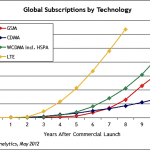
Unsurprisingly, 4G LTE is the fastest growing cellular network technology, in part for what it delivers and deployment's timing. Strategy Analytics forecasts that 4G LTE will reach 1 billion connections, or 15 percent of all, by 2017. That compares to 12 years for GSM and about 11 years for WCDMA to reach as many.
But LTE isn't gain without pain. In the United States, Verizon by far and large has the most expansive 4G network, reaching 250 metro areas and 200 million Americans compared to 38 metros and 75 million people for AT&T. Adoption still is fairly low, perhaps because phone subscribers don't understand the value. Meanwhile, Verizon will axe grandfathered unlimited plans when subscribers upgrade to LTE. There's pain for the gain.
Samsung accounts for 40% of Android smartphone sales
The figure is so important, I'm breaking it out from the long analysis posted mid-afternoon about the smartphone market consolidating around Apple and Samsung. The South Korean electronics giant is doing to Android on smartphones what Amazon does on tablets: Hugely fragment the market around a forked operating system. I warned about this three weeks ago in post "Google has lost control of Android". Now there is sales data to back it up.
Earlier today, Gartner released first quarter sales data for global handsets. Not shipments into the channel, but actual sales to end users. Market leader Samsung accounted for 40 percent of all Android smartphone sales, with no other manufacturer topping 10 percent. Sure Samsung's success lifts overall Android smartphone share -- 56.1 percent up from 36.4 percent a year earlier. But what's good for Samsung isn't necessarily in the best interests of the broader Android ecosystem.
LG actually did some cool stuff with its new Android UI
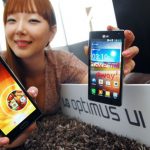
There are many manufacturer-created user interfaces for Android, and sadly, most of them are unpleasant.
Some are polluted with unremovable bloatware, some are sluggish performers, and some are just badly designed. For as many different versions of the Android user experience as there are, there are very few major builds that add remarkable innovations on top of the Android platform.
Smartphone market consolidates around Apple and Samsung
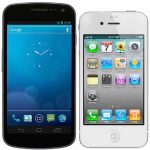
Today, Gartner put to end weeks of cellular handset debate. Apple apologists disputed Samsung's smartphone success over iPhone -- the presumption that the South Korean electronics giant benefits from greater shipments vs actual sales. Make no mistake: Samsung is the global leader overall and in the smartphone category, based on actual sales. Apologist arguments be damned.
That said, Apple's position is solid. Together, Apple and Samsung combined smartphone sales market share approaches 50 percent. Contrary to speculation that Windows Phone might appear as a third dominant mobile OS, the market is set to largely split between two vendors. As I explained three weeks ago in post, "Google has lost control of Android", Sasmung's rise isn't necessarily good for the broader ecosystem.
The measure of Windows Phone's failure is...

There are many measures, but one piqued my attention last week. According to Nielsen, Windows Mobile US smartphone market share, based on install base not unit shipments, is considerably higher than its successor -- 4.1 percent versus 1.7 percent for newer Windows Phone. Interpret however you like: Windows Mobile is so good, many Americans stick with it; Windows Phone isn't doing well after two version releases and 18 months of sales.
Nielsen's numbers are for first quarter, when Android share reached 48.5 percent, effectively from zero three years ago (the OS debuted on one smartphone from one carrier in Q4 2008). The next two places go to iOS and BlacBerry, with 32 percent and 16 percent share, respectively. In second quarter 2011: Android, 39 percent; iOS, 28 percent; BlackBerry, 20 percent; Windows Mobile/Phone, 9 percent. So Microsoft's overall share measured by both operating systems is down by one-third in just three quarters.
Will you buy Samsung Galaxy S III?
Eleven days have passed since Samsung unveiled Galaxy S III, which goes on sale internationally on May 29. Galaxy S III and HTC One X are arguably the hottest Android smartphones currently available, thanks in part to quad-core HSPA+ models. But HTC One X is dual-core for LTE variants hitting these shores, subsidized from carriers; no final word yet on S3. I often ask buying questions like this one right away but waited to see what pricing would pop for Galaxy S III. Expansys-USA is taking preorders in pebble blue or white for $649.99. Pricing isn't available for 32GB or 64GB models.
I call out Expansys USA, because pricing is the best I've seen so far, and it's lower than expected. The $799.99 seen most elsewhere is more in line with unlocked Galaxy S II and Galaxy Nexus when they launched internationally. Through Amazon, Techno Trading House (a new reseller to me) lists the pebble blue model for $824, available June 2, although it's only $744 purchased direct. My simple question: Will you buy? Either unlocked for no-contract price or lower locked price from a carrier with contractual commitment -- the latter an option available in Europe before Stateside?
The mobile web is dead

Today, comScore released startling data about the mobile web, which bodes poorly for the browser. In March, the web browser accounted for just 18.5 percent of time spent online among US smartphone users. Mobile apps accounted for the rest. Now we know why Safari for iOS capabilities advance so sparingly: Apple sees it as irrelevant. Stated differently: Safari is to mobile what Internet Explorer 6 was to the desktop 10 years ago. Apps matter more to both developers.
Qualifying that one country does not the whole world make, the US data nevertheless foreshadows future trends and illuminates the past, demonstrating the wisdom of Apple's 2008 turnabout. When iPhone launched in June 2007, cofounder Steve Jobs couldn't say enough about Safari as a key user benefit. But by early 2008, Jobs and company shifted emphasis to the App Store, which launched in July of that year. In essence, Apple bet against the web after foaming at the mouth about open standards. Apps better fit Apple's "our way or the highway" approach to end-to-end hardware, software and supporting services. Only Google can save the mobile web now.
Google Galaxy Nexus first-impressions review
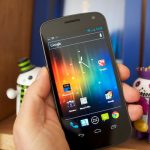
Two days ago, May 4, I received the Samsung Galaxy Nexus -- the 16GB HSPA+ model Google started selling direct last week. I'm not alone. Many of you ordered this phone, too. This first-impressions post extends my December review of the 32GB Verizon LTE model.
I will say straight up that out-of-box experience on AT&T is nowhere as good as Verizon. Network is huge factor. Audio quality is crisp and clear on Verizon compared to occasional hissy-fits on AT&T. Data speed isn't comparable, so far -- that's round and about San Diego and communities East and South, La Mesa and Lemon Grove, respectively. I expected at least 10Mbps HSPA+ data speed, based on my wife's Samsung Galaxy S II Skyrocket (before AT&T turned on LTE service here). I've yet to top 3.5Mbps on AT&T HSPA+ compared to an average 20Mbps over Verizon LTE. If data throughput is a priority, Galaxy Nexus HSPA+ -- over AT&T anyway -- is not for you. However, if you want a GSM network phone that is unlocked and contract-free and offers the best of Android, Google Galaxy Nexus is an exceptionally good choice. But expect to make a few compromises.
Recent Headlines
Most Commented Stories
BetaNews, your source for breaking tech news, reviews, and in-depth reporting since 1998.
© 1998-2025 BetaNews, Inc. All Rights Reserved. About Us - Privacy Policy - Cookie Policy - Sitemap.