Is iPhone 4S obsolete?

I repeatedly ask you questions in headlines, because I ask myself. This one is top of my mind following today's Samsung Galaxy S III announcement. My eyes bugger at the differences in size, features and most importantly benefits -- the majority of those coming from Samsung skinning Android 4 into seeming oblivion. It's hard to discern a way that Galaxy S3 isn't superior to iPhone 4S. If iOS 5 looked antiquated before, and it surely did, Samsung's TouchWiz-modified Ice Cream Sandwich makes it suddenly ancient.
But the question is bigger than hardware or software. Samsung isn't the world's No. 1 handset maker overall and in smartphones by lark. Apple is known for focusing on delivering benefits that matter, sometimes at the expense of hardware capabilities, and truly aspirational marketing. Galaxy S III evokes these qualities, with something more: real benefits without sacrificing hardware capabilities while using software to enrich the human experience. Then there's the aspirational marketing, as seen in the embedded video. Samsung does something Apple-like, only better.
5 things you should know about Samsung Galaxy S III

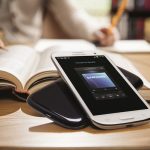
Earlier today, Samsung unveiled the newest member of its Galaxy S family of Android-based smartphones, the Galaxy S III, at London's Earl's Court Exhibition Center at a press event dubbed "Samsung Mobile Unpacked 2012". Was it the disappointment that some people predicted? Hell, no! Not to me, at least. And I am going to tell you why.
Right up to today's launch event, there were many rumors/predictions saying that we would see a device with a 4.6 - 4.8 inch Super AMOLED screen, Samsung's new quad-core processor (Exynos 4420) running at 1.4 GHz, 1GB of RAM, and 4G connectivity (at least in markets that currently support it). All of these predictions came true. But there's more -- five things that set Galaxy S III apart from other Samsung smartphones and those from competitors.
Who will buy Galaxy Nexus from Google?

While we wait for Samsung to unveil its new smartphone in a few hours, for your waiting pleasure I've got answers to the question posed last week: "Would you pay Google $399 for unlocked, HSPA+ Galaxy Nexus?" The search and information giant ended April with a May flower: Direct sales of its flagship, Android 4.0 smartphone, presumably because AT&T and T-Mobile aren't doing so.
Google's got a good thing going here for Android enthusiasts, but I've got a problem with the direct sales thing. What Apple offers that its rival can't: Service. People buying iPhone can get defective replacement at local Apple stores. They also can purchase, granted for an extra 99 bucks, AppleCare+, which extends the basic warranty and provides discounted replacements. If you drop and break iPhone 4S, Apple will replace it for $49, up to two times. What's Google going to do for you, if Galaxy Nexus goes bust or you bust it up?
BlackBerry 10 breathes new life into RIM

Playbook, like so much about Research in Motion these days, is a crisis of faith. Do you believe RIM will finally get it right, or move away from BlackBerry? Months ago when the Playbook 2.0 update hit and leaks finally outed the keyboard/case thing and Blackberry London hardware, I believed in the tablet, BlackBerry 10 and RIM having a future. Or at least one last chance.
This week's BlackBerry World 2012 has renewed my confidence in RIM, and I would even say that they now have a very good chance to bounce back.
Is there hope for Windows Phone?
That's the question I'm asking after looking over comScore US mobile subscriber data for the three months ending in March. After years of steady, steep declines, Windows Phone subscriber share held steady from February to March, which perhaps not coincidentally is when Nokia Lumia 900 went on sale. Could it be...
comScore measures subscribers 13 years and older. Microsoft mobile share among smartphone subscribers held steady at 3.9 percent month-on-month, the first real stop in drop in years. How mighty is Microsoft's fall? Market share was 19 percent in September 2009, for example. So 3.9 percent is nothing to skinny, but staying there rather than going down is small, but notable improvement.
Samsung smartphone shipments soar stunning 267%, trouncing iPhone
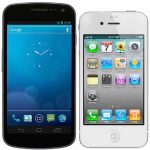
Apple apologists' brief respite is over. Late last week, IHS iSuppli and Strategy Analytics released first quarter data putting Samsung handset shipments ahead of Nokia, ending the Finnish company's 14-year reign. But the analyst firms couldn't agree on smartphones, with Strategy Analytics positioning Samsung ahead of Apple, but IHS giving the nod to iPhone. The Apple Fanclub clung to the "We're No. 1!" data, unsurprisingly. But the last word comes today from IDC, which corroborates Strategy Analytics, crowning Samsung king in both categories.
"The halcyon days of rapid growth in the smartphone market have been good to Samsung", Kevin Restivo, IDC senior research analyst, says. "Samsung has used its established relationships with carriers in a mix of economically diverse markets to gain share organically and at the expense of former high fliers such as Nokia".
iPad leaps ahead of iPhone browser usage, Opera Mini collapses
New iPad tipped the mobile web browsing balance, according to April data Net Applications released today. Apple's tablet now exceeds iPhone for browser usage share among mobile devices. That's 33.7 percent to 27.4 percent, after being neck and neck for the previous three months. iPad had nudged in front during February and March, but in April leapt ahead of iPhone.
Considering how much larger is iPhone's install base, or Android's for that matter, iPad's ascension is quite remarkable. Cumulative iOS device shipments reached 365 million during first calendar quarter -- nearly 67 million of them iPads. In all, iOS devices give mobile Safari tremendous usage share in the category: 63.84 percent, that's up from 52.36 percent in June 2011.
Google has lost control of Android
There was great news on the Android front this week. Samsung reported blow-out earnings, with smartphones -- the majority running Android -- accounting for nearly three-quarters of profits. Meanwhile comScore data spotlights the growing US Android tablet market. Additionally, Google started selling Galaxy Nexus direct, with no carrier contract, for $399. But all three share something in common -- what they foreshadow. Google has lost control of Android, and must swiftly act to regain it.
Forrester Research predicts that proprietary Android will surpass the Google Android ecosystem by 2015. Stated differently, Google's open-source mobile platform risks fracturing into multiple fatally fragmented Android ecosystems. Not one but many. There is little time for Google to demonstrate decisive leadership that can keep the ecosystem largely intact.
The King is dead -- Samsung snatches crown from Nokia and Apple
On this solemn Friday morning let us bow our heads in a moment of remembrance. The once mighty Nokia has fallen, after reigning supreme over the cellular handset market for 14 years. Apple succumbed in only three months over smartphones. Long live the king. Samsung leads both markets, according to Strategy Analytics.
I warned you, as did many others. Last week: "Nokia does the Windows Phone death dance". Two weeks ago: "Don't cry for me, iPhone". Samsung shipped 93.5 million phones during first quarter, easily eclipsing Nokia's 82.7 million. Nearly half of Samsung's shipments were smartphones -- 44.5 million, compared to 35.1 million for Apple.
Would you pay Google $399 for unlocked, HSPA+ Galaxy Nexus?

Google has surreptitiously answered whether AT&T or T-Mobile would carry Galaxy Nexus, which is available from Sprint and Verizon here in the United States: No. Otherwise, why would Google sell the smartphone direct, which it started doing yesterday. It's a helluva price, too -- $399, unlocked, with no contractual commitment.
This is the HSPA+ model released internationally in November 2011. That means no LTE and only 16GB storage, rather than 32GB -- and it's not expandable. The phone sold for $729 or more from Amazon and handset resellers just a few months ago. Amazon lists the 16GB model for $438 today. But, hey, $399 is better. But is it low enough for you? You can get 64GB iPhone 4S from AT&T for same price -- granted locked, with 2-year contractual commitment. Both handsets are HSPA+, though, and AppleCare+, which offers cheap replacement for broken phones, is an extra $99. So I ask: Would you -- or will you -- buy Galaxy Nexus direct from Google?
Samsung Galaxy S III promo dares iPhone users to be different

Samsung's new promo for next week's big mobile event is a real snoozer. It's nothing like those cheesy videos mocking iPhone users for being wannabe hipsters, who have such no lives they'll wait hours on end to buy a phone that looks exactly like the one owned now. Instead of chutzpah, galaxies pass before your eyes. Get it? New Galaxy device launch. Wake me, I fell asleep.
But wait for it. There's a pretty good punchline, if you can bear through the video's first 48 seconds. Be sure that if an iPhone user, Samsung means the dig for you.
Windows Phone will gain serious market share this year

Let me repeat that a little more verbosely. Watch for Windows Phone to grab a serious hunk of market share at the end of 2012. No doubt about it. "Huh?" you ask. Believe it.
The Feibus-is-crazy club most assuredly is enjoying a surge in membership right about now. And why not? There is certainly plenty of evidence to suggest that Windows Phone thus far has underwhelmed.
Nokia does the Windows Phone death dance

Few high-tech companies have imploded like Nokia and at the strangest time. Typically, dominant companies get killed during transitions from where they rule to where they don't. Nokia is oddest exception, imploding during a major computing era shift that favors its core competency. Transition from the PC to the mobile device eras is underway -- to a market where Nokia was, until recently, share leader by huge margins. How low the mighty has fallen, and former Microsoft division president turned Nokia CEO Stephen Elop wields the missile codes that launched self-inflicted nuclear strikes.
Today's Nokia earnings report is a disaster. It's radioactive fallout from Elop's decision to turn over the Finnish company's crown jewels to Microsoft. Elop sold Nokia's soul to his former masters, which I described at the time as a "silent takeover" of the company. Nokia needed new leadership, not new technology -- Elop's fundamental platform and cloud services switch -- to combat escalating Android and iOS competition. Before his tenure, Nokia did the right things, just in the wrong ways. Since taking the chief executive's seat in Autumn 2010, Elop has done the wrong things in all the right ways to destroy a once proud mobile device innovator.
Microsoft, Nokia, don't cheat Lumia owners of Windows Phone 8
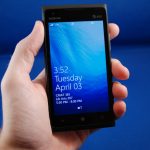
Children often suffer when parents make bad decisions. For the marriage of Microsoft and Nokia, there is trouble looming for the kids -- that's you, buyers of Lumia smartphones. The next version of Windows Phone codename Apollo may not be supported. That's the rumor shooting across the web today. Here's one bit of gossip every current Windows Phone owner should hope is wrong.
I've got no inside intelligence here, hearing nothing either way about Lumia upgrades. But I can see scenarios where Apollo might be a problem, particularly for older CPUs or GPUs. For example, all current Windows Phones are single-core. Surely double-core handsets are coming, but will the software support single-core CPUs? It's the first question to ask, with rumors a flying and Microsoft not denying.
What is the most popular household gadget?

Surely it's no surprise that nearly nine out of 10 American adults owns a cell phone. But would you believe that 19 percent own an ebook reader or tablet? Or that one in five dosen't use the Internet? These are among the fascinating findings from a fresh Pew Internet report "Digital Differences".
The findings are a blueprint for understanding Americans' digital lifestyles and what gadgets -- and supporting products and services -- fit in where. Major tech companies create distinct digital lifestyles people buy into, which is particularly true for Apple, Dell, Google, Microsoft, Samsung and Sony among others. Apple, Google and Microsoft are in pitched lifestyle product competition, and should look to studies like this one to understand the stunning nuances connected, so-called post-PC devices bring to consumer behavior.
Recent Headlines
Most Commented Stories
BetaNews, your source for breaking tech news, reviews, and in-depth reporting since 1998.
© 1998-2025 BetaNews, Inc. All Rights Reserved. About Us - Privacy Policy - Cookie Policy - Sitemap.