
Has 'beta' lost its meaning?
About 11 years ago (please ignore the rapidly aging "10 Years" banner overhead), a very bright young man put together a hosting service for new software, and a news feed to help publicize it. I'll spare you the part where I praise my boss for his wisdom and insight and great sense of timing, although all of that's certainly true.
In 1998, the term "beta" was generally used to mean "new software;" and so "Beta News" was interpreted quite correctly to mean "new software news." Some enterprising person may be able to dig up something I published elsewhere during that time where I complained about what I perceived as the misappropriation of "beta" to simply mean "new."
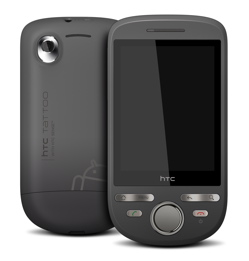
HTC Tattoo could be the first 'real' free smartphone
Now that HTC has unveiled its fourth Android handset, one begins to wonder what is next for the Taiwanese company and indeed the Android handsets business as a whole. HTC was the first to release a phone running on Google's open smartphone operating system, and now that it has shown off the Tattoo (formerly known as "Click") the company appears to have foregone design innovation in favor of releasing a cheap device.
The HTC Tattoo has a 528 MHz Qualcomm MSM7225 processor with 256 MB RAM, quad-band GSM/HSPA/UMTS radios, Wi-Fi, Bluetooth 2.1, a 3.2 megapixel camera, 3.5mm headphone jack and microSD-expandable memory. But aside from HTC's Sense UI, which debuted in the Hero last month, the only noteworthy feature of the Tattoo is the ability for users to decorate its chassis with cosmetic designs -- not exactly Earth-shattering stuff.

UK mobile market shrinks with T-Mobile, Orange merger
The UK's third and fourth largest mobile network operators, Orange and T-Mobile, will combine in a new joint venture this fall, the companies announced today. If authorized by antitrust regulators, the merger will create the single largest mobile company in the United Kingdom, with an estimated 28.4 million subscribers, or roughly 37% of the market.
While the British mobile phone market is much smaller and denser than its American counterpart, there are some similarities occurring between the two markets that are important to consider. Currently the largest UK operator with a 27% share is Telefonica's O2, which is the exclusive iPhone carrier like AT&T in the US. In second place with 25% of the British market is Vodafone, the company which jointly owns Verizon Wireless, the second place US carrier. The merger of Orange and T-Mobile in the UK would be like Sprint and T-Mobile merging in the United States, breaking up the market into thirds.

It's the end of the iPod as we know it
The big news this week promises to be Apple's annual September product launch on Wednesday. Of course, the famously secretive company won't confirm anything before then, but if the rumors are to be believed, Apple is about to release another generation of refreshed iPods on a drooling world.
Which begs the question: Does the world even need a new iPod? Or, viewed another way, have the old iPods run their course? Or another, does anyone buy single-function music players anymore, or has the world moved on to multifunction devices?

FCC ponders a future with multiple 'internets'
While many of the FCC's broadband workshops have dealt with current, concrete issues such as the deployment, adoption, and utilization of broadband in the United States, Thursday's FCC workshop took a refreshing departure from the here and now -- which in government practices is the equivalent to three years ago -- and spent time discussing the ideas that could potentially change what we know as the Internet.
One of the questions in the discussion was, "What might the Internet architecture look like in ten to twenty years, beyond incremental changes like speed increases?"

Court awards TiVo $200 million, not $1 billion, in Dish/EchoStar damages
It is no secret that Dish Network and partner EchoStar lost to TiVo in a ruling concerning whether the satellite companies' video recorders infringed on TiVo's patents. What was amazing was the possibility of an unprecedented $1 billion in legal sanctions that TiVo sought against the former sister companies. Today, a US District Court Judge in Eastern Texas did award TiVo a sizable contempt sanction sum of $200 million, which by most rational measures is still huge.
TiVo had requested treble damages -- three times the estimated base value of the infringement -- under the theory that EchoStar and its then-subsidiary Dish willfully infringed upon TiVo's technology. That much was apparently rejected today.

Google makes a quick U-turn on Books privacy amid FTC inquiry
A mere three days after explaining to the Federal Trade Commission in an open letter (PDF available here) that it could not draft a complete privacy policy for its Google Books site since the services such a policy would protect have yet to be invented, Google issued its first privacy policy update specifically for Google books.
But the policy addendum itself actually questions its own need to exist. "Google Books operates a lot like Web Search and other basic Google web services, so there are relatively few privacy practices that are unique to the Google Books product," reads the actual text of the policy statement.

Kindle users get Amazon offer for returned deleted books, gift certificates
While the distributor of several e-books was wrong to assume that the "classic" nature of certain titles allowed them to be sold under the public domain license, there's been considerable concern over Amazon's right to "undo" the sale of those titles through its electronic Kindle Store. Last July, Amazon CEO Jeff Bezos issued a mea culpa, saying the unannounced deletion of various titles including George Orwell's 1984 was "stupid, thoughtless, and painfully out of line with our principles."
This morning, as first noted by Gizmodo's Rosa Golijan, individuals affected by Amazon's unannounced deletions are now receiving e-mails that appear to be from Amazon, offering customers the opportunity to the company to deliver legitimate copies of their books free of charge, or alternately to receive $30 gift certificates or refund checks from Amazon.

YouTube UK lifts blackout of 'premium' music videos
YouTube UK has lifted the six-month long "premium" music video blackout after arriving at a deal with the Performing Rights Society for Music over royalties.
The description of "premium" music videos included those that have been uploaded, or claimed as property, by record labels. The blackout only prohibited UK YouTube viewers from watching these videos, fan-uploaded copies were not included in the sanction.

How the updated Market in Android 1.6 will change everything
Google's App store for the Android mobile operating system is called the Android Market; for nearly a year, it's looked like a beta build. All of the critical elements are in place, but generally with a lack of presentability and polish. It uses a white-on-black color scheme (not good for reflective mobile phone screens); its application profiles lack screenshots, and it features user reviews a little too prominently to be beneficial to sales; the featured apps are little more than the application's logo on the top of the first page; and overall, its navigability is mediocre.
Developers who have recently made their sales figures public blame the Market's unfinished appearance on the overall sluggishness of sales when compared to the multi-million selling iTunes App Store. While I maintain that the two mobile app markets should not be compared (if only for the fact that the iTunes app store evolved out of the six-year old iTunes MP3 shop ecosystem, and all of its progenies have been designed to be mobile app stores from the ground up), Android Market definitely needed to be re-thought.

Appeals court stays Microsoft Word injunction
Late yesterday afternoon, as first reported by the Seattle P-I, the Federal Circuit Court of Appeals in Washington, DC issued a stay of last month's Texas District Court injunction against the sale of Microsoft Word in the US, about one month before that injunction might have taken effect.
The stay will give Microsoft time to formally appeal its case, after having filed papers there two weeks ago. In what some are calling a clear display of brinksmanship, the company is pulling out all the stops, demonstrating it may be willing to forego the usual settlement if it can set precedent. Since the founding of this country, inventors have been granted legally protected monopolies in the markets generated by their inventions; and the US, unlike almost any other country in the world, considers the first inventor -- not the first to patent an invention -- as the proper title-holder of a patent.

Toshiba's $249 Blu-ray player vs. $299 PS3: The choice is obvious
Just about a month ago, Toshiba confirmed it had applied for membership in the Blu-ray Disc Association, and announced its intention to launch both standalone Blu-ray players and BD-equipped notebooks this year.
Today, the company that was formerly responsible for Blu-ray's sole opposition in the high definition disc market unveiled the first details about its Blu-ray hardware.

Google gives the floor to advocates of its controversial book deal
Google reached a settlement last October with the Author's Guild, the Association of American Publishers, and several independent authors that filed a class action suit against it three years ago. Once this agreement is approved, Google will be able to greatly increase the number of books that can be searched, previewed and purchased in Google Books. There are currently some seven million books available.
"We hope and expect that this leap forward with our friends and partners in the publishing industry is just the first of many. We love books at Google, and our fondest dream is that Book Search will evolve into a service that ensures that books, along with their authors and publishers, will flourish for many years into the future," Google said in an announcement earlier this week.

Cloudy forecast? Gmail outage shouldn't cast such a chill over Web apps
Will this week's Google Mail outage frighten you out of shifting more of your computing solutions into the cloud?
On balance, it shouldn't, as no technology is perfect and failure is part of the landscape whether we keep our stuff in a data center, in a box under our desk, or on some unseen Web server on the other side of the country. But any failure of this magnitude offers up a prime opportunity to discuss -- and hopefully improve -- the weaknesses that can still bite us.
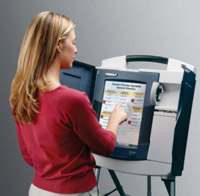
Diebold finally rids itself of electronic voting business
If you ask Diebold, there is a such thing as bad press. For years, the company has endured brand-eroding criticism about its electronic voting machines, and earlier this year in a hearing, publicly admitted they had serious design flaws.
Now, the company can finally move on from its e-voting debacles, as it sold the business unit to competitor Election Systems & Software, Inc. for a mere $5 million.