Android apps run in an Ubuntu netbook
Talk of non-smartphone devices running Android has been commonplace in the last few months. From tiny companies like Guangzhou Skytone Transmission Technologies, which is expected to release an ARM-powered netbook driven by Android, to the ultra-mega computer giants like Dell with its Android-equipped Mini 10, the "DroidBook" is not far from reality.
But today, Ubuntu sponsor Canonical showed a different approach: making Android applications usable in Ubuntu Netbook Remix. The Ubuntu Developer Summit (UDS) takes place in Barcelona this week, and the focus is expected to be Ubuntu 9.10 (a.k.a., Karmic Koala), which was released in alpha earlier in May (downloadable from Fileforum now). However, three sessions at the convention are reportedly dedicated to development for, and compatibility with Android.
Top 10 Windows 7 Features #3: XP Mode
In some ways, Steve Ballmer is proving to be a more capable Microsoft CEO than Bill Gates, especially recently. Whereas Gates' strategies have typically been associated with playing unfair, rewriting the rules, and being blatantly defiant about it in the process, Ballmer's strategy of taking away the argument -- eliminating the appearance of advantage and then still winning -- has been more effective, and more difficult to combat in both the marketplace and the courtroom.
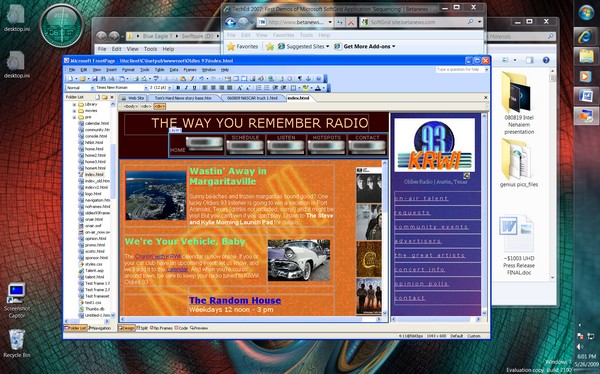
Nowhere does the "Playing Too Fair" strategy make a bigger display of itself in Microsoft's favor than in its latest permutation of virtualization technology -- a move that many individuals (myself included) directly suggested the company should do, and the company then did. Since 2004, Microsoft has offered a no-cost way for users to run Windows XP in a kind of hosted envelope, one which users were delighted to discover worked fairly well in Windows Vista. But it didn't offer any real advantages -- to use a program that relied on XP, you had to work within that envelope, using networking tools to associate two machines running on the same CPU.

Is Motorola saving money by skipping Windows Mobile 6.5?
According to documents purportedly leaked by AT&T, a Motorola handset originally slated to run Windows Mobile has changed Operating Systems mid-stream, and will be released with Android by the end of 2009's third quarter. The "Iron Man," or "Heron" as it's called on the AT&T document, includes all the Windows Mobile specs (IE6, Pocket Outlook, Exchange ActiveSync) with the caveat "Specifications subject to change due to move to Android."
Both Motorola and AT&T declined comment today.
LTE competition heats up as Swedish MNO opens first site
In Stockholm, Sweden today, mobile network operator TeliaSonera and wireless infrastructure leader Ericsson unveiled the first site in Sweden's forthcoming 4G LTE network, expected to go live in 2010 with deployments in Stockholm and Oslo.
The process has picked up considerable steam recently. It was only four months ago that TeliaSonera announced its first LTE contracts, which included Ericsson and Chinese telecommunications hardware provider Huawei. Just a month later in the US, Verizon named its LTE partners, which also included Ericsson, as well as Alcatel-Lucent, Starent Networks, and Nokia-Siemens.

To Bing or not to Bing?
Focusing on Microsoft's dilemma over how it can compete against Google in a market that Google now solidly owns, blinds one to the bigger problem facing anyone trying to do business on the Internet today, including Microsoft: No one really has a clue as to how the damned thing works.
Arguably, Google may be closer to discovering the clue than anyone. But its clever marketing tactics, which lead the technology press to cover color changes to the Gmail toolbar and the shifting of department names from the bottom to the right side of the corporate logo as strike-up-the-band events, indicate to me that Google is just as indecisive about a viable long-term business plan as everyone else. It's just better at masking that fact.
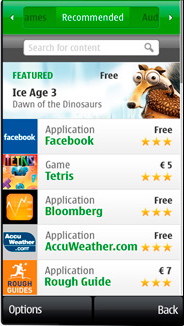
A rocky start for Nokia's Ovi Store
Fulfilling the promise it made in February, Nokia has opened its Ovi Store to most of the world before the close of May. Users of any of 50 different Nokia handhelds can either download the Ovi Store mobile app by selecting the icon in the device's Download Folder, or by navigating to store.ovi.com in their browser.
Like the app stores of competing devices, The Ovi Store offers both free and paid content such as games, videos, podcasts, productivity tools, as well as web-based and location-based services and applications. Apps can be purchased either through operator billing or through direct credit card billing.
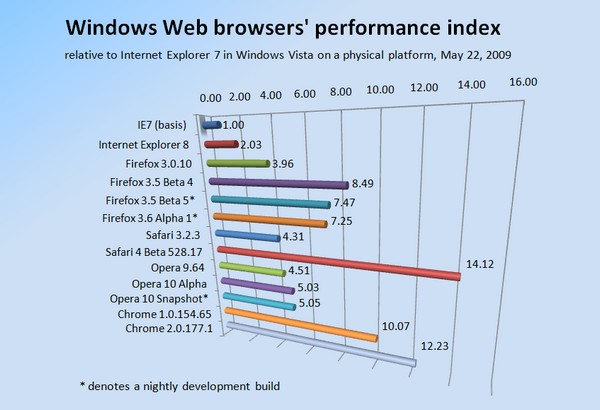
Google Chrome 2 is 20% faster than Chrome 1 in physical speed tests
Yesterday, Google traded development track 1 of its Chrome Web browser for track 2, making the latter effectively the "stable" edition of the browser, even though it's still officially under development and not yet feature-complete. Many users of version 1 found themselves automatically upgraded to version 2, and may very well have noticed a subsequent speed increase from the JavaScript interpreter.
In a blog post yesterday, Google said that speed increase would be about 30%. But is that an accurate assessment, especially given that Google's V8 JavaScript benchmark was devised by Google to test its V8 JavaScript interpreter?

A cultural event this weekend makes the case for geek culture
Memorial Day weekend starts off summer in Geek America, when the human impulse to be out and about runs headlong into the common refrain of THE YELLOW FACE! IT BURNS! IT BURNS, MY PRECIOUS! Here in Seattle, where the geeks roam freely and the Yellow Face more or less leaves us alone most of the time, many of our kind will make for Folklife, a four-day arts festival held downtown.
The relationship in the geek (nerd, dweeb) community between gearheadedness and a love of Ye Olden Tymes is tenuous in the 21st century. Years ago, Ren Fayre attendance, a fondness for filk, and a tolerance for girls wearing twirly dresses and flower garlands was more or less required for admittance to the computer lab. Cyberpunk, thankfully, drove a wedge into that relationship; steampunk attempts to re-knit it somewhat, but these days a working knowledge of morris dancing or ownership of a 20-sided die is strictly optional.
The future of RealDVD Jukebox hangs on one judge's decision
In 2007, RealNetworks began to develop a set-top DVD archiver/player similar to Kaleidescape under the project name "Facet." It was this idea that spawned the creation of RealDVD, a piece of software that allows copy-protected DVDs to be copied, compressed, and saved on a user's hard drive. However, that software was temporarily pulled off the market thanks to a copyright infringement suit from the DVD Copy Control Association and six major Hollywood studios (Disney, Paramount/Viacom, Sony, 20th Century Fox, Universal, and Warner Bros.).
The suit began last October and has involved relentless mudslinging between the parties. In the beginning, the studios claimed the product should have been called "StealDVD," and that it "clearly violate[s] the law." Most recently, RealNetworks called the six Hollywood studios "an illegal cartel," and charged them with antitrust violations.

Will consumers be able to afford the bandwidth they're craving?
The pocketable Internet has created an insatiable need for bandwidth. 18% of total Internet traffic in 2008 came from mobile devices, and it's only increasing. In fact, a national tier one mobile network operator (MNO) (that preferred to remain nameless) participated in Yankee Group research that recently projected its data consumption would grow by a factor of six in the next three years.
Here is what that means: In 1995, there were about 9,000 cell sites in the United States. Today, there are more than 228,000, or an average of 80 thousand new sites every five years. Each one of these sites serves about a thousand users, and the backhaul is provided mostly T1 and E1 lease lines, with an average of 3 T1's per site and an average bandwidth capacity of 4.62 megabits per second. The maximum speed is generally around 10 Mbps, and Yankee Group research showed that it cost MNOs about $6.1 billion to provide that much bandwidth in 2008.
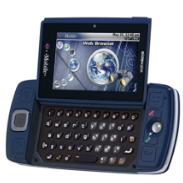
The Sidekick LX 2009: smart phone or smarter netbook?
Decades from now, when our descendants' implanted heads-up displays are implanted in their heads, and their instant messages and points-of-presence (phone service? what's that?) are controlled directly by their brainwaves, they'll look back on all of us who painstakingly suffered through the smartphone era, wondering how we managed to get so worked up over hunks of silicon and plastic. And I, very old by then and loudly eccentric, will shake my bony fists and yell at the whippersnappers:
"BECAUSE SOME OF THEM WERE FUN, DAMMIT! NOW GET OFF MY LAWN!"

French Socialists mount constitutional challenge to 'three strikes' net access bill
This week in As The HADOPI Turns: Socialists! Frenchmen suing France! An estimate of takedown numbers that'll make you glad Christine Albanel isn't doling our your online time! Plus, evidence that it really can get worse. Très worse.
When last we saw France's Création et Internet law, which gives ISPs there the power to block access to the Internet for anyone accused three times of illegal file-sharing, it was on its way to the Senate and onward to the desk of President Nicolas Sarkozy. On Tuesday, several Socialist members of the French Parliament took their case to the nation's Constitutional Council, raising eleven points of possible conflict with the country's laws.

Malware infection strikes US Justice Department
A virus infection of unknown type and origin necessitated the partial shutdown of computer networks belonging to the US Marshals Service on Thursday. The FBI was also believed to have been infected, and other Justice Department agencies were taking precautions Thursday as well.
Nikki Credic, a spokesperson for the US Marshals Service, provided very little data about the nature of the problem, but she did state that no data was known to have been compromised. The agency took down its net access and shut down some parts of its e-mail service while tech folk got to the source of the problem.

Cisco and the Free Software Foundation settle compliance suit
Once upon a time, Richard Stallman's Free Software Foundation started a conversation with Cisco about playing nicely with other people's software licenses. Five years later, that conversation hadn't gotten much traction, so the FSF applied lawyers to the problem. Five months later, Cisco appears to have gotten the message.
Cisco and the FSF made official this week what had been whispered in certain circles earlier in the month: There will be peace in our time, as Cisco revamps how it works with free software licenses such as the GNU General Public License.