
Protesters confront Author's Guild over Kindle text-to-speech
By taking Amazon to task over the text-to-speech function of the Kindle 2, the Author's Guild has put itself in an undesirable position. Whereas the feature was originally open for use on any text contained within the device, the Author's Guild is now pressuring Amazon into letting publishers decide on an individual basis whether a book should be enabled with "voice performance" abilities.
At the end of March, twenty groups representing visually and cognitively impaired individuals, such as the American Council of the Blind, the International Dyslexia Association, and the National Center for Learning Disabilities, joined together and formed the Reading Rights Coalition to oppose the action of the Author's Guild.

Will Windows XP keep ruling the netbook?
Since the shipment last year of the earliest netbooks, Linux has fallen drastically behind Windows XP, according to new research by two industry analyst groups, Ovum and the NPD Group. Meanwhile, some people are touting both Windows 7 and the Android variant of Linux as future replacements of sorts for the existing netbook operating systems.
Specifically, XP's share of netbook units shipped soared from less than 10% in the first half of 2008 to 96% as of February 2009, according to data released this week by NPD Retail Tracking Service.

New hope for US memory maker Spansion after big Samsung settlement
Bringing to a quiet end a case where one of America's brightest hopes for competing in microprocessors had vowed to go down swinging, Spansion -- the producer of flash memory born from an AMD spinoff -- settled its case brought last November against global NAND flash powerhouse Samsung. Spansion will receive a one-time payment of $70 million in cash, and the two companies have agreed to share each others' patent portfolios.
The news is exactly what Spansion needs right now to survive, having filing for bankruptcy just last month. A few weeks ago, the company reported fiscal first quarter revenue of about $400 million, which isn't small change by any means. But that's a 15% annual drop, and the flash memory business has notoriously thin margins.

Microsoft used software activation without a license, jury finds
In a unanimous and complete decision by a Rhode Island US District Court jury yesterday, Microsoft was found guilty of willfully infringing upon an inventor's 1996 patent for a continual software activation and licensing system -- effectively saying that Microsoft stole the technology for preventing users from stealing its technology. The inventor -- an Australian named Richard B. Frederickson, III, of Uniloc Private, Ltd. -- was awarded $388 million USD, or more than half a billion Australian dollars.
The records on Frederickson's suit, dating back to 2005, are too old for public online availability, otherwise we'd do our usual citation of the original suit. But the single patent that Frederickson was defending was for a system that only enables software to run at any time at all, only if the licensing mechanism lets it do so. It's the software activation scheme that has become one of Windows' and Office's trademarks -- the very system that Microsoft first introduced to Betanews in 2001. At that time, the company emphasized the discovery it claimed to have made, of a system that can detect when the underlying hardware for the software has been changed from the original point of licensing, to disable images of that software from being copied and run on multiple PCs.

French battle back on restrictive HADOPI copyright law
Liberty, equality, fraternity... money? France's National Assembly has tossed out the HADOPI bill approved late in the night last week by 16 members of France's Senate. The bill, amended, is apt to be re-introduced later in 2009.
The sticking point on Thursday for the "Creation and Internet Law," known as HADOPI after its French acronym (la Haute Autorité pour la Diffusion des Oeuvres et la Protection des Droits sur Internet), wasn't its notorious graduated-response / "three strikes" aspect, which states that after three accusations of piracy the government may take away an accused person's Internet access for up to a year.

You're a Mac, you're a PC...Now it's our turn, says Linux
The Mac vs. PC viral video and advertising war continues to rage, but now Linux has gotten involved. The nonprofit Linux Foundation began a contest in December challenging users to design a commercial for Linux that would take the "I'm a Mac....I'm a PC" self-branding campaign and spin it to fit the open source community: "WE are Linux."
The contest winners were announced today, just about a week after the latest salvo of Microsoft ads where computer shoppers are followed around as they look for their perfect machine. The first of these viral ads caused an explosion of blogospheric proportions at the end of March, when the cute girl in the commercial said, "I guess I'm just not cool enough for a Mac."

An accidental alert triggers a Live Messenger uproar
If one of your friends or business contacts on Windows Live Messenger has a different handle now than he did a few days ago, the reason may be because he received a message from Microsoft telling her she needed to do so, on account of a "recent system enhancement."
A blog post on Microsoft's Windows Live Messenger site yesterday explained that an unknown number of Messenger users may have received this alert in the center of their desktops. But the blog post apologized, saying the message was sent in error. "You will be able to continue to use your current e-mail address," the post read, "and there is no reason to make any changes."

Apple sued in 'exceptional' case of multi-touch infringement
Elan Microelectronics, a Taiwanese integrated circuit design firm, has sued Apple in the Northern District of California for infringement on two of its US touchscreen patents.
Observers can file this one under "should have seen it coming."
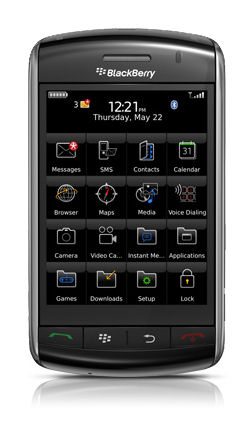
Rumors gel around a possible BlackBerry Storm sequel
As Research In Motion's first all-touchscreen BlackBerry, and one of the "Big Four" in the touchphone market that has dominated smartphone sales, the BlackBerry Storm is a formidable device.
Director of Research at ChangeWave, Paul Carton, said in a Web conference yesterday, "This market is overwhelmingly dominated by two companies: Apple and RIM." Nearly all of ChangeWave's consumer smartphone survey statistics were dominated by the iPhone and the Storm, and by proxy their US carriers, AT&T and Verizon.
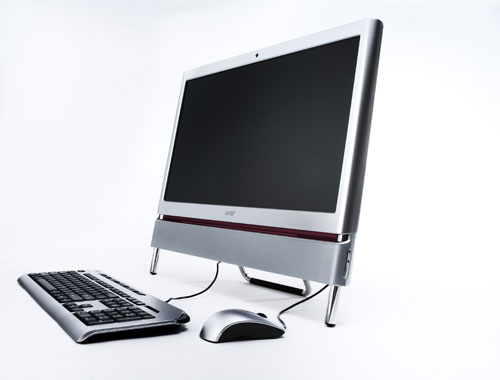
Acer observes 'new market trends,' releases an all-in-one
At the end of 2008, according to iSuppli, notebooks finally took the crown for top-selling PC form factor, edging out desktops by a mere 100,000 units. Laptops may have finally taken the lead, with worldwide sales of 38.6 million units, against 38.5 million for desktops.
Of course, Current Analysis has noted times in 2003, 2004 and 2005 that laptops have outsold desktops, generally constituting a 3-7% market share advantage; but market share endgame was never declared. It's generally assumed that at some point desktops will officially be the minority, but no one has yet declared it.
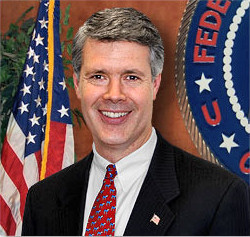
FCC's McDowell: Careful that 'national broadband' isn't just for cable
Normally, Congressional legislation regarding broadband Internet service takes the time to define its terms. Right now, for purposes of US law in a rapidly changing technology climate, the law itself defines the term rather broadly. For example, 7 USC 31 section 950bb defines the phrase this way: "The term 'broadband service' means any technology identified by the Secretary as having the capacity to transmit data to enable a subscriber to the service to originate and receive high-quality voice, data, graphics, and video."
The keyword there is any, letting broadband effectively mean anything that serves the Internet at high speed and bandwidth. But appropriations bills are laws in a very different sense -- they don't amend US Code. They simply say, here's some money, and here's what it will be spent on...and maybe they give definitions, and maybe they don't.

Amazon and others follow iTunes' lead in hiking MP3 prices
Take it as a sign that the digital music industry is finally reaching maturity. The labels that once clamped down on digital distribution with absolute prejudice have generally loosened up, allowing DRM-free distribution to flourish. Now, the business is expanding to make room for fully variable pricing.
The cost of digital music has long been an issue of concern for me, as a fan of short, fast, and loud music. I always felt that there was a problem with the 99¢ per song across the board pricing scheme iTunes employed. While you cannot measure musical enjoyment in minutes, cents, or kilobytes per second, it just never felt fair to have to pay 99¢ for a twelve second song like "Wienerschnitzel" by The Descendents, when it could buy a nine-minute song like Dream Theater's "Metropolis, Part 1..."

German gov't fines Microsoft for 'influencing' Office resale prices
This morning, Germany's Bundeskartellamt -- the anti-cartel department of the country's executive branch -- has issued a €9 million fine against Microsoft for what it describes as illegally and anti-competitively influencing the retail sales value of Office Home & Student Edition 2007.
It's no secret that Microsoft -- among many other manufacturers -- has provided rebates to resellers who sell software to verified students; this has been the case worldwide for the last few decades. But in an English-language statement this morning, the Bundeskartellamt says that when Microsoft has entered into such agreements with German resellers, the final retail price the two agree upon in advance, constitutes a form of price fixing...and that's illegal.

The news doesn't want to be free
Last week, Richard Engel, the long-time war correspondent currently with NBC News, won a much-deserved Peabody Award for his on-the-scene coverage of the war in Afghanistan. Every time I see the footage, I still get goose bumps. Here is a man crouching down in the corner of hilltop outpost, along with American soldiers from Viper Company firing in two directions into the mountains. From the camera angle peering up, you can actually see enemy ammunition passing mere inches from Engel's helmet and whispering through the flimsy camouflage. And like a weatherman covering converging air masses, Engel presents essentially a dissertation about the strategy of both the Taliban and al-Qaeda, some of which are shooting at him, at that moment.
After merely visualizing that footage for a few seconds, I find it pretty much impossible to count myself in the same column with Engel, under the title, "Journalist." There have been times when I'm covering a technology or a development conference, and a press relations specialist is rushing to validate a quote and refresh my grapefruit juice, when I would emphatically deny that Engel and I in the same business.

Amazon launches the first third-party Xbox Live store
While downloadable content has become the norm in home video gaming, a gamer who wants to purchase new games or add-in content via download has very limited options. Generally, it has been limited to the console's built-in app store, or direct from the console manufacturer. With the PlayStation 3, it's the PSN Shop, Wii it's the Wii Shop Channel, and with the 360, was the Xbox Live Marketplace or on Xbox.com.
Today, Amazon announced that it has opened the beta of the Amazon Xbox Live Store, where users can download Xbox Live Arcade games, or buy subscription cards and Microsoft Points. Transactions, however, are cash only and Microsoft Points do not yet look to be accepted.