
Analysts: Where is (and isn't) SaaS headed?
SaaS is now moving toward greater success in online backup, Web conferencing, and some other areas, but not really in either integration or business intelligence, say Forrester Research analysts.
Software-as-a-service (SaaS) originally got off the ground with customer relationship management and human resources applications, Forrester notes in a new report. But although SaaS will keep gaining ground in those two areas, SaaS will also pick up considerable momentum in online backup, Web conferencing, collaboration, and IT systems management, the analysts predict.
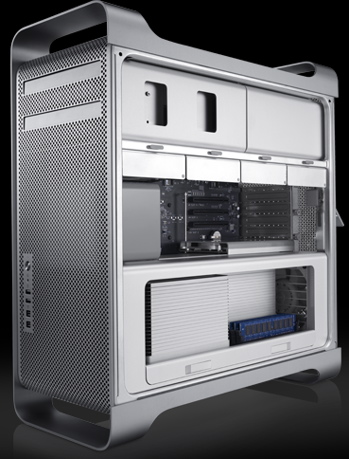
Apple Macs get Carbonite online backup, with free trials
After a beta test, Carbonite, a major provider of online backup services to consumers and small businesses, this week opened its first backup service for Macs.
Carbonite's new service provides automatic online backup for Intel-based Macs running Mac OS 10.4 or 10.5, backing up files to Carbonite's cloud-based servers in the background while users work at their computers. Secure socket layer (SSL) encryption is used for privacy.

Nintendo avoids yet another patent infringement suit over controllers
Nintendo prevailed in yet another patent infringement lawsuit about its controllers for the Wii and GameCube. A 2007 suit from Fenner Investments Ltd. sued Nintendo and Microsoft for the joystick ports on their consoles.
The patent held by Fenner (#6,297,751) is for a low-power interface with standard 5 volt peripherals that "includes a bi-directional buffer circuit and a pulse generator which, together, generate a digital pulse signal, representing a joystick coordinate position, based on an input analog measurement signal."

IRS servers in need of hebdomadal malware scans
A report released last week by the Treasury Inspector General for Tax Administration (TIGTA) after a year-long audit states that servers at the Internal Revenue Service are in need of hebdomadal malware scans, after the agency's Cybersecurity Computer Security Incident Response Center noted a 45% increase in malware infections between 2007 and 2008.
Michael Phillips, deputy inspector general for audit at TIGTA, issued four recommendations for the IRS, all in line with statutory requirements that the agency get a good look from auditors on a regular basis.

Nokia continues its cost-cutting plan with more layoffs
Late last month, Nokia announced that it would be scaling back its operations, and instated a voluntary resignation program for 1,000 of its employees.
Today, Nokia announced further workforce reductions will take place, affecting devices and markets, corporate development, and global support divisions that would be overlapping after the company completes its acquisition of Symbian.

Cisco: Intel Nehalem-based servers part of long-term data center 'vision'
With a sweeping data center initiative that includes Cisco-produced servers, Cisco is still only part way through a just revealed long-term strategy to stand at the center of network-based cloud computing, said John Chambers, CEO of the network equipment company, during a customer and press event today.
Cisco's emerging network-based data center architecture is designed to provide a variety of benefits to customers. "The first challenge is complexity," said Prem Jain, senior VP of engineering, who equated data center operations with "buying a car and assembling it yourself."

Fun with WikiScanner, Scientology edition
Masters of procrastination are familiar with the snoopy pleasures of WikiScanner, which lets you input an organization name or domain and get back a list of what folks using their network have been up to on Wikipedia. Some edits are pretty obvious -- for instance, the edits from users at aig.com on "The Fate Of Achilles' Armor," "Lists of Past Disneyland Attractions," and "1975 in Country Music" are obviously attempts to earn their bonuses. But what was the Church of Scientology up back in 2006 to with Kurt Cobain?
Over at Culture kills... wait, I mean Cutlery, Matthew Caverhill searched on a whim for "Scientology" and noticed that in addition to the sort of edits one might expect from a large organization with concerns about their public image, the CoS domains also showed a number of edits to pages done on a single January day in 2006, concerning celebrities who had killed themselves or been murdered by someone believed to be mentally ill.
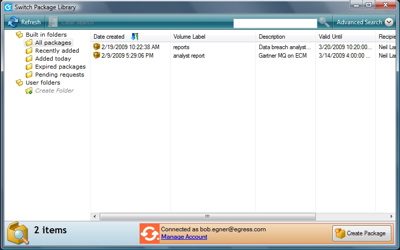
Egress debuts fresh data-security model
Operating on the theory that data at rest isn't a problem until it becomes restless, Egress Software Technologies on Monday debuted a security system designed to protect data in motion -- over the net, on a thumbdrive, in the cloud, or what you will.
Bob Egner, US president of the UK-based Egress, notes that practically speaking you can't not share data these days; the ways we all work with partner firms and third-party vendors dictate it. The problem is that as your data gets further from you, its primary keeper, it can become increasingly hard to make sure that only the right people can access it. The ubiquity of cheap, capacious data containers (DVD-Rs, thumb drives, even MP3 players) adds another layer of complexity, making it even easier for large masses of data to go on walkabout.

Microsoft: If Vista buyers knew so much, why would they sue?
In all the confusion that arose in 2006 over whether lesser-grade editions of Windows Vista was "real Vista" and whether existing PCs were ready or capable of running it, consumers probably downloaded a lot of information about different ways they could get their hands on the new product. In a motion filed last week by Microsoft in the "Vista Capable" suit in US District Court in Seattle, and first reported on by our friend Todd Bishop at Seattle's TechFlash, the company argues that the wealth of such information that former plaintiffs unearthed during their purchasing research should have been enough to tell them that Vista Home Basic wasn't the same as Vista Home Premium.
For that reason, the company claims, prospective plaintiffs can't exactly say they were harmed in the same way, so they don't deserve to be re-enlisted as class action plaintiffs. The judge in that case threw out the class action distinction last month.

No more Hitachi monitors after July's restructuring
After suffering the shame of pleading guilty in the US Justice Dept.'s ongoing investigation of price fixing in the TFT-LCD monitor industry, Hitachi announced this afternoon, Tokyo time, that it had gone about as far as it could in the present economy, in its current structure. Beginning this July, the division responsible for engineering and building those monitors probably won't even be known as Hitachi.
Spinoffs of the Consumer Business Group and the Automotive Systems Division are now fully underway, with the current executive vice president slated to take charge of the new consumer products manufacturer. That group will still downsize -- or, as Hitachi's statement to the Tokyo Stock Exchange calls it, "rightsize" -- to about 750 employees, and will outsource some of its development to Panasonic, so the new company will start out small.

SHOUTcast founding father to leave AOL
Steven "Tag" Loomis, who wrote the server software for Internet radio service SHOUTcast (with Nullsoft founders Tom Pepper and Justin Frankel) will be leaving AOL. With Loomis' departure, and the large-scale structural changes taking place at Time Warner's AOL, the future of SHOUTcast becomes uncertain.
Sources at Nullsoft suggest that SHOUTcast will simply go into maintenance mode as daily responsibilities are turned over to Shoutcast developers Faisal Sultan and Neil Radisch.

Cisco unveils Unified Computing System, with lots of big partners
Hand-in-hand with a long list of influential partners -- ranging from Microsoft and Red Hat to Accenture and EMC -- Cisco is extending upon its legacy networking heritage by jumping into server, storage, cloud and virtualization markets already occupied by major OEMs such as Hewlett-Packard, IBM, and Dell.
While corporate IT spending is strapped, analysts predict future growth across these markets such as blade computing, cloud storage, and virtualization. Although Cisco is largely new to these areas, the networking giant plans to leverage relationships across its large ecosystem of technology, systems integration, and channel partners to gain customers and contracts.

The Korean iPod, now 30% more expensive!
The Korea Times reports that the price of Apple's iPods will be increased in Korea due to the diminished value of the Korean won.
The international exchange of currency has had a varied impact on the tech industry recently. In January, for example, Nintendo had to tune down its 2009 revenue projections because the Yen increased in value, thereby devaluing exports by a fraction when weighed against the softening dollar and euro. Korea's currency has slid down from about 1,100 on the dollar to the neighborhood of 1,500 on the dollar.

Intel fires a warning shot across AMD's bow on Global Foundries
When AMD spun off a huge chunk of its manufacturing operations two weeks ago, creating a new and instantly major chip making firm called Global Foundries, it was with the idea of enabling the new entity to manufacture CPUs using AMD's designs. But a good portion of the intellectual property for those designs comes to AMD by way of a cross-licensing agreement between the two companies, that Intel fears AMD may be breaching.
This morning, Intel announced it has formally informed AMD of its opinion that Global Foundries is not an AMD "subsidiary," and therefore does not qualify to make use of Intel's x86 intellectual property in building chips for AMD or anyone else.
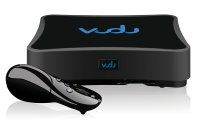
Pandora comes to set-top boxes via Vudu
Users of the Vudu high definition video on demand service now have access to Pandora Internet radio, the company said today.
At the end of 2008, set-top box company Vudu unveiled its open source Rich Internet Application (RIA) platform for Vudu hardware, which allowed the device to access Internet services like YouTube, Picasa, and Flickr. The announcement was similar to one made by budget set top box maker Roku several months before. That company's successful Netflix streamer later got Amazon's Video on Demand, and is expected to get a YouTube upgrade in the near future. The move to bolster a discrete service with rich Internet content is one that has been taken by most set-top box competitors.