
Maybe it really is over: New Broadcom suit against Qualcomm tossed out
Southern California District Court Judge William Q. Hayes last Thursday dismissed without prejudice the latest claim brought by handset chip maker Broadcom against its principal rival in that market, Qualcomm. That claim was that Qualcomm, by means of its Subscriber Unit License Agreements (SULAs) passed on to reseller customers who purchase handsets made with Qualcomm chips, charges a second time for the use of patents it already charged the manufacturer for once.
It's a serious double-dipping claim, which if true, could hurt Broadcom and other competitors in the following way: A company that would double-dip in this manner wouldn't have to set its prices too high for the first dip in order to make a big profit. That could result in such a company undercutting its competitors who may only (assuming no one else double-dips as well) be profiting from the initial patent license to manufacturers.
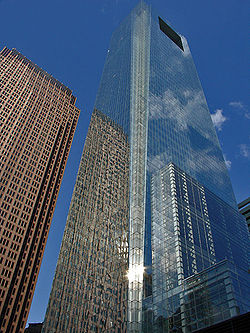
Sony and Comcast to jointly open retail store tomorrow
Sony and Comcast announced this morning that they will open the doors to a new co-branded retail storefront tomorrow in the Comcast Center in Philadelphia, Pennsylvania.
Called "Sony Style Comcast Labs," the store will be similar to the 40 Sony Style stores in the United States, but will include Comcast's roster of products as well, with a special focus on emerging technologies from the service provider.

Berners-Lee warns of privacy threat on the Web's 20th birthday
It was twenty years ago today: Tim Berners-Lee taught the band to play wrote up his "Information Management: A Proposal" paper and hatched the idea for the "Mesh," which on further review he'd decide to call the World-Wide Web. What started as a simple tool for managing the dataflow at CERN has become the most disruptive technology of our lifetime. If you're reading this, raise a glass -- but don't get too comfortable.
If you've never taken a look at the document that set it all off, you should -- there's even a little diagram that reminds you of what flow charts looked like before Powerpoint. (Scroll down.) Terms like VAX and hypercard and uucp are used, which should make all the old guard around here feel sort of happy and nostalgic. Making us all feel rather less happy and nostalgic is Sir Tim's address to Parliament this week, in which he warned that the looming loss of privacy thanks to Internet tech would mean more than just privacy lost: "We must not snoop on the internet... What is at stake is the integrity of the internet as a communications medium."

ACTA shielded from sunlight as court rejects FOIA claim
A request filed by various public-interest groups asking that details of the Anti-Counterfeiting Trade Act be revealed to the public has been denied by an official of the Office of the US Trade Representative. Knowledge Ecology International made seven document requests, all of which were denied "in the interest of national security."
Nice transparency, one might snark, though Ars Technica points out that the acting US Trade Representative (Peter Allgeier) is an appointee of the previous administration. ACTA, which has been under negotiation since that administration, has been made available to an assortment of lobbyists and other corporate entities. Other organizations besides KEI calling for more transparency for ACTA negotiations include the Electronic Frontier Foundation, Public Knowledge, and the European Parliament. (Cloud-over-sun image by Simon Eugster, via Wikimedia Commons.)

It's a more solid-state Sun, embedding flash memory in servers
This week, Sun announced solid-state disk technology as an option for its x64 and chip multi-threaded (CMT) rack and blade servers, along with free trial and pricing discount offers. In addition, it rolled out the Sun Flash Analyzer, a new software tool for helping customers leverage SSD-based servers to raise application performance.
The company's overall flash effort is particularly ambitious and far reaching, even though Sun isn't the first vendor to offer SSD flash as a server option, according to some analysts. IBM, for example, beat Sun out the door with SSD-enabled servers way back in 2007, noted Charles King, principal analyst at Pund-IT, in an interview with Betanews.

It has come to this: A claim that patent reform threatens the environment
Much of America's ability to once again play a contributing factor in the restoration of balance in Earth's natural environment depends on the continuing creation of new technologies, both for replacing other technologies that damage our planet and for simply curing the problem at hand. Some of these technologies are being created at the grass roots level, by entrepreneurs and experimenters, often with the intention of licensing or selling that technology once it receives its US patent -- its assurance of originality and viability.
But the value of that patent in the modern market is determined by its defensibility -- literally, how much it can rake in, in infringement cases. Without that market value, much of the incentive for trying to build new technologies in the first place, may be lost.
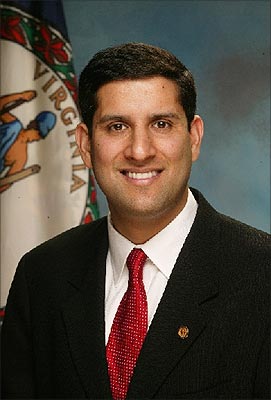
Vivek Kundra's maiden-voyage speech: content 8, timing 2
The FBI's been pretty emphatic so far that Vivek Kundra's not the target of the investigation that resulted in yesterday's raids on his old offices in DC, though a person can't blame the White House for putting the guy on administrative leave anyway until the details are clear. (The guy the FBI nabbed is, after all, acting CSO for the district.) In all the hubbub, however, the press has mainly passed over Kundra's speech on Thursday to FOSE, in which he laid out his ideas for shaping up the tech aspects of the ship of state. The audacity of the free market, anyone?
Kundra's speech (transcribed in its entirety at Government Computer News) made the case for government-led innovation, when it's done right -- DARPA and the NSF with the early Internet, for instance, and the National Institutes of Health with the Human Genome Project -- while emphasizing the need to provide public access to the data, bring the public into policy discussions, and lower the cost of government.
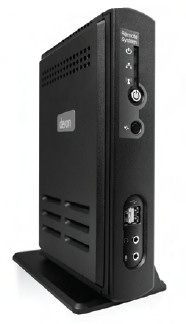
Intel's Atom and the return of the thin client
Decades ago, one of the most viable arguments for major enterprises holding onto their "big iron" -- their aging mainframes -- was that they could still provide processing power for thin clients, the smaller and less expensive terminals that didn't need the speed to crunch numbers. Today, in the era of virtualization, the concept of shifting processing power back to the data center has been reborn, especially with the deployment of lighter-weight, single-core processors that only provide the power needed to render results.
With that, a thin-client manufacturer named Devon IT this week announced it's shipping a little PC called the TC5 that frankly isn't much smarter than many smartphones these days...but it doesn't need to be. It's shipping with Intel's single-core Atom N270 processor clocked at 1.66 GHz, which isn't much; it uses Intel's GMA 950 embedded graphics, which also isn't much; and it has Windows XP or Linux on board rather than Windows Vista, and you know the drill there now.
So what's its purpose? To serve as a wired or wireless network receiver and to pump data to the screen as fast as possible...and besides gathering user input, that's about it. Its design enables it to run one program -- maybe the only one it ever has to run: a desktop virtualization host.
Analysts predict smartphones will thrive, even in this market
Last week, market research company NPD released findings that showed the touchscreen smartphone market has been thriving. Today, Gartner market research has released its figures for 2008, confirming the shift toward a smartphone-dominated market.
The overall mobile phone market is expected to shrink by about 10 percent in 2009, while smartphones will comprise an ever larger segment of that contracting market. Informa Telecoms and Media last week predicted a 35.3% growth in smartphone sales this year, and Gartner this week predicted a growth of 28%.
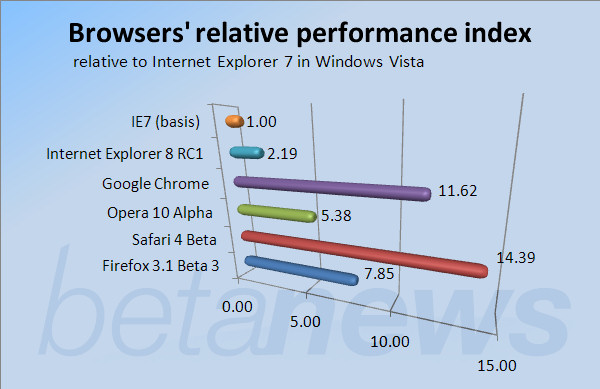
Tests: Firefox 3.1 JavaScript outpaced by Safari 4, Google Chrome
Download Firefox 3.1 Beta 3 for Windows from Fileforum now.
Internet enthusiasts today are getting their first glimpse of the TraceMonkey JavaScript interpreter that Mozilla claims will be one of the principal reasons to own and use Firefox 3.5 -- what the latest Firefox will inevitably be called once the numerology gets sorted out. A fresh round of comprehensive Betanews tests Thursday afternoon indicate that Firefox 3.1 Beta 3 will demonstrate close to eight times the general JavaScript calculation and rendering performance of Microsoft Internet Explorer 7 -- a clear performance gain.

T-Mobile USA: UK report on Android Cupcake is 'just a rumor'
Now under development for the past several months, an envisioned update to the Android mobile OS known as "Cupcake" is expected to add video recording and other desirable new features to T-Mobile's G1, as well as to future Android phones.
In a report widely bandied about this week, UK-based gadget blog Pocket-lint on Wednesday quoted a T-Mobile spokesperson as stating, "We will be offering G1 users the firmware update some time in April." Pocket-lint did not supply the name or location of its public relations source, though.

Google ad exec tapped to head AOL
Time Warner's CEO Jeff Bewkes announced this evening that AOL's current chairman and CEO Randy Falco will be replaced by Tim Armstrong, President of Google's American Operations and board member of the Advertising Council, the Interactive Advertising Bureau, and The Advertising Research Foundation.
Bewkes called Armstrong an advertising pioneer, who has "a stellar reputation and proven track record." Armstrong will also be of crucial importance in Time Warner's decisions about the future of the AOL brand.
Palm Pre and Sprint reveal plan pricing options
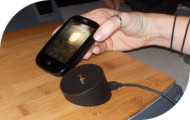
They won't say when it'll arrive and they won't say how much it'll cost, but representatives from Palm and Sprint on Thursday were willing to talk about stuff like service plans for the wildly anticipated (though not anytime soon) Palm Pre.
It'll be the Everything plans for would-be Pre users: The available individual service plans, according to company officials will be for 400 minutes, 900 minutes, and the $100 all-you-can-eat Simply Everything option. For families, the options are 1500 minutes, 3000 minutes or (again) Simply Everything for $190. Beyond that, they say testing's going well, including on the Touchstone inductive charger, and Palm officials reaffirmed that they're not out of the Windows Mobile business yet, with more devices on the way. (David Owens, director of consumer acquisition for Sprint. also assured the webcast audience that really, they've heard every possibly Pre pun by now; no reason to offer more -- though your writer feels that pre-empting such things pre-liminary to launch is just... pre-posterous.)

Quelle horreur: French president wants to chop net access for alleged downloaders
French President Nicolas Sarkozy wishes to create a national surveillance program to monitor Internet users and, if they're thought to be illegally sharing content, to cut off their Net access for up to a year.
The proposed law was debated in the French Parliament this week. Sarkozy, whose model-actress wife Carla Bruni has recorded an album, is convinced that France's music and movie industries are suffering because the citizenry is downloading its wares.
Microsoft exec to join DHS as CIO nominee gets tangled in FBI raid
Will the last person in Seattle to leave for the Obama administration please turn off the Space Needle? The Department of Homeland Security today announced that a senior Microsoft exec will step into a major cybersecurity role. Meanwhile, back in the other Washington, an FBI raid at the former DC CTO offices of new federal CIO Vivek Kundra is raising questions.
The raid, which appears to have been predicated on a bribery sting operation, is not known to involve Vivek, whom President Obama nominated to be his chief information officer a week ago today. But there have been two arrests -- Yusuf Acar, an information systems security officer with the city, and Sushil Bansal, president and chief executive of Advanced Integrated Technologies Corp. AITC has a number of contracts with city agencies including the DMV, and the city's human-resources department; Mr. Bansal used to be a city government employee. Both men appeared in federal court Thursday afternoon and corruption charges were brought against them.