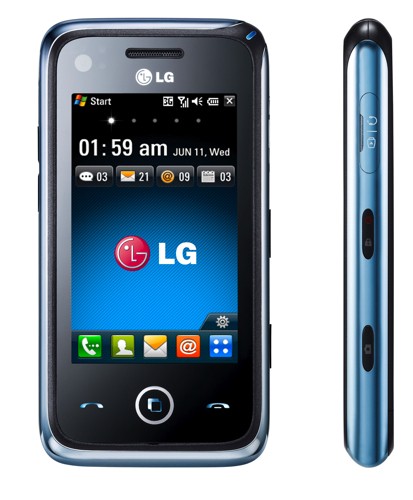
LG to make Windows Mobile its primary smartphone OS
In a big win for Windows Mobile, LG -- the world's third largest mobile handset maker -- has agreed to make Microsoft's struggling and aging operating system the primary for all its smartphones.
The move is a gamble for LG, which doesn't have its own smartphone platform like market leader Nokia. Samsung, which has been the fastest growing mobile company and controls the #2 spot, said it will continue to dabble in Symbian, Windows Mobile and Google's Android platforms.
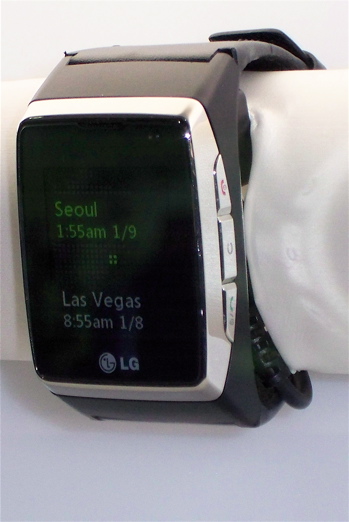
Orange promises to deliver LG's watch phone, likely this year
When Betanews took a closer look at LG's watch phone at CES in January, the only thing separating these quasi-sci-fi devices from reality was a mobile carrier willing to bless them with subsidies.
Today, France's Orange announced that it will be the first mobile operator to bring the watch phone to market.
Mobile app stores: Nokia and Microsoft each get one, too
Today at the Mobile World Congress in Barcelona, Nokia announced that its Ovi suite of mobile applications will be getting its own App store in May, and Microsoft announced Windows Marketplace for Windows Mobile devices.
Nokia's store fits into the company's Ovi suite of mobile services, and will appropriately be named The Ovi Store. It will carry the applications, games, videos, podcasts, widgets, and "personalization content" (likely wallpaper and ringtones) previously found on Download!, MOSH, and WidSets, now combined into a single location.
Analyst: Video game industry continues growth
Market research group NPD has released its latest tally of sales in the video game industry, which continues to grow despite worsening economic conditions.
Last September, MIT professor Henry Jenkins III called video games some of the "great equalizers" in digital media. He referred to video games as "convergent transmedia," or a single medium made up of other media: graphic design, music, coding, voice acting, script and dialogue writing, and so on.

Vizio turns tables in ongoing HDTV litigation
While we wait for the digital-TV switchover, the manufacturers of high-definition television sets will joust for our entertainment. On Friday, a day after the International Trade Commission upheld a lower judicial body's invalidation of a crucial HD-related patent, Vizio filed suit against the company that made the claim.
Funai Electric has, over the last year, filed various lawsuits against other HDTV manufacturers, asserting infringement of two HD-related patents, 5,329,369 ("Asymmetric picture compression") and 6,115,074 ("System for forming and processing program map information suitable for terrestrial, cable or satellite broadcast").

Opera to launch 'Turbo' for faster Web browsing
Opera Software will next week roll out Turbo, a new server-enabled compression technology for speeding up Web browsing on PCs, mobile phones, gaming machines, and other devices.
Although many of the details are being withheld until Turbo's official launch at Mobile World Congress (MWC) in Barcelona, Opera shared some information with journalists this week.

Court disallows brief in trial against Harvard student who downloaded music
One of the three amicus briefs filed in support of Webcasting the proceedings in the trial of a Harvard student accusing of illegally downloading music has been refused for consideration by the First Circuit Court.
The Associated Press-led brief was rejected because accepting it would have required that one of the judges involved recuse herself or himself from the case. That would indicate that one or more of the judges has a conflict of interest with one of the parties petitioning; perhaps they hold stock in a certain company, or have a close relative employed by one. (In other words, the "

Moonlight 1.0 means more Silverlight apps run smoothly on Linux
Microsoft had always promised interoperability as one of its key goals for Silverlight. The way it's accomplishing this on the Linux side of the scale is by empowering Miguel de Icaza to take the project and run with it.
This week marked an important milestone in a genuine effort to take a pretty good graphical Web applications platform and make it workable for Linux. The Mono Project, a team backed by Novell and Microsoft whose goal is to make the .NET Framework workable on other platforms, including Linux (and even, if you can believe it, Windows) has released its first non-beta version of the Moonlight 1.0 plug-in.
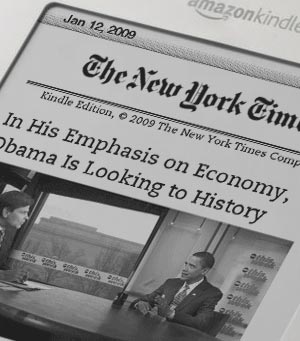
Is text-to-speech on Kindle 2 a threat to audiobooks?
Yesterday, the Author's Guild aired complaints about the Kindle 2's new onboard text-to-speech function from predictive text specialists Nuance Communications, warning that the function could eventually cut into the audiobook market.
The group said, "This presents a significant challenge to the publishing industry. Audiobooks surpassed $1 billion in sales in 2007; e-book sales are just a small fraction of that. While the audio quality of the Kindle 2, judging from Amazon's promotional materials, is best described as serviceable, it's far better than the text-to-speech audio of just a few years ago. We expect this software to improve rapidly."
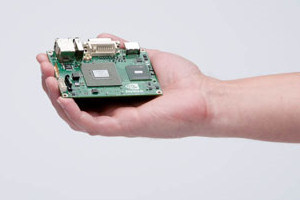
Nvidia: First Ion PC to ship by summer, might use Vista
PC makers are working on both netbooks and small desktop systems using Ion, but the first Ion PC, expected by this summer, will probably be a desktop model, an Nvidia spokesperson said today.
"Given that we just introduced Ion is December, and that PC design cycles are usually 6 to 12 months, it will take some time for Ion designs to come to market. We do expect the first Ion-based systems to hit by summer, if not earlier," said Ken Brown, PR manager for platforms, in an e-mail to Betanews.

Google: now making you even more visible
This week, Google cranked out several tools that exploit the search company's strength in the LBS (location based service) model. Betanews took a look at one for Android, and one for Gmail.
Google Labs is a repository of potentially advantageous little gadgets, so when new product is pushed through, it usually warrants solid consideration. On Tuesday, a Gmail lab was premiered that carried a solid concept: Show the geographic origin of a user's e-mails as a signature.

Facebook's '$65m settliement' might be worth a lot less
A settlement by Facebook's founder to college classmates, pegged by lawyers at $65 million, contained only $20 million in cash, according to an AP report this week which also revives the issue of Facebook's real stock value.
Facebook founder Mark Zuckerberg paid the controversial settlement to former Harvard classmates who claimed he stole their idea for a social networking site. The classmates later started their own social network, ConnectU.
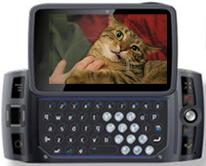
More specs, photos turn up for next Sidekick
T-Mobile tends to keep the wraps on each new iteration of the Sidekick for as long as it can, but that doesn't keep details on (and photos of) the 2009 iteration of the cult-fave smartphone from making their way to the fan sites.
First, Hiptop3 (from which the above image is borrowed with thanks) scored another scoop this week from correspondence with, as they put it, "a reader who claims to have actually held and played with the Sidekick 2009/Blade."

Paul Allen's cable company charts Chapter 11 course
Charter Communications, the nation's fourth-largest cable company and a major component of Paul Allen's Vulcan, has turnaround experts on board and is prepping a Chapter 11 filing to restructure approximately $8 billion in debt.
The purchase of the St. Louis-based company in 1988 was a big component of Allen's "wired world" vision -- "I will finally have some wires for my wired world," he said back when he was purchasing both Charter and the quickly ingested Marcus Cable -- but the provider's had a hard time in the marketplace, ranking at or near the bottom of various customer-satisfaction polls over the years and getting a rare public warning from the Better Business Bureau in 2006.

Microsoft offers $250,000 for capture of Conficker writer
The Conficker situation has to be maddening for Microsoft. The vulnerability was patched months ago, but as the infection spreads through unpatched systems, it's hitting some very high-profile networks. And so the company's offering a remarkable reward for what could be a very fragile peace of mind.
Microsoft announced on Thursday that it's prepared to hand over a quarter of a million dollars (or the equivalent sum in your local currency; the offer's worldwide) for information leading to the arrest and conviction of the person or persons who wrote Conficker. That's not a bad payday for a knowledgeable person willing to drop a dime, but a look at past arrests for alleged malware-writing reveals that usually the people who get nabbed are, to be blunt, script kiddies who tweaked up a variant and got (un)lucky. (Remember Jeffrey Lee Parson? The Blaster B variant? Anyone?)