
Android PC tablet on the way from Archos and TI
A new Android device is in the works, and the jointly developed product from Archos and Texas Instruments will be a tablet PC with phone functionality, not merely a smartphone.
Set for release in the third quarter of this year, the Internet Media Tablet (IMT) will follow on the heels of the Archos 5 tablet rolled out last fall. Integration of the IMT with Google's Android software stack will add smartphone functionality, the two companies said in a joint statement today.

Mozilla CEO: Firefox is 'a crack in the Microsoft monopoly'
If there is indeed a new spirit of cooperation and interoperability embodied by the US' new leadership, then it has apparently stopped short of the Web browser market, where a very old argument rages on.
In a belated response to an already ancient topic that for many had already become so dead that you can't quite tell the carcass was a horse any more, Mozilla Chairman and CEO Mitchell Baker declared on her blog late last week her current opinion: Microsoft continues, she says, to apply monopoly pressure on the Web market by distributing Internet Explorer in such a way that customers are not aware that they have a choice.

Google gets in on the energy business
Google is developing a tool for home energy consumption monitoring, without taking its collective mind off of proselytizing open protocols and standards and user data security.
Utility companies generally form regional monopolies, but evolution in regulatory policies has opened a door for software companies such as Google to get involved. The gradual deployment of "smart meters," -- network-connected power meters capable of maintaining and sharing detailed information about energy consumption -- is one of the major areas of development. Since 2004, for example, the Los Angeles Department of Water and Power (LADWP) has deployed more than 9,000 smart meters provided by a company called SmartSynch.

Public beta of an electronic mailing alternative to the Post Office
A public beta of an innovative, if ambitious, project originally announced in December is being launched this morning: Imagine if someone who normally sends you mail via your US Mail box outside your front door were instead to send an electronic document to an address that's keyed to that same postal address -- not your e-mail, but your street number. You'd have access to that electronic delivery location because, well, you live there.
That's the notion behind Zumbox, a service that relies on both sender and receiver to be interested in sending regular mail electronically. You may have read about this "electronic mail" concept, it's in all the papers. Zumbox's value proposition is that it may enable services like public utilities, print publications, and other firms that do their business with consumers using dead trees and postal carriers, to instead save the time and post electronic documents (maybe PDFs, maybe Word files) online to the very same postal address.

Intel backs away from some public appearances overseas
One of the casualties of Intel scaling back its costs is a reduction in its public appearances, particularly overseas. Perhaps second only to the company's annual Developers' Forum in the US (which remains scheduled for September 22 in San Francisco) is its annual appearance in Taiwan, which is closer to the motherboard manufacturers upon which Intel relies. Now that event -- originally scheduled for next November -- has been cancelled, as Taiwan's leading industry daily DigiTimes was first to report, and Intel's IDF Web site also shows that its Beijing conference scheduled for April 8 has been trimmed back by one day.
Last October in Taipei, Intel introduced its Capella power-saving architecture for its Nehalem generation 45 nm processors, along with some new advancements in the Atom processor that's powering more and more netbooks. Conceivably, though, any new milestones in Intel's roadmap may still be announced in San Francisco in September.

Hathaway preps for 60-day sprint to Obama's cyber-czar post
President Obama's likely appointment of Melissa Hathaway to the National Cyber Advisor post isn't just a nod to bipartisanship currently taking a battering on Capitol Hill, but an indication of the administration's new thinking.
Before she receives the official nod for the "cyber czar" post, though, Hathaway has a massive 60-day project ahead of her: a comprehensive review of federal cyber-security organization and strategy, focusing in particular on problems that need immediate fixing. To that end, she's attached to the National Security Council for the duration of the project. Any cyber-czar appointment would happen after that.

Significantly less than the Best Buy possible
As if anyone's inclined to dispose of serious income in a retail store these days, there's news from Palm Beach that a Best Buy employee has been arrested on suspicion of using a rogue card reader to steal credit-card information from shoppers.
The employee, who has not yet been named by officials at either the electronics chain or the Secret Service (which carried out the investigation), is accused of running her scam during the November-December holiday season. It's believed she may have grabbed data from as many as 4,000 customers.

AMD's 45 nm midrange Phenom IIs aim to regain the performance lead
Last month, the one-time price-performance leader introduced its first desktop-class, upper-tier 45 nm Phenom II processors. Today, AMD is readying its midrange CPUs in that category, with a strategy that just might work.
As far as process generations are concerned, AMD is one big step behind Intel already, with that company's Core i7 architecture starting to incorporate almost everything AMD used to champion -- including a built-in memory controller -- while also using 32 nm lithography. AMD's strategy to contest Core i7 is looking clearer: Erase the perceived advantage of Core i7 by challenging its performance at lower price points, and enticing customers in the value segment with the prospects of one extra core.

Dancing with the Woz
Let it never be said that Apple co-founder and legendary prankster Steve Wozniak doesn't have a wonderful sense of fun. But how's his sense of rhythm? We're about to find out, as Wozniak is slated to show off his moves on the next season of Dancing With The Stars.
For those who've managed to miss this cultural phenomenon, it's an ABC series; celebrity "dancers" train with professional hoofers and go on to strut their stuff on camera. Each week, one dancer is eliminated by a combination of judges' results and fan voting via phone/text/Web.

Major label venture TotalMusic calls it a day
A project by major record labels Sony and Universal sought to change the distribution method of digital music. But over the weekend, a key executive unofficially declared that the plug has been pulled.
In a blog answer to the TechCrunch assessment that Total Music was "sinking fast", Jason Herskowitz, VP of Product Management at Total Music, confirmed the project's termination, saying, "I regret that we didn't get to show you guys more about what we built -- but in these extremely hard economic times (particularly for those in the music industry) it's hard to blame them from pulling the plug on a still-highly-speculative offering."

Google Sync made possible through patent license with Microsoft
As it turns out, Google did not develop a calendar and contacts synchronization platform all on its own. Rather, it licensed Exchange Server patents from Microsoft, in a deal that company is describing today as an "open" license.
This morning, Google launched its initial beta for a contacts synchronization service that enables individuals to share information for up to five mobile calendars and three e-mail addresses between devices, including iPhone, S60, BlackBerry, Sony Ericsson, and Windows Mobile phones. If that list sounded familiar, it's because their manufacturers are all on the patent licensing agreement list announced by Microsoft last December 18.
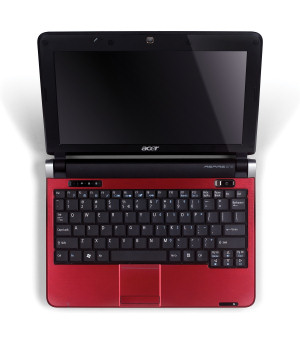
Acer ships updated Aspire One, with Windows but no Linux
About a week ahead of schedule, Acer has started US shipments of its second generation Aspire One netbook, a Windows XP-only device with a larger 10.1-inch screen.
Despite the bigger screen size of the new Aspire One AOD150, Acer's latest netbook doesn't offer an appreciably roomier keyboard, according to some who have tried out the new PC, which first shipped in the UK on January 23.

Google launches Sync for iPhone and Windows Mobile
Google has released a tool that allows Google calendar and Gmail contact data to be synced with iPhone and Windows Mobile devices. Similar to the Blackberry application Google released last year, Google Sync integrates a user's Google calendar data with the phone's native calendar. It also works with Google Apps accounts, but administrator approval must first be granted.
There are currently some limitations to the application. The iPhone, for example, cannot sync more than five calendars, and contact information cannot hold multiple numbers for fax, mobile, or pager headings, and each contact is limited to 3 email addresses.
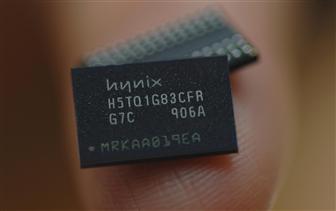
Hynix to scale DDR3 DRAM down to 40 nm
Forget the legal headaches with SDRAM, Hynix announced over the weekend that the "three dimensional transistor" fabrication technology allows for gigabit DDR3 DRAM chips to now be made in the 40 nm size class. Mass production of these 40 nm chips from Hynix is expected to begin in the third quarter of 2009.
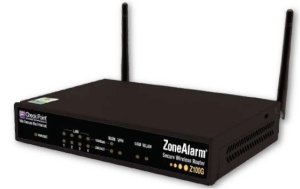
ZoneAlarm Router gets updated
Check Point software's ZoneAlarm Secure Wireless Router Z100G version 8.0 has been released today. The company's antivirus and firewall-enabled wireless router is just over two years old, and has been updated to include VStream antispam, a firewall monitor and status dashboard, built-in DNS server, and support for Xbox LIVE hosting.
The updated Z100G ("G" as in "802.11g") maintains the same premium pricetag that its predecessor carried, and will retail for $149.95.