
Intel slashes quad-core CPU prices across the board
This morning, an Intel spokesperson confirmed to Betanews that the company has made drastic cuts in its CPU prices for 1,000-unit shipments, effective immediately. They include a 40% slash on its top-of-the-line processor.
While the company's Extreme series quad-core at the top of the line -- which blends four cores with hyperthreading -- will remain at $1,499 in 1,000-unit quantities, Intel's highest-end business-class quad-core desktop processor, the 3.0 GHz Q9650, is getting its price cropped by 40.6% today, from $530 to $316. Standard-power quad-cores (as opposed to Intel's low-power line) from the 2.83 GHz Q9550 to the 2.33 GHz Q8200 are also all being slashed in price by 16 - 20%, with the Q8200 now selling for $163.

Betanews Alpha is now on RSS
If you've been wondering why you haven't been seeing Betanews Alpha posts on your RSS feed, well today, we've solved that little problem. Now you can subscribe to Alpha. Be sure to set your RSS feed reader of choice to include this address:
https://betanews.com/alpha/rss

Obama inauguration: potentially the 'most viewed event' in history?
Beginning tomorrow at 6:00 am EST, the inauguration of President-Elect Barack Obama will officially take over American airwaves. In addition to traditional television and radio coverage, the ceremony will be broadcast over streaming services such as Joost and Livestation, through news web sites, and through handsets capable of receiving mobile television broadcasts.
Verizon V Cast TV and AT&T Mobile TV will be broadcasting the event live to their respective subscribers, and cross-platform broadcaster MobiTV will be streaming live coverage all day from ABC News Now, CNBC, CSPAN, Fox News, and MSNBC.

The EC's latest objection: Is it time to unbundle IE from Windows?
For many, it's a very tired, old argument; but for politicians in Europe, it remains a rallying cry: Microsoft, says the European Commission, is using its Web browser unfairly.
At the height of the Microsoft / Netscape browser war a decade (or was it a century?) ago, Microsoft argued that so much of Windows' functionality relied upon the HTML rendering capability of Internet Explorer that it would be technically impossible to divorce the two from one another. That argument was raised in response to objections from lawmakers and judges worldwide, including in the US, that bundling IE with Windows gave Microsoft an unfair advantage -- and at the time, many saw that claim as somewhat self-serving and artificial.

Report: Verizon to launch femtocell extender this month
Verizon will be the next US mobile carrier to offer signal extending femtocell services for the home, according to reports. The Verizon Wireless Network Extender is expected to be available on January 25, and offer a service nearly identical to Sprint's AIRAVE femtocell.
The femtocell device will be the same Samsung Ubicell that connects to GPS and the home WAN to generate a 5,000 square foot CDMA signal. The main difference between Sprint and Verizon will be the $249.99 the latter will charge for the unit. Reports that AT&T was testing its own femtocell solution circulated last year and tapped the UK's IP.Access Ltd. as a major hardware provider. Since that time, however, there have been no updates from AT&T.

CherryPal introduces its latest netbook
CherryPal, which introduced a 10 oz., 400 MHz internet appliance called the C100 in July, unveiled its netbook at the Sundance Film Festival today.
Called the Bing, CherryPal's netbook runs a Linux-based operating system called GreenMaraschino with a 1.6 GHz Intel Atom N270 processor. With 1 GB DDR2 RAM, a 160 GB HDD, a 10.2" (1024 x 600) TFT display, 3 USB ports, SD/MMC/MS slot, a 0.3 megapixel webcam, and built-in 802.11 b/g, the Bing is being marketed as an efficient, environmentally friendly, simple machine.

Bill to delay DTV transition is itself delayed
In an early sign that there may not be smooth sailing ahead for even some Democrat-backed initiatives of lesser importance than, say, the long-term health of the nation's economy, Senate Republicans late Friday successfully blocked the fast-tracking of a bill introduced yesterday by Sen. Jay Rockefeller (D - W.V.) to delay the nation's DTV transition date by 90 more days, to June 12. This according to the Associated Press this morning.
The measure now has the clear backing of the incoming Obama administration, whose transition team leader John Podesta had advocated more time for citizens to redeem government-backed coupons toward the purchase of DTV signal converters for their analog sets. Members of the Obama team, along with current lawmakers, are worried that too few of those coupons have been redeemed, indicating that citizens may not know they've received them. (The possibility that they may not want or need to redeem them has not been discussed.)

Openly BOSSing around the Internet
It's too soon to know what will remain standing as new CEO Carol Bartz makes her way through the the halls of Yahoo, but here's a modest proposal from one admirer: Show some love to the BOSS.
I don't mean Bartz, yahoos (though could it hurt if you're employed there?). I mean Yahoo Search BOSS (Build your Own Search Service), the company's open search Web services platform. Amidst the thicket of advertising-based this and widgetastic that, here's a Yahoo project that thrives on mashing up searches. Remember search? Yahoo used to do search...

Senate considers delaying DTV transition until June
On the theory that some two million eligible customers have yet to receive their $40 coupons toward the purchase of an over-the-air DTV signal converter, Sen. Jay Rockefeller (D - W.V.) introduced a bill giving them more time.
If approved, Sen. Rockefeller's bill would extend the transition date by 90 days to June 12. Rockefeller's sentiments appear to be echoed by key members of the President-Elect's transition team, along with Federal Communications Commission members who told a crowd last week at CES 2009 in Las Vegas that they saw a lack of leadership all last year in driving the transition forward.
More AMD layoffs impact 1,100, execs to get pay cuts
The news is no better for AMD, which today confirmed it is letting go of 9% of those remaining employees who are not being transferred to The Foundry Company -- 200 by attrition, and an additional 900 by traditional termination.
This is in addition to the 600 being let go internationally announced last November (the original estimate was 500), and 1,600 whose "transitioning out" began earlier in 2008.

Censored version of e-book enters iPhone App Store
In December came the first word that the e-book version of David Carnoy's Knife Music was not allowed to be sold in the iPhone App Store because it contained "objectionable content." Now, the book is available in the store for free, but censored.
Censorship of the book was reportedly administered by the author himself to expeditiously get it approved for distribution in the popular mobile shop. Carnoy, an editor and regular contributor at CNET, wrote a column in December about DIY publishing in the information age.

DHS to take on core routing vulnerability
No serious security geek has forgotten last year's big reveal of the hole at the heart of the net's routing protocol, but is the Department of Homeland Security the outfit you'd imagined patching it?
The Border Gateway Protocol (BGP) is essential stuff, allowing the Net to be decentralized but still able to get stuff from point A to point B. It's not something you can simply not use, like JavaScript or even HTTP. As such, BGP is a fat target for bad guys, and last year at DefCon, two security researchers demonstrated a technique that would let such entities monitor and even alter unencrypted net traffic.

CNN.com invites beta testers to a live Inauguration Day event
If you've been considering or planning an interactive party with a few million of your closest friends to watch the inauguration of Barack Obama and Joe Biden next Tuesday, CNN.com has an idea for a way you can use that time as a productive beta tester. On January 20, the interactive division of the news network will be partnering with Facebook in a worldwide test of a video delivery and sharing service.
Here's the details as CNN.com presented them to Betanews this afternoon:

Sony Ericsson posts a $247 million losing quarter
Mobile telecommunications joint venture Sony Ericsson sold 6.6 million fewer phones in the fourth quarter of 2008 than it did the previous year, resulting in profits dropping from last year's €373 million to a loss of €73 million, a €446 million year over year decline.
Mobile handset sales for the holiday season look to have been very weak overall. Sony Ericsson sold some 24.2 million phones during the holiday shopping season, which resulted in a quarterly profit loss of €187 million ($247 million). In 2007, the company reported sales of 30.8 million in the fourth quarter.
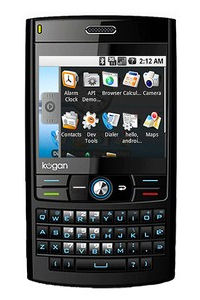
Agora Android phone gets curtailed by Kogan
Promising prospective early adopters refunds on their pre-orders, Australia-based Kogan today imposed an indefinite delay on the Android-enabled Agora phone, citing issues around interoperability, screen size, and resolution.
Manufacturing had already started on the Agora when Kogan made the move to temporarily pull the plug on production, said Ruslan Kogan, the company's founder and CEO, in a letter to customers.