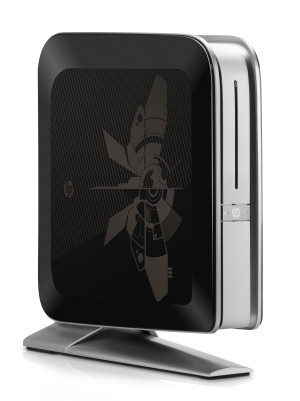
HP / Voodoo Firebird sells out at $2,100
This morning, Hewlett-Packard's elite division began direct sales of its two newest Firebird enthusiast desktop models, though the top-of-the-line edition sold out right away.
HP's Web site revealed complete specifications and, for the first time, prices for the two slim form-factor enthusiast desktop systems introduced at CES on Tuesday. The lower-end model 802, which features Intel's 2.66 GHz Core 2 Quad 9400 with dual Nvidia 9800S GPUs, is still selling for $1,800 as of Friday evening. However, HP has sold out of the model 803, with the 2.83 GHz Core 2 Quad 9550 and the same dual Nvidias, priced at $2,100.
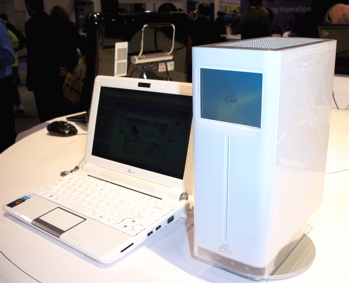
The latest in big small things from Asus and MSI
The headquarters of AsusTek Computer Inc., and Micro-Star International (MSI) are a mere 21 kilometers apart in Taiwan, and they seem as close as ever in the South hall of the Las Vegas Convention Center.
Both companies are known for their motherboards, and both are bringing the consumer electronics market a product line with a heavy emphasis on a tiny physical and environmental footprint, Asus with Eee and MSI with Wind.
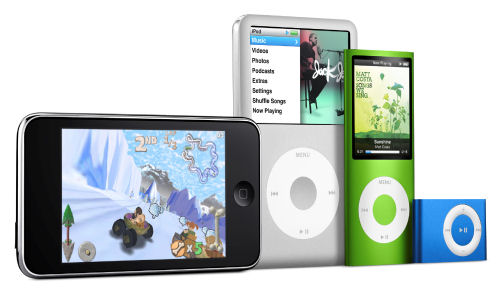
Is DRM on its last throes at last?
A lively set of CES panelists tore into the current state of digital-rights management for movies, music and other content. Apple fans probably felt their ears burning for much of it.
You might expect that the announcement this week that Apple's dumping most DRM for iTunes-purchased tracks would have been the focus of much of "How Can Digital Rights Management Make Sense?" Not really. Ted Cohen, managing partner of TAG Strategies and a longtime music-industry figure, said, "Apple says jump and the labels say how high; they have been pretty monolithic in their approach to digital music. The quid-pro-quo was digital pricing; that 99-cents-one-size-fits-all doesn't work as well as you'd think." The labels have new artists that could benefit from lower per-track pricing; Apple's been catching real flak from users tired of DRM; this was, said Cohen, "a moment when both sides of the table had something to give."
Analysis: The possible Palm Pre comeback
It is probably the story of this year's CES: A team that's down by several points, with time ticking away, coming back to within striking distance of winning the whole ball game.
That's Palm's circumstances this year at CES, as its Pre smartphone has clearly stolen the buzz in every topic of conversation. It's an important score, especially since Apple was perceived as not having a strong follow-up at Macworld this week, and since the other smartphone-related news from this year's show has not been major.
Verizon Wireless completes Alltel purchase, will begin rebranding in Q2
As expected, Verizon Wireless on Friday announced the completion of its purchase of Alltel, pushing it past AT&T as the largest wireless carrier in the United States. Rebranding of Alltel will begin in Q2 and last through Q3 of 2009.
Verizon paid about $5.9 billion for Alltel, which holds about $22.2 billion in debt. With Alltel's 12.9 million subscribers, Verizon will now serve 83.7 million total users, although 2.1 million will be lost when Verizon leaves certain markets as part of its agreement with the DOJ and FCC to gain approval for the merger.
Seagate evolves external storage into a media console
If you're the sort of person who likes to save lots of digital photos, video, and similar content to a hard disk drive, and would like to show it on a television rather than a computer monitor, here's the product for you.
The Seagate FreeAgent Theater HD media player, which works with a remote, is intended to work with the Seagate FreeAgent Go portable hard drive. The media player gets plugged into the TV once, and thereafter users can plug their FreeAgent Go drives into the media player without having to fumble with cables each time. It also includes a USB port for linking other non-Seagate FreeAgent Go devices.
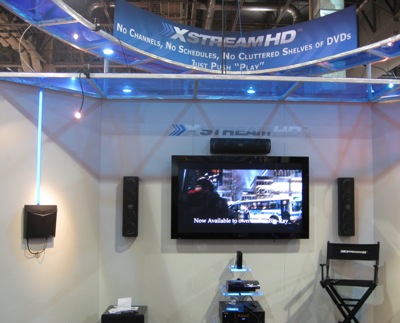
XStreamHD, not....quite....yet
XStreamHD, which offered a promising solution for satellite on-demand high definition video since last year was prepped to make a big announcement today, but something got in the way.
Betanews looked at XStreamHD at last year's CES, showing off its 1080p video and 7.1-channel lossless audio "transport network" for content providers. The main appeal of the service is that it can bring high-quality content to a user on demand without using the internet.
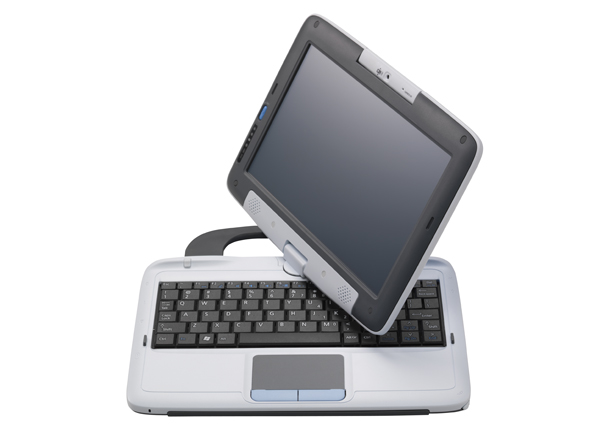
Intel turns Classmate PC into a convertible tablet for students
Intel has given its low-cost Classmate PC laptop a makeover at CES 2009, adding a touch screen and making the 8.9-inch display swivel 180 degrees and morph into a tablet PC.
Designed for students (sorry, Netbook fans), the Classmate PC is reportedly doing much better than OLPC's $100 laptop for developing markets, largely because Intel is farming out the manufacturing process to local OEMs. Intel scored its largest contract in Portugal thanks to the government's Magellan initiative, which aims to provide the laptops to all students in the country. Venezuela is working with Portugal to implement a similar program.

Dell claims design leadership with Adamo
Dell gathered together a modest audience this morning to make three announcements and then give a tantalizing look at the hotly-rumored Adamo luxury laptop line.

Live from the Intel keynote at CES 2009
It's not necessarily the PC processor company any more, as Intel's Atom processor for netbooks, and its media processors for CE media equipment, take more of a starring role at CES.
1:58pm PT: Two singers -- Adam Levine and the lead singer of Counting Crows -- both come to the stage, endorsing Intel's new program. Barrett encourages audience members to visit the new site and help fund technology programs for emerging nations.
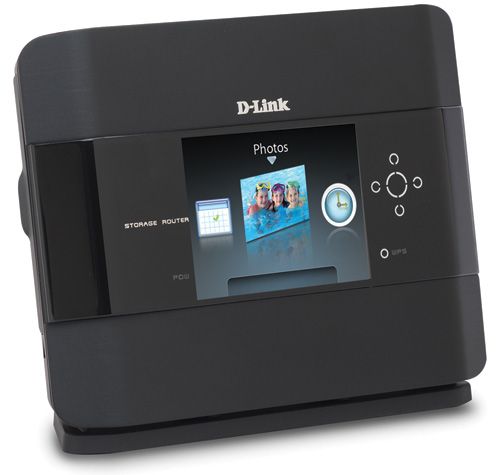
A once-unthinkable combo: a picture frame that hides a router
You know those dolls with the crocheted skirt your grandmother had on the back of the toilet, combining home decor with hiding the spare roll? Now D-Link hides a network router inside a digital picture frame.
The D-Link Xtreme N DIR-685 includes an 802.11n Wi-Fi router, an FTP server, network attached storage (how much, D-Link doesn't say), SharePort technology for sharing USB printers and scanners -- and a 3.2-inch LCD monitor that displays pictures, live streaming video and other Internet content, the weather, and network performance statistics and gauges.
Kindle to deliver your daily news, sports, money, and life
USA Today -- which veteran journalist Linda Ellerbee once described as the newspaper for people who find the evening news too complex -- is now available on Amazon's Kindle electronic reading device.
The paper is said to be the top-selling newspaper in the U.S., with a total average daily circulation of 2.3 million and a daily readership of 5.4 million.

Toshiba SSD creeps into an SAS
Showing the expansion of the use of flash memory into enterprise hardware, Toshiba said it was developing a solid-state drive using a SCSI (SAS) interface, making it suitable for high-performance enterprise storage.
Flash memory is solid state, is faster than traditional memory, uses less power, and produces less heat. But although it's earned a bad reputation lately among foundries for being cheap, compared to DRAM, it typically has been more expensive -- at least by the gigabyte -- and thus far it's been used primarily in laptops. On the other hand, servers that take less power and produce less heat could save data centers a lot of money.
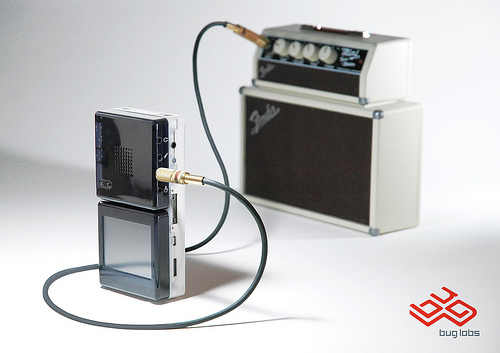
Bug Labs' build-your-own devices get sound and wireless
If you know the basics of Java programming, you can use Bug Labs' lengthening list of pre-built components -- which now includes audio and four types of wireless, for instance -- to build devices that do exactly what you want.
At CES this week, Bug Labs is announcing the addition of five more component modules to its earlier five.
Legislation would block the resurrection of TV's 'Fairness Doctrine'
If your YouTube video makes a statement, and it gets onto somebody's HDTV some day, is YouTube obligated to make time available for opposing viewpoints? Certainly not...or so you might think.
Since 1949, a law has existed on the US federal books mandating that broadcasters who grant time for certain viewpoints or opinions grant "equal time" to opposing viewpoints. This is the infamous Fairness Doctrine, which is still the law of the land -- according to a Supreme Court ruling -- although the federal mandate for the FCC to enforce that law was officially repealed in 1985.