
Free online games see sharp increase
comScore data released this week showed online casual gaming has reached 86 million users in 2008, an increase of 27% year over year. Additionally, the time individual users spend on gaming sites increased 42%.
Casual gaming is the category where Yahoo is definitely king, with 19.5 million unique visits in December, a 20% increase over 2007 and 4 million visits more than second place EA Online, and 6 million more than Disney Games, which holds third place.

Whitehouse.gov incorporates RDFa mashup lingo
President Obama's TIGR (Technology, Innovation and Government Reform) team has already extolled the merits of mashups, and now we're seeing the beginnings of mashup language RDFa take root on WhiteHouse.gov.
Viewing the site's copyright policy source reveals the use of RDFa tags such as xmlns,and property. These provide a set of XHTML attributes (metadata) to augment the visual data with information meant for other machines to read, recognize and catalog.

Google's rumored GDrive personal cloud service gets real description
Google's GDrive -- a rumored forthcoming service for storing personal software files on cloud-based Google servers -- looks likely to launch soon, if a reference in a file used by GooglePack is a good indication.
GDrive's "localized product category" is "online file backup and storage," according to the newly discovered description in the file. It also offers a two-line "localized short description" for the long anticipated GGDrive service, which is seen by some as ultimately eliminating the need for storing personal data on PC hard drives.
Copyright Board begrudgingly adopts revenue-based streaming royalties
With explanatory language that made it clear its judges didn't particularly favor anyone at all involved in this whole process, the CRB announced this week it will apply royalties to streaming net services based on revenue.
Though the royalty schemes themselves may not be exactly what streaming broadcasters asked for, especially with regard to its phraseology and methodology -- which makes corporate tax law look like an episode of "Sesame Street" by comparison -- the US Copyright Royalty Board published in its weekly news bulletin (dated Monday but released today) its revenue-based royalties schedules for online services that provide streaming music, online music stores that provide downloads, and ringtone services.

Hollywood studios join the streaming media parade
Studio 3 Networks, a joint venture of three major production groups, revealed today that Epix -- the name for which it had filed multiple trademark applications in early December, will be a streaming on demand Web service.
Originally thought to be a premium television channel and companion on demand service, Studio 3 president Mark Greenberg said yesterday that it will actually be the other way around: a Web service with a cable channel planned for the future. Studio 3 is a joint venture of Viacom and Paramount Pictures, MGM Studios and United Artists, and Lionsgate Films.

U.S. News Weekly: Now how much would you pay?
This week, the publishers of U.S. News and World Report announced it's launching a publishing experiment that's been tried before: a weekly edition of its now-biweekly print news service in PDF format, for subscribers willing to pay about $20 per year.
Already, the concept has been given a lot of guff elsewhere on the Web. The prevailing word thus far appears to be that no one wants to pay for news any more, and why should they? Information, after all, "wants to be free."

Adobe claims 100 million AIR installs...Where's Silverlight?
Yesterday at a conference in Japan, Adobe announced it has received an independent assessment of the worldwide installed base for its Web platforms. A Millward Brown survey estimates that Flash has been installed on 99% of the world's Internet-enabled PCs, leading Adobe to estimate that Flash Player 10 by itself will break the 80% penetration mark by the end of Q2 2009.
Some 100 million PCs are believed to have successfully installed Adobe's AIR runtime platform -- and by "successfully," the company means, it's running and active and without trouble. That's based on the company's own statistics about downloads.
'Google for films' site helps Britons find media
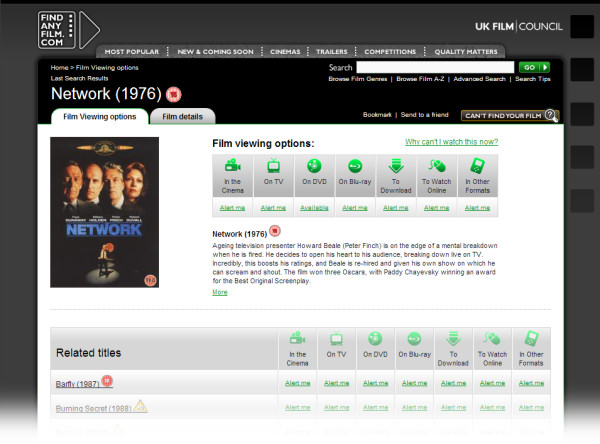
A "Google for films" type of search engine site just rolled out this week lets you quickly peruse a database of 60,000 titles to find movies for downloading, in cinemas, to watch online, and on TV, standard DVD, and Blu-ray.
In a quick visit to the FindAnyFilm.com site today, for example, Betanews confirmed that The Dark Knight is available in all of these categories, whereas Slumdog Millionaire -- another box office draw -- can still be seen only in cinemas.

The rumored Skype sale by eBay: Much ado with little to go by
Commentary is swirling in the blogsphere this week over the prospect of eBay selling its VoIP property Skype to an acquirer. But does the online auctioneer really have some sort of "plan" in that direction?
Much of the media appears not at all convinced that this is so, despite all the attention paid to the rumors.

Fennec coming to HTC Touch Pro
In Mozilla's weekly project meeting yesterday, updates to mobile browser Fennec were discussed, and the M1 milestone release target for Windows Mobile was noted.
According to the meeting's minutes: "We are targeting a Milestone release for the first week of February, targeting the HTC touch pro. We are two patches away from the meta goal of building from trunk. The tools changes have review from dougt, and are waiting for review from ted, who has promised review by the end of the week. NSPR changes are waiting for review from Nelson, who asked for and received a patch against NSPR trunk."

Jimmy Wales wants Wikipedia edit flags
It appears that last week's Inauguration Day uproar over Ted Kennedy and Robert Byrd's health has ended Jimmy Wales' patience with not having the Flagged Revisions options switched on at Wikipedia.
During a post-Inaugural luncheon, Senator Kennedy was taken ill and Senator Byrd left the room in obvious distress. Both men subsequently recovered, but for a few minutes, Wikipedia said they had died -- much to the chagrin of Wales, Wikipedia's founder.
Symantec launches beta of GoEverywhere cloud workspace
Symantec today opened the first beta of its GoEverywhere service, a browser-accessible cloud workspace that centralizes user data from a variety of cloud services and makes them available through a single interface and single user ID and password. GoEverywhere features more than 100 of the popular communications and productivity apps available on the Web today, and it could be described as something of a cloud-based virtual machine. Interested users can sign up on goeverywhere.com to participate in the free beta.
Wired.com discovers Google Docs flaw, but that's not the only one
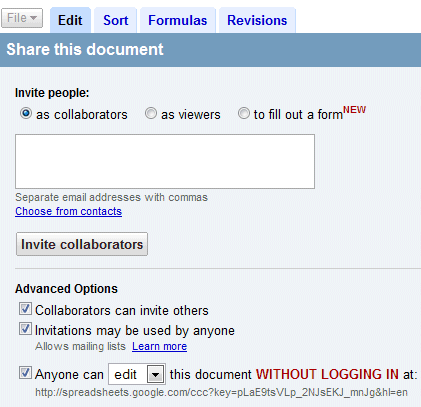
A writer at Wired.com this week pointed to a document editing issue in Google Apps, and that's just the latest in a list of security holes -- of varying severity -- uncovered by users of Google's suite.
Other users have complained, for example, about Google document ownership getting assigned to the wrong people, an inability to delete images of Google documents, and the lack of SSL encryption for docs published in the Standard Edition.

Cloud-based document sharing service SugarSync 1.5 released
Sharpcast began rolling out the 1.5 version of its cross-platform synching service SugarSync today. The upgrade includes the new "shared folders" feature, which adds a document collaboration aspect to the nearly one-year old sync service.
SugarSync is a subscription cloud service that makes documents and files remotely accessible through synched Windows and Mac PCs or through mobile handsets including iPhone and BlackBerry. Current subscribers may not receive the SugarSync Manager upgrade until Monday or Tuesday, but the shared folders feature in the Web interface is available to all immediately.

MSN Mobile Music timidly tests the English Channel with DRM
MSN Mobile Music, a browser-based music shop designed for mobile handsets and completely unrelated to Zune marketplace was formally launched in the UK this week. Microsoft may have taken a step backward by protecting downloads with DRM.
The store is run by VidZone Digital Media and features .WMA downloads, ringtones, and video content from three of the "big four" major labels (Universal Music Group is not yet in.) Single songs cost £1.50, videos cost £2 and ringtones go for £3.