
Blockchain startups raise $290 million worldwide
Blockchain and bitcoin start-ups have raised almost $300 million in funding in the first half of 2016, Juniper Research claims. This goes to show just how important the new way of doing business and paying for goods and services is.
There are more than 30 startups in the world which Juniper looked at for this research.
Airbnb's valuation reaches $30 billion
Airbnb, the home rental startup, is raising another $850 million (£651m), according to a new report by Bloomberg, at a valuation of $30 billion, making it the second most valuable start-up, right behind the $68-billion-worth car-sharing Uber.
The document, filed with the state of Delaware, does not show who the investors are, and Airbnb has yet to make a comment.
AI will boost fintech revenue by 960 percent
Earnings created by the use of artificial intelligence (AI) in financial technology (fintech) will skyrocket in the next five years, according to new reports by Juniper Research.
The researchers have said that, by 2021, we should expect a jump of 960 percent, with revenues hitting $17 billion (£12.95bn).

Google loses $895 million on moonshot projects
Google’s parent company Alphabet is feeling pressure after the search engine’s so-called moonshot projects have lost the company nearly $900 million in just three months. Alphabet has invested heavily into a number of projects that may or may not even become actual products due to their experimental nature.
The company’s moonshot projects and ideas include self-driving-cars, its superfast fibre internet and smart home technology. Though these ideas may eventually pay off, currently they are costing Google a great deal more than it is earning in sales.

Security pros find it hard to measure ROI on spending
The majority of IT security experts actually struggle to measure the return on investment in security measures, Tenable Network Security says.
Based on a survey of 250 IT security professionals, conducted during the Infosecurity Europe 2016 summit, it says that the majority can only measure the return on less than 25 percent of their security spend.
Apple revenue and iPhone sales are down
Apple today announced its financial report for Q3 FY2016 (Q2 CY2016), revealing a drop in revenue and falling iPhone sales compared to both the previous quarter and this time last year.
Apple posted quarterly revenue of $42.4 billion and a net income of $7.8 billion, with the bulk (nearly $18 billion) coming from the Americas. This revenue is compared to $50.5 billion in Q2 FY2016 and $49.6 billion in Q3 FY2015, drops of 16 percent and 15 percent respectively.

Europol's No More Ransom website helps ransomware victims unlock their files
To help curb the global rise of ransomware, the European police agency Europol has decided to launch a new initiative and website to put victims of an attack in touch with the police.
The initiative will be called "No More Ransom" and will be coordinated by Europol, but will also be receiving help from the Dutch national police, Intel Security and Kaspersky Lab.

US government could save billions by modernizing its technology
The US government could save $5.8 billion in technology cost, and at the same time modernize and improve the efficiency of its systems. This is according to the Information Services Group, a technology insights, market intelligence and advisory services company.
Today, at the headquarters of the General Services Administration, it released a report, together with the Commission on IT Cost, Opportunity, Strategy and Transparency (IT COST).
Intel's Q2 2016 by the numbers: $13.5 billion in revenue, $1.3 billion profit
Intel has certainly made progress on its restructuring initiative to focus on the cloud and the internet of things (IoT), but these key businesses have failed to deliver significant enough growth to boost slowing chip sales.
The company reports revenue of $13.5 billion for Q2 2016, which is a three percent increase from the previous year. However, profit for the latest quarter is down by more than half (51 percent) to $1.3 billion, which is primarily a result of high restructuring costs of $1.4 billion.
Average ransomware demand doubles in six months
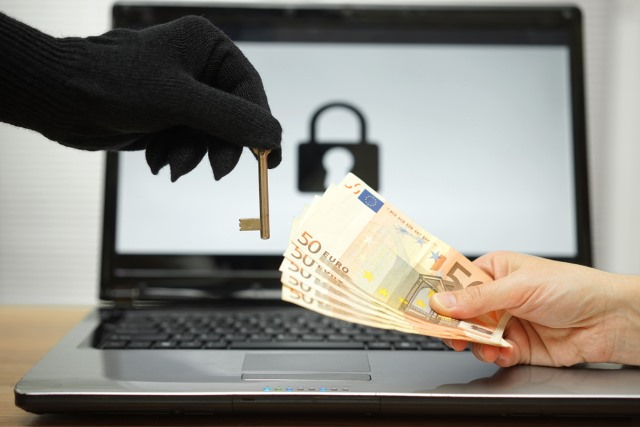
Remember that recent article I wrote about how people value their online data much more than what extortionists are asking for when they hit them with ransomware?
Well, extortionists seem to have caught on. Newest research paper from Symantec tells us that the average ransom demand is now £525, up from £223 at the end of last year.

Businesses can minimize software costs by 30 percent
Businesses can cut software costs by 30 percent if they stick to software management best practices, Gartner has announced -- research director Hank Marquis says potential savings are just "too large to ignore". Companies will spend $332 billion on it in 2016, so yes, it is a pretty big deal.
There are three best practices organizations can use to achieve these savings: optimizing software configurations, recycling licenses and using software asset management (SAM) tools.

Stampedo ransomware available for just $39
A new variant of ransomware has been found for sale on the dark web for an incredibly low price that allows its victims 96 hours to pay a fee.
This new piece of ransomware is called Stampedo and it is available for only $39 which includes a lifetime license. Once it has infected a user’s system, a fee must be paid within the allotted time in order to regain access. If a user fails to pay the fee, Stampedo begins to delete random files on their computer within six hour intervals.
Ransomware victims pay less than they expect
If you’re a cyber-criminal looking to enter the ransomware game, but not sure how much money you should demand for the unlocking of a victim’s files, don’t worry. Kaspersky Lab has done the research for you.
The security firm, together with B2B International, says people value their smartphone data, on average, at $682. In 39 percent of cases, the figure exceeds $1,000. On the other hand, cyber-criminals which have managed to lock a victim’s device through ransomware, usually demand $300.

Our private data is worth less than we think
Brits think their personal data is really, really valuable. There is nothing wrong with that, and private data should be valued highly, and guarded as such. However, once criminals get a hold of such data, they’ll sell it for such a low price you simply won't believe.
According to a new TotallyMoney.com report, based on a poll of 1,000 consumers, we value an email address at £983. In reality, it is being sold for five pence. A similar thing is with the browsing history. Its actual price on the black market is a ridiculous £0.0014. On average, we value it at £934.

Cost is not the main reason behind cloud adoption
The notion that cloud computing solutions are being driven primarily by reduced costs, and that they’re causing IT teams to shrink everywhere seems to be significantly in the myths area.
A new report by Six Degrees Group (6DG) points out that there are other, more important reasons, businesses opt for cloud solutions, and that teams are not necessarily shrinking, but reshaping mostly.