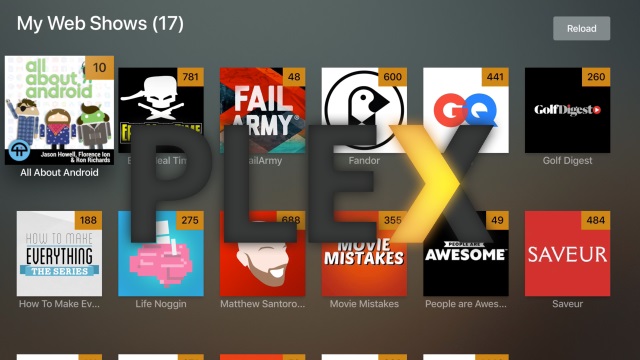
Plex launches beta version of Plex Web Shows offering on-demand streaming shows for free
Continuing to increase its appeal to cord-cutters, Plex has announced a new on-demand streaming feature. Plex Web Shows is launching in beta and includes curated content from independent creators like Epic Meal Time, ASAPscience, Household Hacker, People are Awesome, and The Pet Collective, as well as brands including GQ, Saveur, Epicurious, and Pitchfork.
Plex Web Shows works across a range of devices -- web, iOS, Android, Apple TV, Windows, macOS and more -- and does not require either a Plex server or a paid Plex subscription. Like Plex News and Plex Podcasts, content is not only curated, but includes smart, custom recommendations based on preferences and watching history.
Google launches new .page TLD
Google has announced the availability of a new TLD (top-level domain) from its own Google Registry. Joining the likes of .com and .org comes .page which is described as "a new opportunity for anyone to build an online presence".
With security in mind, Google says that all .page websites require an SSL certificate. For businesses and individuals, the race is now on to grab the domain they want before it is snapped up by someone else.
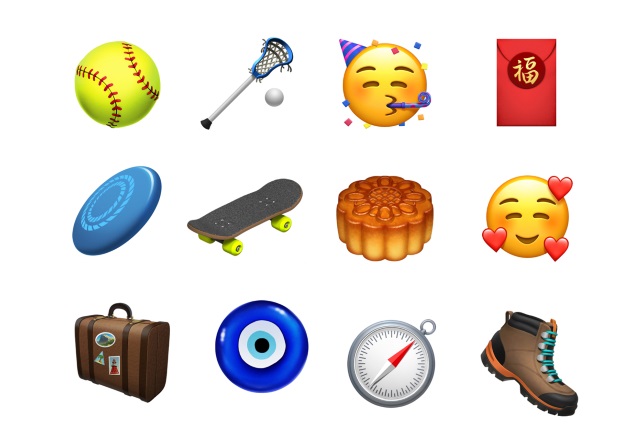
iOS 12.1 beta 2 fixes iPhone charging problem and adds scores of new emoji
Apple has released the second beta version of iOS 12.1 and while the iPhone-maker is heralding the including of more than 70 new emoji, the bigger news is that it includes a fix for the charging problem users have been complaining about.
When owners of the new iPhone XS and iPhone XS Max started to complain that their handsets were not charging, it was initially thought there was a problem with the latest hardware. But it seems that the problem was actually down to iOS 12.
Google's new Voice Access app lets you control your Android phone with your voice
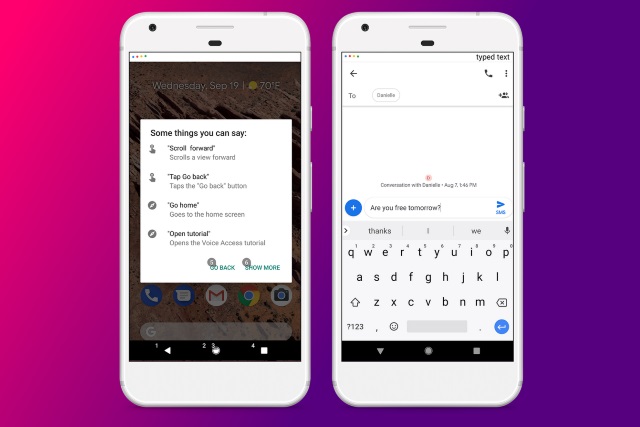
Google has a new app that allows for full control of an Android phone with your voice -- Voice Access. While it has been possible to perform simple actions such as switching apps and writing messages, the ability to interact with on-screen elements is something that has been missing.
Pitched as an accessibility tool, Voice Access fills in many gaps in Android's voice control system, making it possible to navigate apps, edit text and much more.
Facebook hack update: Attackers did not use stolen tokens to access other sites and apps
Since the revelation that a "security issue" allowed hackers to steal access tokens to view people's Facebook accounts, the company has provided a further update about the incident. Facebook has already provided one update about the attack, but now the investigation has progressed and the social network is trying to offer reassurances to those who have understandable concerns about security.
The company says that the attackers did not access any apps that make use of Facebook Login, the system that makes it possible to sign into other accounts and services with Facebook credentials.
Facebook rolls out new tools to help those suffering bullying and harassment
The problems of bullying, harassment and trolling on social media are getting worse all of the time and the likes of Twitter and Facebook are under pressure to offer tools and protection to their users. Today Facebook unveils new options to help empower those who fall victim to such attacks.
One new feature provides a way to report or delete multiple posts at once, and there is also a way to report bullying on behalf of someone else. Facebook is introducing new protections for public figures -- who frequently find themselves under attack -- and is also pushing education programs.
What is the Presidential Alert text from the National Wireless Emergency Alert System?
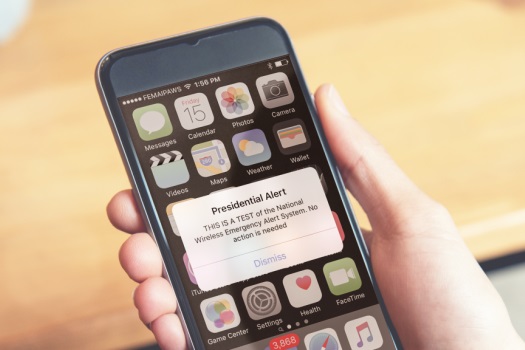
Today -- Wednesday October 3 -- your phone will receive a text message; assuming you're in the US, that is, and use Verizon, T-Mobile, AT&T or Sprint as your carrier. The text should arrive from 11:18AM PT / 2:18PM ET, and it will feature the dramatic heading of Presidential Alert.
You may be reading this because you wonder what on Earth is going on -- particularly if your phone has made a strange noise -- but there's nothing to worry about. Not this time, anyway.
Android rooting tool SuperSU disappears from Play Store
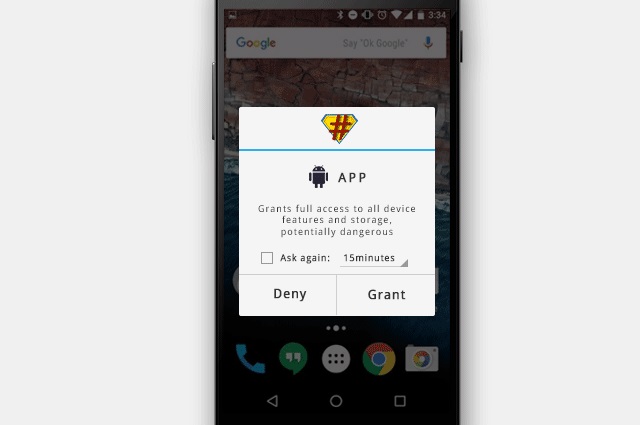
If you haven't already made the jump to Magisk to cater for your handset rooting needs, now is very much the time to do so. The long-popular SuperSU has been removed from the Google Play Store, meaning one of the most popular rooting tools has been lost.
The disappearance is not entirely surprising as SuperSU has not been updated for some time and plenty of other root apps have grown in popularity -- but it will still come as a disappointment for its many fans.
How to access Google's secret text adventure game
Google is well known for hiding Easter eggs in its software and tools, and a new little treat has just been discovered. Hidden in Google Chrome's developer console is a text adventure game.
While this is not exactly The Hitchhiker's Guide to the Galaxy, and it's unlikely to draw you away from Fortnite or Assassin's Creed, the game is a simple delight like Chrome's jumping dinosaur. Here's how to access it.
Google is trying to make Chrome extensions safer with new Chrome Web Store review process and permission controls
Extensions are a great way to increase the capabilities of your web browser, but they can also be the source of problems. Malicious extensions can be a serious headache, and this is something that Chrome users know more than most. Now Google is looking to improve security.
The company has already promised that with Chrome 70 it is going to give users more privacy controls, and today it announced that this version of the browser will also introduce permission controls extensions. On top of this Google is introducing a new review process for extensions submitted to the Chrome Web Store, as well as placing a ban on extensions with obfuscated code.

Microsoft re-open-sources early versions of MS-DOS on GitHub
Back in 2014, Microsoft gave the source code for MS-DOS 1.25 and MS-DOS 2.0 to the Computer History Museum. Now -- in a move it describes as "re-open-sourcing" -- the company has pushed the code to GitHub for all to see.
Dating from mid-1983, the source code may moisten the eyes of anyone who remembers the days of text-based operating systems, and it gives an interesting glimpse into the world of software development a few decades ago.

Sign up with The Lab and you could get a OnePlus 6T early
If you're a fan of OnePlus handsets, you might like the idea of getting your hands on the OnePlus 6T not only free of charge, but before the official launch.
As part of its marketing program, OnePlus has opened up The Lab -- as it has done with previous models of its phones. This gives you the opportunity to sign up to review the phone, which means you'll be given one for free!
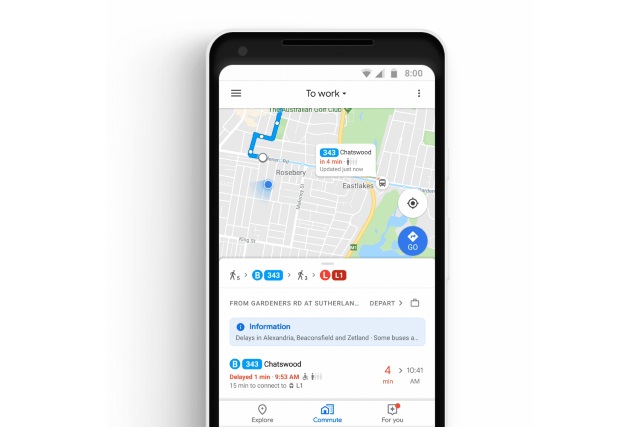
Major Google Maps update brings real-time public transport updates, music control, and more
Google is pushing out a big update to its Google Maps app with the aim of making your daily commute easier. One of the biggest additions is support for mixed-mode commutes -- those journeys that involve multiple modes of transport -- and to help with this, there's also real-time information about the location of buses and trains.
But it doesn't end there. Google Maps now also supports Spotify, Apple Music, and Google Play Music podcast and music playback to help keep you entertained while you travel.

Tim Berners-Lee launches open source project Solid to decentralize the web and place users in control of data
Tim Berners-Lee is famous for inventing the world wide web, and now he's ready to take things to the next level with an ambitious open source project called Solid. Noting that the web has become "an engine of inequity and division", Berners-Lee wants to restore the power and agency of individuals online and move the balance of power away from "powerful forces who use it for their own agendas".
Solid is not a completely new venture. Berners-Lee has been working on it for some time, and it is built on the existing web as we know it. Where it differs is that "it gives every user a choice about where data is stored, which specific people and groups can access select elements, and which apps you use". This is about decentralizing the web.
Microsoft stops development of touch-friendly Office apps for Windows
Microsoft has confirmed that it is no longer developing the touch-friendly versions of Office apps for Windows
The Word Mobile, Excel Mobile, and PowerPoint Mobile apps found in the Microsoft Store first appeared for Windows 8.1, and development has continued with the release of Windows 10. But now this is changing, with Microsoft saying it wants to focus on the Win32, web, iOS and Android versions instead.