
How the cloud powers enterprise mobility efforts
As enterprise technology advances and more companies turn toward non-traditional, work-from-anywhere solutions, cloud software is rapidly becoming the management platform of choice for enterprise mobility efforts. This digital migration to the cloud is accelerating so quickly that, by 2019, 90 percent of all mobile data traffic is predicted to be generated by cloud software.
Since businesses are heavily leveraging cloud technology to manage their enterprise mobility programs, software developers are evolving to meet this growing contemporary demand. As a result, almost all of today’s cloud solutions are being developed with a mobile-first mindset -- and these solutions are bringing big returns to the organizations that adopt and embrace them.

Let's talk about Value as a Service
It is already common knowledge that many traditional product companies are converting the delivery of their offerings to the as-a-service model. We are now approaching the final frontier of that model: Value as a Service (VaaS). As we shift to VaaS, customers will focus less on the delivery model and more on the value delivered.
Effectively delivering VaaS requires a new kind of relationship between vendors and customers, one that is outcome-based, rather than a negotiated, transactional exchange of goods and services for money. It’s more of a partnership in which both parties are empowered to support each other as well as hold each other accountable for achieving measurable results they’ve both agreed upon.

Brexit has a major impact on UK tech jobs
We don't have to wait any longer to see the effects of Brexit on the tech job market in the country -- Hired.co.uk already has some data for us. And it's exactly as you might have imagined it.
According to the hiring site's report, the number of foreign tech workers in the UK is now down 50 percent. The rate at which foreign workers are now accepting UK-based roles has also dropped by a fifth (20 percent). But it’s not just the employees that are declining offers, businesses are also sending out less.
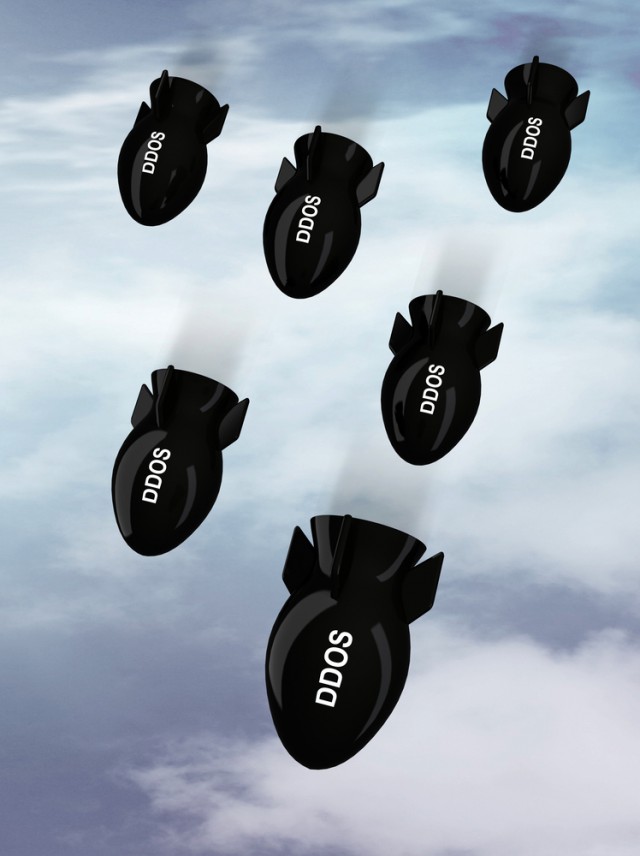
One for the history books: 2016's year in DDoS attacks
While 2016 certainly seemed to be one bad news item after the other, the year might not have been as dire as everyone thought. On the good news front, researchers made huge strides in precision treatments for cancer and prevention methods for Alzheimer’s, the Cubbies finally won the World Series, LeBron brought a championship to Cleveland, and Leonardo DiCaprio got his Oscar.
You know who else had a great year? The people behind DDoS attacks. They really rocked it in 2016 -- but of course that’s terrible news for everyone else.

Automation will transform accountants' jobs in the next five years
Do you think automation will change your job in the next five years? Accountants seem to think so.
Pretty much every accountant believes their work will be either partly or completely automated by 2022. A new report by FreeAgent says 96 percent of accountants agree with this claim, and just three percent say they don’t think automation will change their work.

VR will soon go mainstream on smartphones
Soon every smartphone will be VR-enabled. This will open up the virtual floodgates, making video-based VR experiences more affordable and accessible. Immersive VR will go mainstream not on laptops, smart TVs or games consoles but on mobiles.
Affordable headsets such as Samsung Gear VR and Google Daydream View are already gaining traction with early adopters for VR gaming and content streaming via apps such as Netflix VR and HBO Now VR. But this is just the tip of the iceberg. As well as media and entertainment, there is a huge market opportunity for organizations in other sectors to boost engagement with video-based, mobile VR content: fly-on-the-wall corporate training and company events, real estate sales, retail, and virtual classrooms.

Over-reliance on one defensive layer leads to ransomware attacks: prepare early, check often
Since its first appearance more than 20 years ago, ransomware has become one of the most discussed cyber threats -- affecting companies of all sizes, across all industries.
We cannot go a couple of days without seeing a new breach headline as a result of a ransomware attack (today's attack on healthcare is a prime example). The threat environment is becoming more dangerous because enterprises are not adequately prepared to protect, defend, respond or remediate.

Growth of BYOD proves it's no longer an optional strategy
If you study graphs related to the adoption rate of BYOD and BYOD spending, you’ll notice that it’s pretty steep. While growth may have been gradual from 2010 through 2014, adoption rates have skyrocketed over the last couple of years.
Enterprises and small businesses alike are finally realizing that BYOD is no longer an optional strategy if they want to remain competitive.

Enterprises that don't embrace automation will cease to exist
Automate or perish. That is essentially what a new study by BMC Software, an IT solutions for the digital enterprise company, is saying. It polled IT decision makers for its new report and came to the conclusion that almost three quarters (73 percent) agree with the above-mentioned statement.
ITDMs believe that those organizations which fail to adapt automation within the next five years will cease to exist in 10. More than nine in ten (92 percent) said that demands for new sources of revenue, unique competitive advantage, and operational excellence are creating "enormous pressure to compete digitally" to earn the trust of employees, partners and, finally, customers.

Why Access Rights Management should be an enterprise priority
In some ways, the new research claiming that people are still the biggest threat to cyber security is hardly surprising; this has been the case for years now. What is surprising is that even with the GDPR only one year away, this hasn't moved on. It seems that organizations are aware of the problem, which of course is a good thing, but isn't it time we began to see research saying that people aren't a threat anymore because organizations have secured their systems against these types of threats and educated their workforces in the process. That kind of research would be much more heartening. Especially so when other research suggests that there's an IT skills shortage coming soon that could make it even more difficult for organizations to secure themselves against cyber threats.
The Institute of Information Security Professionals (IISP) is behind the new research claiming that people are still the biggest threat to cyber security. The research suggests that people are still not cautious enough about phishing scams such as links or attachments in emails or about visiting websites that might not be safe. The IISP also suggests that there is a lack of technical skill that causes problems and interestingly, it also claims that another problem is with organizations making poor critical decisions around strategy and budgets, suggesting that organizations are not focused on the right ways to prevent cyber attacks.

Digital inclusion in developing markets: Is satellite Internet the answer?
In today’s era of globalization and ever increasing interconnectedness, the demand for affordable connectivity is growing around the world. The ability to have access to an affordable means of communication is essential for economic and social development across the globe.
Today, we take for granted the free access to information almost anywhere and at any time. Thanks to mobile connectivity we are able to communicate with people across the world at the tap of our fingertips.

One in four European businesses don't know GDPR is coming
Every fourth European company has no idea GDPR is coming its way. Consequently, they don’t know about the dangers and the draconic fines that follow those that don’t comply with the upcoming regulation.
This is according to a new report by IDC Research, based on a poll of 700 European companies. More than half (52 percent) don’t know what the impact on their organization is.

Majority of UK workers blindly open email attachments
Come on, people. We’re almost halfway through 2017, and you’re still opening shady email attachments? Glasswall Solutions seems to think so. As a matter of fact, its new report says UK workers are "too trusting" of email attachments.
More than half, 58 percent, "blindly" open email attachments from unknown sources. Three quarters, 75 percent, recognize how often they get shady emails. Just 16 percent thinks they should be worried about a cyber-attack.

Digital transformation is powerful, but also dangerous
More than two thirds of network managers in the UK consider the digital strategy an important part in tackling competition. However, almost half (49 percent) look at legacy technologies as something that’s holding them back in this endeavor.
This is according to a new report by Axians UK, released earlier today.

Automation, IoT and VR will improve sales and customer experiences
Retail, wholesale and manufacturing companies are turning to Internet of Things (IoT), Automation and Virtual Reality (VR) to drive sales and improve customer experiences.
This is according to a new report by global ecommerce consultancy firm Salmon, which says almost two thirds (61 percent) of European companies in above mentioned industries are investing and believing in IoT.