
Windows 7 is coming: Don't upgrade
To upgrade or not to upgrade: It's the issue of the moment for Windows users everywhere as the hype machine for the October 22 Windows 7 release gathers steam. And as we gaze at our existing machines, either running a snappy but outdated XP or a pokey but still slick looking Vista, and wonder whether we should be planning a late night trip to the big box store for our very own copy, I've got one word for you: Stop.
There are plenty of reasons why you'd want to refresh your existing machine with a cool new operating system. Pre-release versions of Windows 7 have displayed impressive performance, stability, and usability. Device compatibility -- a major bugaboo early on for the ill-starred Vista -- is much improved. It's smaller and lighter than the OS it ostensibly replaces, a nice reversal from the years-long tidal wave of ever-more-bloated products from the world's largest software vendor. Win7 scales better and can take advantage of more memory and multicore processors. That the new OS looks cool enough to not embarrass Windows fans when they run into Mac zealots at parties is an added bonus.

RealPlayer launches SP, letting users copy YouTube vids
Let's face it: RealPlayer hasn't been a viable media player for almost ten years. As Technologizer's David Worthington wrote for Betanews in 2000, "A once useful media player's standard installation was transformed into a bloated menagerie of components and add-ons with the release of RealPlayer 7. These needlessly suck away system resources and add useless functionality..."
Today, RealNetworks finds itself competing not so much against Windows Media Player as with the likes of DownloadHelper. Real is now working to generate interest among free media consuming types with the launch of RealPlayer SP, which lets users download unprotected Flash videos to keep.
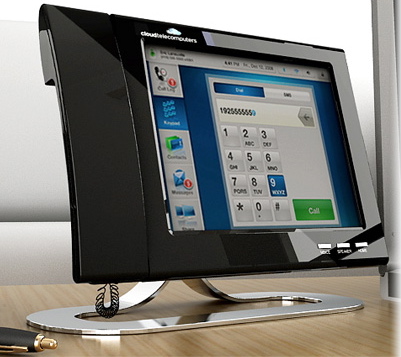
Glass: Android for office phones
Earlier this year, we took a look at a desktop phone running Android built by California startup Touch Revolution. While that device provided a look into the potential application of the OS in fixed telephony, the devices we saw were running a version of Android almost indistinguishable from the publicly available build.
Today, Cloud Telecomputers has debuted a completely unique build of Android as a part of its Glass "telecomputer" platform. The company's reference design has the Android environment running on a TI OMAP processor, and all telephony (VoIP and DSP, SIP Stack and Voice Codecs) being handled by a separate Audiocodes processor.
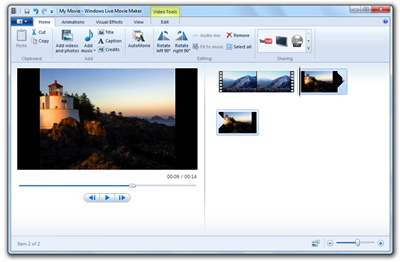
New Windows Live Movie Maker debuts, says good-bye to XP for good
The Windows Live team announced this afternoon that Windows Live Movie Maker, the free video editing software component of Windows Live Essentials has come out of beta and is available for download.
Windows Live Movie Maker opened in beta last year, and has been designed to provide a quick and easy method of cutting video clips rather than a full editing suite.
What is the Microsoft Lifestyle?
Since January, when I switched to Windows 7 (Beta and later Release Candidate), I have sought an answer to that question. To my surprise, I have yet to find a Microsoft lifestyle -- not one that fits me. So I ask Betanews readers: What is the Microsoft lifestyle? What is your Microsoft lifestyle? Please answer in comments.
Perhaps Microsoft's lifestyle is enterprise computing, something I don't participate in. I've never worked for a company that required SharePoint and often, because of older deployed software, neither has there been mandate to use Exchange Server. When I was an analyst, writing in Word was a must, but not before or since.

MySpace to acquire music discovery service iLike
It was no secret that social network MySpace was looking to acquire music discovery service iLike, thanks to reports earlier this week. Today, however, it was made official.
Financial terms of the deal were not disclosed, but rumors this week valued iLike at around $20 million after subtracting the cost MySpace will incur from maintaining the entire iLike staff, which includes CEO Ali Partovi, President Hadi Partovi, CTO Nat Brown, and all 26 employees.

First PowerBuilder 12 public beta adds Visual Studio IDE, fully embraces .NET
Sign up for Sybase PowerBuilder 12 Beta 1 through Fileforum now.
In the early 1990s, before the introduction of the Web application upended the entire programming model, and businesses' local networks had yet to be connected to the Internet, a very serious battle took place in the emerging market of high-level client/server development systems. Microsoft helped legitimize that market with the introduction of Visual Basic, originally pushed toward businesses as a rapid business app development tool; and Borland helped blow the market wide open by devoting its Turbo Pascal expertise in a product called Delphi. But the seed product for this market had taken root the previous decade: a high-level interpreter with object-oriented foundation from Powersoft, called PowerBuilder.

NPD: 'Dumbphones' still rule, average phone buyer spends $87
Smartphones may be growing in popularity, but the market is still completely owned by feature phones, market research company NPD Group said today. According to the company's Mobile Phone Track service 72% of all new handsets sold in the second quarter were so-called "dumbphones."
This does represent a 5% decline for the quarter, when smartphones managed to increase their share by more than 47% (they now represent 28% of overall consumer phone sales). But there's still a long way to go before smartphones can lay claim to even half of the mobile phone market.

Two dual-mode satellite/cell phones in the pipeline for SkyTerra
As we saw earlier in the summer, Hybrid Satellite/Cell phones are almost here, and the American Recovery and Reinvestment Act is playing a major role in their advancement.
SkyTerra Safety Access, a subdivision of SkyTerra Communications (formerly Mobile Satellite Ventures), has applied for $37 million in funds from the National Telecommunications and Information Administration (NTIA) under the Act. The plan is for these funds to be used to develop and deploy two dual-mode Cell/Sat phones for the public safety sector.

ComScore: Bing the only search to gain US share in July
Usually when a new online product unveils an upgrade, its audience numbers see a bump for the first month, before subsiding and evening out. Last month, Bing's first usage share numbers from analysis firm comScore showed a little bump, but not much of one -- yet Microsoft made as much out of it as it could.
The news this month -- the first to show month-by-month progress since the changeover from Windows Live -- may actually be more encouraging for Microsoft: It gained half a point of usage share among US users for the month of July over June, at the same time when Google and Yahoo combined lost about as much.

DC Metro begins wireless signal improvement in underground stations
The Washington Metropolitan Area Transit Authority announced yesterday that the project to improve cellular service in Washington DC's Metro stations and tunnels began construction over the weekend, and will be completed on October 16.
The bill to expand wireless coverage in Washington DC's underground Metrorail stations was passed in October 2008, and broke the exclusive contract Verizon Wireless had with the DC Metro Transit Authority through its acquisition of Bell Atlantic Mobile Systems. Bell Atlantic Mobile signed the exclusivity contract with Metro in 1993.

Step one in the process: Microsoft files appeal of Word injunction
Almost everyone who has been observing the patent infringement case in US District Court in Eastern Texas surrounding Microsoft Word (Betanews correspondents included) have predicted that this is the opening round in a very long dance whose steps are pretty much pre-determined: The merits of Canadian software firm i4i's case seem questionable at the very least, and cases like this are typically either overturned on appeal or settled out of court. But one can't help feeling that there's an ever-so-slight chance of this being not really a dance but a train wreck in progress, the slim possibility that the ironically named i4i has found the one loophole in US patent law just waiting to be exploited: the notion that a heretofore unclaimed function that should seem obvious on its face, may not qualify as prior art for the sake of a patent challenge.
Yesterday, as first reported by the Seattle P-I, Microsoft filed its emergency motion for a stay of injunction, with the US Federal Circuit Court of Appeals. It could have filed a boilerplate appeal, simply saying the company has a viable case but needs time to present it. It didn't. Instead, it gave everyone including i4i a peek at the big cards it's willing to play, an advance look at the Supreme Court argument it's willing to make if the case should go that far.

HP fumbles its recovery as economic complexion changes
After CEO Mark Hurd led Hewlett-Packard through the aftermath of Carly Fiorina and then the boardroom scandals, you'd think it would have been prepared for the downturn in the global economy. But more than one factor surprised analysts today, in reading the early numbers from HP, the first one being this: Shipments of personal systems in the company's fiscal third quarter, ending last July, increased by 2% over Q3 2008, but revenue fell 18% in the same interval to $8.4 billion.
Conceivably, shipment rates overall should be permitted to slip between 8% and 10% this year. But that's for the overall market, which includes servers. In Enterprise and Servers, a key revenue category, revenue was down 23% to $3.7 billion. But you can see from the disparity between the two revenue figures that HP these days does more than two-thirds of its systems business with consumers, not businesses individual unit sales as opposed to volume business sales [an HP spokesperson asked Betanews for that clarification]. While HP omitted server shipment figures from its early numbers (those will probably have been squeezed out of the company by tomorrow morning), server shipments would have to have fallen by as much as 10%, we estimate, for HP's performance to be in keeping with the average overall shipment decline that analysts expect, assuming costs stay flat (and they're not -- they declined a bit in this last quarter).

Android grows too large for G1
Even though T-Mobile continues to deny it, the Android community has resigned to the fact that the T-Mobile G1 (also known as the HTC Dream) will not receive any significant upgrades beyond "Cupcake," the Android software update from last April.
The simple fact is that there is not enough memory on the G1 to support a much bigger OS, and even equipping the device with Cupcake was reportedly problematic. "We knew that internal flash space was going to be very tight on the G1 and we kept the system partition tight on purpose," Jean-Baptiste Queru, a software engineer at Google said on Twitter last week.
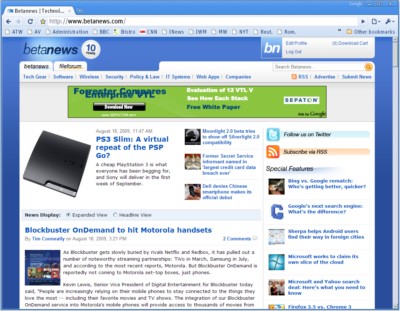
First Google Chrome 4 reveals the beginnings of cloud synchronization
Download Google Chrome Dev channel build 4.0.201.1 from Fileforum now.
With Google, one tends to learn the meanings and intentions behind the many events in its development programs pretty much as they happen. For example, the distinctions between what goes on in the Chrome browser's development channel ("Dev") and what happens in the beta channel, have frequently been explained to us after the fact.