
Is your business ready for the cashless economy?
New research findings reveal that UK shoppers are dreaming of a cashless Christmas -- well, when it comes to their spending habits that is.
The survey, conducted by EE, found that 80 percent of shoppers this festive season expect to pay for any transaction using a credit or debit card. Furthermore, a quarter said they would abandon transactions if they couldn’t use their cards.

Microsoft's promise of spying warnings is an empty gesture
Yesterday we reported that Microsoft will warn users of 'state-sponsored' attacks on their accounts. Sounds great, but does it actually mean anything? Is it a useful service by the tech giant, or just PR bluster?
Considering the covert nature of spying and digital attacks, coupled with legislation around the world, it seems likely that the announcement is little more than meaningless hot air. In the UK, for instance, the planned snooper's charter would make it illegal for companies to alert users to hacking and surveillance by British agencies.

Clueless UK government wants you to help define its digital strategy
The UK government has been heavily criticized for the way it is attempting to control the way in which people use the internet -- blocking porn, unfettered surveillance and so on. The snooper's carter in particular has been the subject of much disapproval, and in an apparent bid to avoid further complaints, the government is now crowdsourcing ideas for internet policies.
In an article entitled UK Digital Strategy - the next frontier in our digital revolution (a document replete with language and references akin to an elderly parent talking about some aspect of modern culture they don't quite understand), Digital Economy Minister Ed Vaizey explains that he is looking for "ideas from public and industry on the UK's digital strategy".

UK's average Internet speed grows by 10 percent in 2015
All European countries surveyed recently, experienced a quarterly increase in average connection speeds, with double digit gains being posted by Norway (15 percent) and the UK (10 percent). Year-over-year it was up by 21 percent in the United Kingdom. Those are the results of a new report by Akamai, the content delivery network.
Global average connection speed has increased slightly (0.2 percent) to 5.1 Mbps from the second quarter, accounting for a 14 percent increase year-over-year, the report said.

All I want for Christmas is porn (a little bit NSFW)
Christmas can be -- scratch that, it is -- a very stressful time of year, and people seek solace in a variety of things... one of them being porn. But when it comes to self-administered stress relief, just what are people around the world using as visual aids to assist stagnant imaginations?
If this is a question that has been bothering you over the festive period, wonder no more for Pornhub has the answers! There is huge scope for sexing up Christmas, and the porn site's latest report into festive shows that XXX fans just can’t get enough of Santa's naughty elves, dirty helpers, and imagining Mr and Mrs Claus engaging in all manner of sexy shenanigans. Forget Happy Christmas, this is more like fappy Christmas... or XXXmas. Spoiler: there's no Jesus porn.

UK government working with eBay and Amazon to catch tax-evading sellers
When it comes to tax avoidance, it's usually big companies that come under the spotlight. Of course, there is nothing -- legally speaking -- wrong with tax avoidance, but it's a very different story with tax evasion. With eBay and Amazon providing a platform for vendors around the world, it is perhaps little surprise that the retail sites are home to a large number of tax evaders.
An investigation by the Guardian found that there are a huge number of overseas sellers who fail to pay VAT in the UK. HM Revenue & Customs is currently looking into whether eBay and Amazon could be held responsible for the tax bills, or what could be done to track down offenders.

Broadband ads are confusing and misleading
People in the UK are confused by broadband advertising that can make it difficult to determine the best deals. The charity Citizens Advice says that most people find the ads too confusing and felt overwhelmed with information, making the task of comparing packages that much harder.
CA's findings suggest that more than half of people looking at broadband deals could not identify the cheapest deal available to them, at least in part because line rental costs were not always made clear. ISPs are accused of misleading customers, using headline-grabbing deal prices that do not truly reflect what the costs are.

New HTTP 451 error indicates pages have been blocked or censored
It's not every day that a new HTTP error code is introduced -- there are, after all, a limit to the number that could possibly be needed -- but it may not be long before you encounter a 451 error. The code has been made a new standard by the Internet Engineering Task Force (IETF) to indicate when sites have been taken down for legal reasons.
Described as an 'HTTP Status Code to Report Legal Obstacles', it is hoped that 451 errors will introduce a new level of transparency about sites that have been killed by governments or law enforcement agencies. In some ways it is an extension of the 403 (Forbidden) error, but it provides a little more information as to why a particular site cannot be accessed.
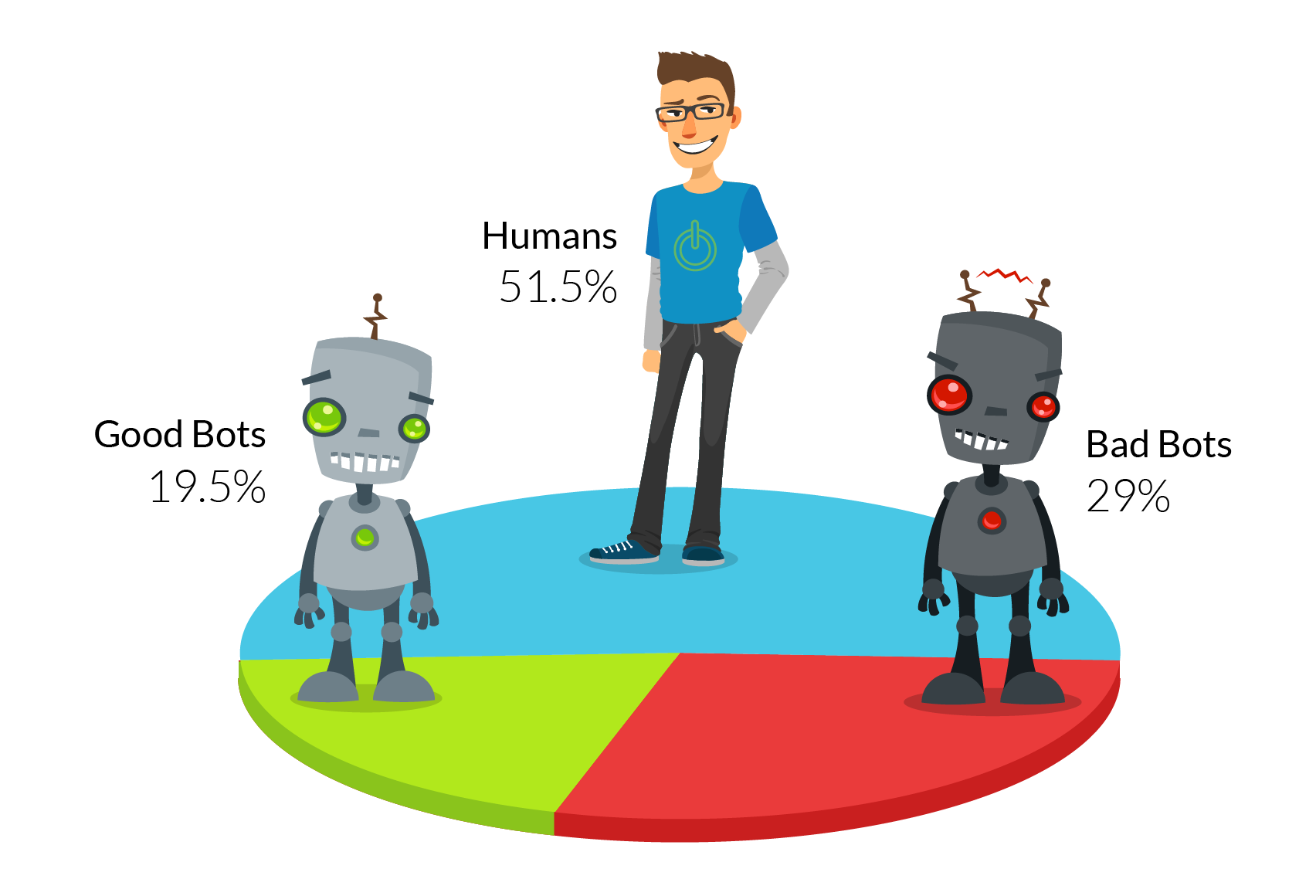
Humans reclaim the web from the bots
For the first time in five years, humans were the ones responsible for the majority (51.5 percent) of all online traffic, up from just 38.5 percent in 2013.
This is according to the latest Imperva Incapsula Bot Traffic Report which shows that good bot traffic decreased, from 31 percent in 2013 to 19.5 percent in 2015, while bad bot traffic remained static, at around 30 percent.

5 reasons why web apps are so frequently insecure
The unrelenting move to the cloud means that web apps are becoming ever more common. They have also increasingly become targets for hackers and this is often because of security failings; many of the recent high-profile security breaches have come about because of web app security vulnerabilities.
Ilia Kolochenko, CEO of High-Tech Bridge suggests a quintet of things companies do -- or fail to do, that make the life of hackers easier.

As well as closing US borders to Muslims, Donald Trump wants to talk to Bill Gates about 'closing up the internet'
People who support freedom of speech are "foolish people" in Donald Trump's book. This is just the latest in a seemingly endless stream of sweeping generalizations and misguided utterances to fall from the mouth of the Republican presidential candidate.
Positioning himself as the spokesman for the "noisy majority", Trump yesterday appealed to the xenophobic electorate in suggesting "a total and complete shutdown of Muslims entering the United States". This is the statement that has, understandably, grabbed the headlines, but Trump also wants to exert control over the technology we use every day. Specifically, he is interested in "closing up the internet in some way", and he wants to speak to Bill Gates about it.

Hillary Clinton wants to spend $275 billion on IoT and world-class broadband for all Americans
Presidential hopeful Hillary Clinton will invest $275 billion over five years on the US infrastructure -- if she's elected, that is. A key part of the plan is to bring "world-class broadband" to every American with a view to increasing competition and equality in the workplace.
While acknowledging the importance of investing in road, rail, and other transport infrastructures, Clinton also wants to invest in the technology of the future. Embracing the Internet of Things, she wants to create "smart cities" that will be filled with connected citizens, businesses, and services, including free Wi-Fi.

Is your network ready for IoT devices?
The stats are here: investment bank Goldman Sachs cites the Internet of Things as a $7 trillion opportunity by 2020 -- with IoT set to have an impact at every stage in the production and distribution of products.
Wikibon predicts the value of efficiency savings from machine data alone could reach close to $1.3 trillion and will drive $514 billion in IT spend by 2020. Manish Sablok, head of Field Marketing, North West and East Europe at ALE, looks at the four fundamental network requirements to enable businesses to take full advantage of the transformations that IoT will drive.

Li-Fi wireless transfers are 100 times faster than Wi-Fi
Li-Fi, the technology which uses light instead of radio waves to transmit data has been tested outside the laboratory environment. The result? Possible Internet speeds a hundred times faster than what we currently have.
So how does this technology work? An LED flicks on and off at speeds imperceptible to the naked eye which can be used to write and transmit information in binary code. It’s basically Morse code, only for computers.

Budget airlines driving in-flight Wi-Fi adoption
A new study from Juniper Research, titled In-Flight Entertainment & Wi-Fi Connectivity, Market prospects 2015-2020, has revealed that the adoption of in-flight Wi-Fi by budget airlines will provide a boost to the connected IFE (in-flight entertainment) market.
Juniper’s findings suggest that budget airlines hosting in-flight Wi-Fi will drive the number of connected commercial aircraft to over 10,400 by 2020, which is a threefold increase from an estimated 3,200 this year.