Everyone knows that Facebook collects data on people online and then uses this to tailor content and advertising. Exactly how it does this remains something of a mystery, however.
Mozilla has partnered with non-profit newsroom The Markup for what it’s calling the 'Facebook Pixel Hunt' to find out how Meta tracks people across the web through its pixel-powered ad network, and what it does with this collected data.
TCFKAF (the company formerly known as Facebook), Meta, has launched Privacy Center, a new way for users to "learn more about our approach to privacy across our apps and technologies". Across five modules -- Security, Sharing, Collection, Use and Ads -- Meta gives users information about privacy across its services.
It also provides links to its endless and scattered collection of tools, settings and options for taking control of privacy and security. The new hub has already come in for criticism, however, as it places onus the burden of responsibility on users rather than hand-holding then through the process of locking down privacy.
Meta recently announced that the protection, privacy and security offered by end-to-end encryption will not be coming to Facebook Messenger or Instagram until some time in 2023. Until then, anyone looking to send secure messages through Meta's platform will have to turn to WhatsApp.
What was not made particularly clear at the time of the announcement, however, is just why there is such a delay. Now Meta has opened up and revealed some of the thinking behind holding back on the roll-out of end-to-end encryption across all of its messaging services.
WhatsApp users may enjoy the benefits of end-to-end encryption, but the same cannot be said of messages sent via Facebook or Instagram. What's more, this is not going to be changing any time soon.
While Meta (or Facebook as it was at the time) previously announced plans to introduce encrypted messaging to the Facebook and Instagram platforms, there was heavy criticism from campaigners and organizations for child safety. Now the company has said end-to-end encryption will not be arriving until 2023.
Facebook's parent company, Meta, has announced a major shift for the social networking, saying it will no longer use facial recognition to identify users in photographs.
As well as closing down the facial recognition system, the company will also delete over a billion people’s individual facial recognition templates. Meta says that it is part of "company-wide move to limit the use of facial recognition in our products", and it is move that will be welcomed by privacy advocates.
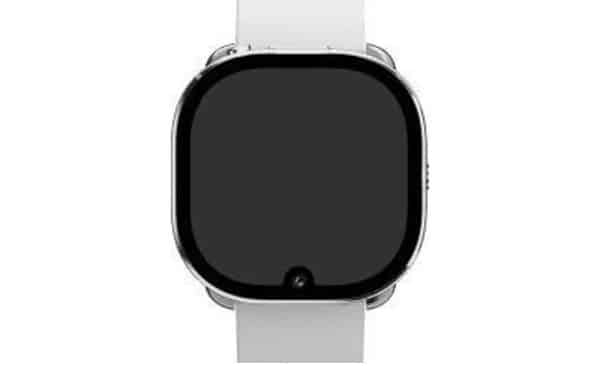
Meta, TCFKAF (the company formerly known as Facebook) appears to be working on a range of smartwatches that bear more than a passing resemblance to the Apple Watch.
At least two wearables are thought to be in development, one of which is codenamed Milan. But what is causing the greatest interest is an image of a smartwatch featuring a notch that is home to a camera.
We knew that Facebook was going to announce a name change today, but what we didn’t know for certain was what that name would be. The smart money was on something to do with the metaverse, which many firms -- Facebook especially -- believe could be the future of the internet.
Much as Google rebranded its parent company Alphabet back in 2015, so Facebook’s parent company is now called Meta, and gains a new blue infinity symbol for a logo. This change only affects the parent company -- the names of the apps everyone knows and uses -- Facebook, Instagram and WhatsApp will stay the same, although the Oculus VR brand will be phased out.