
As trust in Google wanes, interest in privacy-focused search engine DuckDuckGo soars
Google has long been eyed with suspicion, and incidents such as covering up potential data leaks does nothing to help. Privacy and security have increased in importance for the average internet user, and this has seen people moving away from Google and investigating the alternatives.
One beneficiary of this shunning of Google is DuckDuckGo. The privacy-focused search engine has enjoyed a 50 percent surge in usage over the last year, and it can now boast a new record of 30 million daily searches.

All emojis are now considered equal on Twitter
How many characters is an emoji? It seems like a simple question, but on Twitter the answer has not always been clear. Some emojis count as a single character while others eat further into the character count.
But now this is changing -- Twitter has announced that all emojis will now be treated equally. Previously, emoji that could be modified in various ways -- such as changing the skin tone of people -- would use up large numbers of characters. No more!

Apple signs $600 million deal with European chipmaker Dialog
Apple is buying part of Dialog Semiconductor, a chipmaker based in Germany. The iPhone manufacturer is interested in Dialog's power-management technology and has put forward $300 million for it.
On top of this, Apple has committed an additional $300 million to make purchases from other parts of Dialog's business, making this the largest deal the company has undertaken. As part of the arrangement Apple will acquire patents from the chipmaker as well as 300 staff.

Microsoft joins Open Invention Network and open sources its patent portfolio
Microsoft has joined the "largest patent non-aggression community in history", the Open Invention Network (OIN), effectively open-sourcing almost its entire patent portfolio.
The company has shown increasing warmth to the open source community in recent years, and this latest move means that other OIN members will have access to its patents -- with the exception of those relating to Windows and desktop applications. The OIN embraces -- as Microsoft has done of late -- Linux "as a key element of open source software".

Snap launches Snap Originals -- original, bite-sized, interactive shows for Snapchat
Snap has announced the launch of a new range of original, scripted shows for Snapchat. Snap Originals are penned by Hollywood writers that Snap describes as the "world's greatest storytellers".
The shows are not going to compete with offerings from the likes of Netflix. These are not shows of typical episode lengths, but a mere five minutes long. Snap will be hoping that the length, in conjunction with the interactivity and social elements of the shows, will increase their appeal to teenage Snapchat users.

Microsoft has bumped up the price of Windows 10 Home by nearly $20
You'd be forgiven for not having noticed, but Microsoft has quietly -- virtually silently, in fact -- increased the price of Windows 10 Home.
Previously available for $119.99, the operating system will now set you back $139 -- a $19.01 increase. While it's fair to say that the price increase of close to $20 won't affect too many people -- there are just a handful who don't either opt for an upgrade, or buy it pre-installed -- Microsoft did a great job of introducing the new price by stealth.
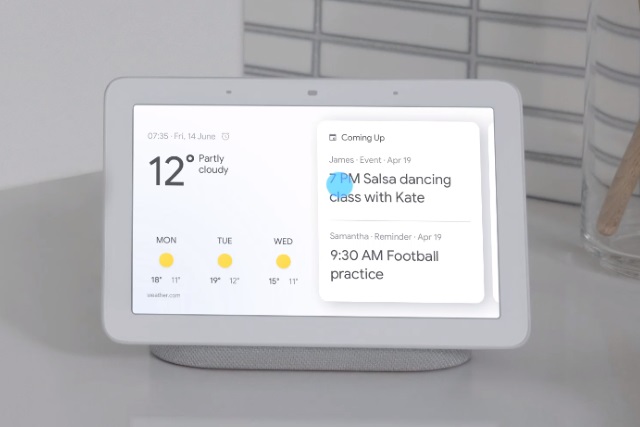
Google Home Hub is smart display that lacks a camera
Yesterday's Google event was primarily about the launch of the new Pixel phones and Slate tablet, but there was much more announced. One of the more interesting products to be revealed was the Google Home Hub.
Ostensibly a smart display, Home Hub lacks something found on Facebook's Portal -- a camera; considering the leakiness of Google, this is probably no bad thing. But what does Google's latest addition to the growing selection of smart devices have to offer?

Twitter is killing off Moments on iOS and Android
In less than two weeks, Twitter's Moments will no longer be available to mobile users.
Seemingly in recognition of the fact that hardly anyone used the feature, Twitter is killing off the ability to create Moments in its iOS and Android apps. But the company is not completely shutting down Moments -- the feature will still be available to those who really want to continue using it.
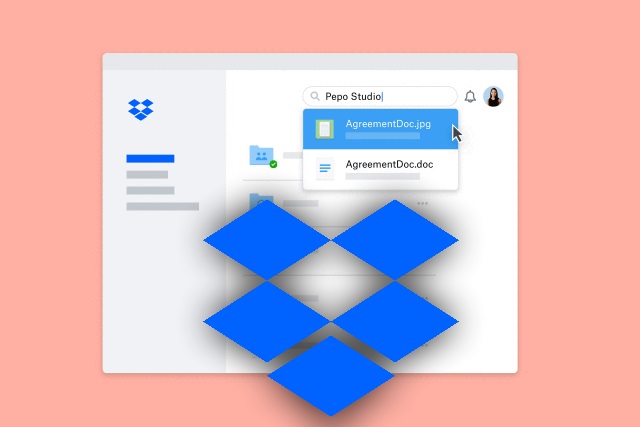
Dropbox makes PDFs and images searchable with automatic OCR feature
Dropbox is in the process of launching a new feature that will make life easier for people using the cloud storage service to house PDFs and image files: automatic OCR.
The optical character recognition is rolling out to paying subscribers, and is an acknowledgement of the fact that a large proportion of files uploaded to Dropbox are photographs of documents. By adding machine learning-powered OCR, Dropbox is making these files searchable.

Google reveals the Pixel 3 and Pixel 3 XL
There have been so many leaks surrounding Google's latest Pixel phones that today's announcements felt like little more than a formality. Nevertheless, the Pixel 3 and Pixel 3 XL are now official.
Taking design inspiration from numerous other handset manufacturers, the new Pixels move away from previous models and have a glass construction. The 5.5-inch Pixel 3 does not feature a notch, but the 6.3-inch XL model does; both handsets feature a Snapdragon 845 SoC, 4GB of RAM, and 64 or 128GB of storage -- and, of course, Android Pie.

How to delete your Google account
Google has given people plenty of reasons to hate it over the years, primarily because of concerns over privacy. But with the revelation that the company knew about a bug in Google+ API that exposed the private details of tens of thousands of users, many people are ready to walk away.
Completely purging Google from your life may seem tricky if you have invested time in any of its services, but if you're thinking that now is the time to part ways, here's what you need to do.

Google pulls out of $10 billion Pentagon cloud contract over AI concerns
Google has announced that it will not be placing a bid for a cloud-computing contract with the Pentagon. The Department of Defense's JEDI (Joint Enterprise Defense Infrastructure) project could have worth up to $10 billion.
The bidding process is due to end this week, but Google will now not be taking part. The company says that this particular project is not in line with its AI policies, but it will continue to work with the US government in other ways.

Google implements new Play Store policies for apps that request SMS and Call Log permissions
Google has introduced privacy and security focused changes as part of an update to Google Play Developer policies. In a move designed to protect sensitive data, there are new rules for apps that request SMS and Call Log permissions.
With immediate effect, it will only be possible for apps configured to be the default calling or text app to access phone and SMS data.

After failing to disclose user data leaks, Google is shutting down Google+ and improving APIs
The private data of nearly half a million Google+ users was exposed to third-party developers, and Google failed to notify anyone. A bug in Google+ APIs meant that users' names, email addresses, occupations, gender and age were accessible from 2015 until Google discovered and patched the problem in March this year.
Despite the data possibly having been accessed by 438 apps, Google chose not to go public about the security breach until now. And in a dramatic move, the company has announced that it is shutting down Google+ for consumers. Google has also revealed details of Project Strobe, an audit program through which it discovered the problem.

Facebook unveils its new smart video calling hardware: Portal and Portal+
Still reeling from a security breach that affected up to 90 million users, Facebook has announced two new pieces of hardware designed to make video chat easier and more immersive than ever. Portal and Portal+ are 10- and 15-inch smart displays complete with integrated cameras and packed with AI. But even Facebook acknowledges there are privacy concerns.
The social networking giant says: "When you can’t be there, Portal and Portal+ let you feel there". What does it mean by this? The cameras are intelligent, meaning they pan and zoom, following people around the room as necessary. Facebook promises that Portal "follows the action" and "keeps everyone in frame" but -- seemingly acknowledging that people won't trust its claim that the devices are "private by design" and that the mic and camera can be disabled with a single tap -- a physical camera cover is included.