
The end, finally, at last, hopefully? Jury finds Novell retained UNIX copyrights
As first reported this afternoon by Groklaw, the publication that made its name covering the ugliest chapter in the history of computing, a jury in Utah district court has found that the copyrights to UNIX were never transferred to the original Santa Cruz Operation by way of a 1995 asset purchase agreement.
The decision may finally put to rest a 15-year-old argument over who, or what, has the rights to UNIX.

Apple launches iPad-friendly iTunes 9.1
Just four days ahead of the iPad's first day of availability, iTunes has received an upgrade which adds sync for the new device. According to the software updater, the new version of iTunes lets users "Organize and sync books you've downloaded from iBooks on iPad or added to your iTunes library," and "Rename, rearrange, or remove Genius Mixes."
The icon under "Library" which formerly was called "Audiobooks" is now simply, "Books," and Genius mixes can now be re-named and moved. Otherwise, there is not much of an outward difference between 9 and 9.1

Chrome 5 becomes the Flash browser, integrates plug-in with dev build
Download Google Chrome 5 Dev build 360.4 for Windows from Fileforum now.
With Google owning YouTube, the Internet's principal delivery system for Flash-based video, it was perhaps inevitable that the company would bundle the Flash plug-in with its Chrome browser. The announcement came today from both Google and the team developing the open source Chromium component on which Chrome is based.
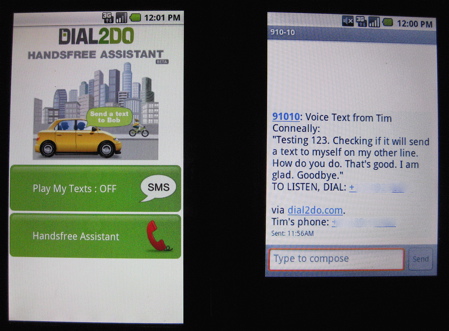
'Hands-off' review of Dial2Do's solution to the texting and driving problem
Back in December, I tried to enable everything I use on my Motorola Droid with text-to-speech, with only limited success. Ideally, I would have been able to have all of my incoming text-based media from Twitter, RSS, e-mail, and SMS read aloud to me so I could use my phone while driving. Unfortunately, Android's built in TalkBack functionality is very limited, and the talking apps I've tried are also pretty limited in what they do.
But with safe driving legislation in committee in Congress, and a growing list of states that have banned texting while driving, the market for eyes- and hands-free phone interfaces is hot.

Apple must apply 'right price, right rights' model to e-books
There are many reasons why iPod and iTunes Store succeeded where competing products failed. But two reasons stand out: Right price, right rights. If iBookstore is to succeed, Apple must apply the same model to e-books and other publications sold there. CEO Steve Jobs and company must seize control of pricing during content negotiations -- and, more importantly -- rights. There must be a single (and generous), standard usage right for all titles, including magazine and newspapers.
When Apple launched iPod in October 2001, the "right price, right rights" model was the best possible: Free. Music labels hadn't locked down CDs with onerous digital rights management mechanisms. Therefore, people could rip music and make their own "mixed tapes" CDs. Meaning -- people buying iPod already owned content they could put on the device. Apple wisely chose not to restrict music copying to iPod. The price was free and the rights were unrestricted.
Test of China Internet connections reveals heavy filtering
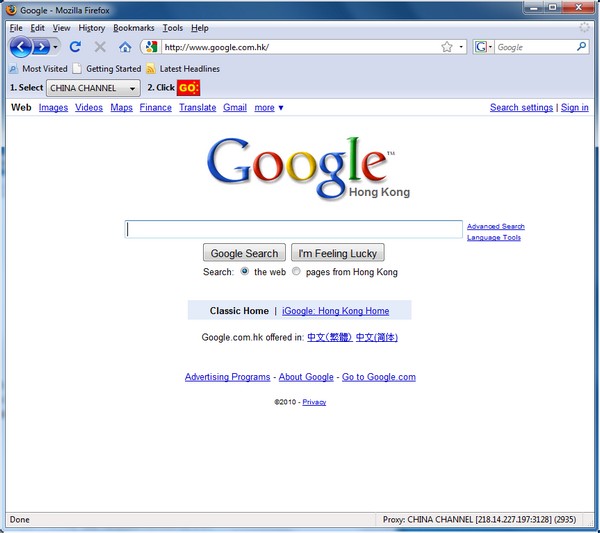
Using a Firefox 3.0 add-on created by developers in Hong Kong, Betanews was able to briefly establish a connection with the Internet via a proxy based in mainland China. With that proxy, we were able to confirm that searches performed using Google's Hong Kong-based page were effectively blocked.
Firefox 3.0 reported the blockage with this message: "The connection to the server was reset while the page was loading" -- a message from the browser, not from an ISP. We used version 3.0.16 of Firefox (an older edition) because it is the only version compatible with China Channel, a tool made for the express purpose of testing China's filtering ability. It has not been upgraded for version 3.6.

It's not dead yet: Microsoft's out-of-band IE6 fix impacts IE8
Last month, Microsoft sent flowers to a mock funeral for Internet Explorer 6, in a show of support for the ideal that the old browser should be declared defunct worldwide. But for a few years yet, the company is still bound to support the product for those users (generally businesses) who refuse to upgrade it. That's why new exploits that continue to target old browsers, such as IE6 and IE7, continue to get attention even a full year after the proper security fix -- IE8 -- has been deployed.
One of the libraries that, among other functions, helps IE to print is the target of an exploit released to the wild earlier this month. The exploit creatively overloads the system with JavaScript variables, then places function calls to IEPEERS.DLL. Once the library is effectively crashed, its used memory isn't cleaned up, enabling binary code seeded into that memory to be executed -- a classic use-after-free scenario.

MPEG LA wins major MPEG-2 settlement from Alcatel-Lucent
Could the manufacturers of DVD players (no, not just Blu-ray, but the original DVDs) owe back royalties to Alcatel-Lucent for the use of patented technology by way of the MPEG-2 codec? The MPEG Licensing Authority had asserted that Alcatel may have structured its 2006 merger with Lucent in such a way that it could hide up to five patents in a special trust, and spring their overdue royalties on the video industry long after DVDs already began the march to obsolescence.
That assertion was being made in a Delaware courtroom earlier this month, in a trial pertaining to a lawsuit filed by the MPEG Licensing Authority back in 2007. Today, MPEG LA -- which also collects royalties for the use of MPEG-2 -- announced a settlement in the case, essentially amounting to a complete defeat for Alcatel-Lucent.
The explosion of non-Flash devices is driving HTML 5 growth, Brightcove says
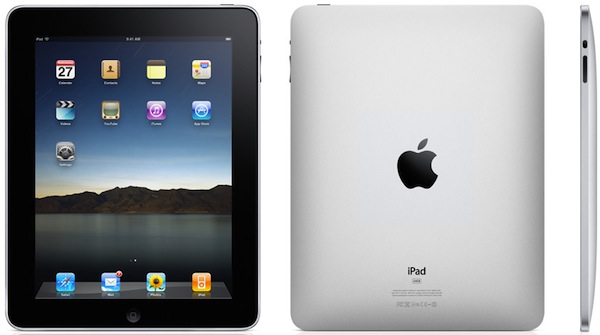
Video sharing site Brightcove is using the impending launch of the Apple iPad as a platform to talk up its support for HTML 5, the updated spec for the Web's core markup language which brings rich functionality to sites (such as video) without the need for third-party plug-ins like Adobe's Flash or Microsoft's Silverlight.
Earlier this year, Brightcove's bigger competitors YouTube and Vimeo announced they were experimenting with HTML 5, but both warned that not everyone would be able to see videos unless they had a compatible browser. Vimeo, for example, said 90% of its videos would work in HTML 5-compatible browsers, but only 20% of viewers would be using one.
One less news app: Did BBC's iPad support threaten the EU's 'Digital Agenda?'
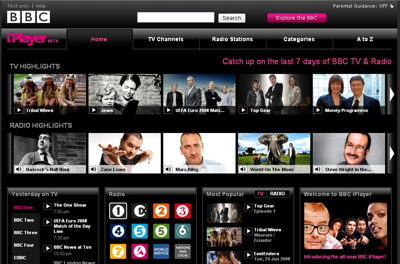
Either the news media is convinced that Apple's forthcoming iPad is the vehicle for delivering news publishing out of its funk, or it's convinced that Apple is conspiring to circumvent the natural course of news with its own walled garden platform. In any event, in the portion of the universe where the two parties are evidently not in bed with one another, the BBC reports that it has been forced to indefinitely postpone the rollout of its iPhone/iPod touch/iPad newsreader app, after the EU's trade group for newspapers complained it could pre-empt their plans to migrate online.
Today, the BBC Trust, which sets policy for the Corporation and serves as its board of directors, put a hold on next month's planned release of the BBC news reader, which would have been distributed for free. The BBC is sustained by UK citizens who pay regular license fees, so on paper, the reason for the delay is to determine whether free distribution of the app goes against its mandate.
But BBC News didn't muzzle its own impression of the Trust's intent. In its report this afternoon, it noted the Trust's citation of "representations from industry" as contributing to its postponement decision.

Apple rolls out Snow Leopard update (10.6.3)
It's been about five months since Apple put out the Mac OS X 10.6.2 update, which fixed a potentially damaging guest account bug that could delete a user's account data if another user logged in and out of a guest account on a Snow Leopard machine.
Today, the company rolled out its next update to the operating system, which has reportedly been in beta since late December. The update includes more than 70 security fixes and 49 general improvements to Snow Leopard, including fixes for Mail, MobileMe, and AirPort. The full release notes are here.
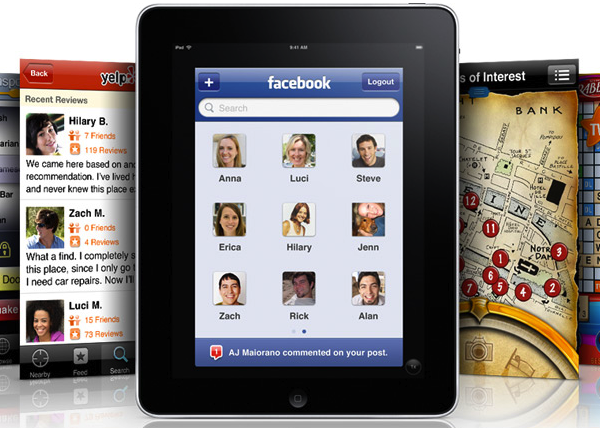
Let's keep the iPad in proper perspective
Can you vehemently disagree with a colleague and still respect him? Despite the often passionate claims of our readers and commenters, who may have forgotten the era of Siskel & Ebert, I believe you can.
I'm as much a fan of a vigorous debate as anyone else. In my previous column last Thursday, Enough with the Apple bashing!, I apparently stepped on the baby toe of fellow Betanews contributor, Joe Wilcox. As scathing as his response -- entitled Of course media bias favors Apple -- was, I assure you I've got pretty thick skin.

We asked: Did you buy iPad -- and you answered!
The iPad cometh this Saturday to an Apple Store near you -- or in a pretty box delivered to your door. No doubt, this week the rumor mill will again run wild about what to expect. I've been wondering about rights usage for ebooks. Can Apple do better than Amazon or Barnes & Noble? That answer is best for a blog post, but not this one.
March 21 post "Be smart, don't buy into iPad hype" was 98 percent about blogger, news media and Wall Street bias favoring Apple. I ended the post "by conducting an informal survey, asking simply: Did you buy an iPad?" Nearly all the comments answered that question, rather than address the post's main topic. That's perhaps commentary on the topic, my writing, interest in iPad -- or all three! I've grabbed a sampling of the best comments about preordering iPad. With that introduction, here are your answers to the question: Did you buy an iPad?
![An Acrobat.com workspace being shared. [Screenshot courtesy Adobe]](https://betanews.com/wp-content/uploads/media/47/4760.jpg)
Adobe tweaks the Web apps business model with paid collaboration
The puzzle for software companies as they adopt Web services is how to make them profitable. Anyone who tries the ad-supported model 1) plays against Google on its home turf; 2) risks working against application efficiency; 3) could raise the ire of users. And anyone who tries offering subscription to storage space 1) could easily be outdone by the first vendor to give away all its space for free; 2) faces an uphill value proposition against cheap local storage, and free synchronization such as Windows Live Sync solving the mobility problem.
Over the past several months, we've seen Adobe playing up collaboration as a key feature of its Acrobat.com service, even over portability -- the element that's most often associated with Adobe. Today, we have confirmation as to why: Inaugurating a potentially lucrative subscription strategy, Adobe hopes consumers will be willing to use Web apps such as Buzzword for free, while paying monthly for the capability to share documents.

With three months to go to DNSSEC, someone's fudging root zone records
One of the extraordinary truths about the Internet as a mechanism is that the databases that enable every IP address to be resolved, are maintained and published by a very small number of organizations acting as a cooperative. The health of the entire network depends on these groups' vigilance. One of these groups is Autonomica AB, a division of the Swedish ISP Netnod. It operates the "I" root server, which in recent weeks has been the apparent victim of a kind of spoofing attack that's been harmless thus far, but could conceivably demonstrate the capability of one rogue element to pollute the entire Internet.
Thanks to the current state of affairs, some are now suspecting a China-based culprit. But as we all know with the Internet, just because a malicious server resides in one country doesn't mean its malicious operator works there as well.