
NPD's Stephen Baker: How can Apple capitalize on its 91% premium PC share?
It's a very big slice of a shrinking pie. As the netbook form factor serves as a much-needed lifeboat for most PC manufacturers, driving average selling prices (ASPs) lower across-the-board, premium PC maker Apple is left with almost complete command of the higher end of the market. Those are the findings of research firm NPD earlier this week, as first reported by Betanews blogger Joe Wilcox. He computed the numbers NPD delivered, and concluded that in terms of revenue (not unit sales), more than nine of every ten dollars spent by Americans on computers whose prices are $1,000 or greater, are collected by Apple.
For the Apple faithful, being able to quote any Microsoft-like market share number in their favor is like Christmas come early. It means there's a genuine market segment where Apple is in complete control. But as those who know Apple very well are saying -- folks like NPD Vice President of Industry Analysis Stephen Baker, who is responsible for the numbers Wilcox cited and who spoke with Betanews this morning -- Apple has a little secret: It doesn't really care about market share.

EC: Microsoft will consider Windows 7 E 'ballot screen' for other browsers
In a public memo this afternoon, the European Commission has stated that Microsoft has offered to include a "ballot screen" with choices of Web browsers, including Internet Explorer 8 and others, as a way for the company to comply with the EC's directives. Last month, the company decided that it would remove IE8 from Windows 7 for European customers only, though that move alone was initially met with skepticism by the continent's legislators, who claimed that the move by itself would not restore choice to consumers.
Microsoft formally acknowledged the proposition minutes ago. Its public statement, given by General Counsel Brad Smith, includes the following: "If this proposal is ultimately accepted, Microsoft will ship Windows in Europe with the full functionality available in the rest of the world. As requested by the Commission, we will be publishing our proposal in full here on our website as soon as possible. While the Commission solicits public comment and considers this proposal, we are committed to ensuring that we are in full compliance with European law and our obligations under the 2007 Court of First Instance ruling."

Google Latitude released for the iPhone...browser
Yesterday's introduction of Google Latitude for iPhone could have been a big deal if the product being announced was actually an application. Instead, Google's social Geolocation product is a Web app that must be run from inside Safari. As such, it's being described as toothless, crippled and worthless by reviewers all over the Web today.
Why was it released as a Web app when it has been available as a standalone app on all the major mobile platforms for five months? Google has been quite upfront about that, saying, "We worked closely with Apple to bring Latitude to the iPhone in a way Apple thought would be best for iPhone users. After we developed a Latitude application for the iPhone, Apple requested we release Latitude as a Web application in order to avoid confusion with Maps on the iPhone, which uses Google to serve maps tiles."

Mozilla: We'll keep pushing for Ogg Theora in HTML 5
The software maker with the ability to rectify everything for the open source community in the field of free video is Google. Right now, its YouTube division relies upon Flash video, whose codecs require Web browsers including Google's own Chrome to have plug-ins installed. If YouTube merely had the option of supporting an open source standard such as Ogg Theora -- a standard supported by sites including France-based DailyMotion -- in one fell swoop, the balance might shift in favor of Ogg's being adopted, as was originally planned, as the basic codec for HTML 5's <VIDEO> element.
But that project was suspended late last month by HTML 5's principal caretakers, who perceived a stalemate between the proprietors of online videos including Google, the manufacturers of Web browsers who are also interested in maintaining high performance levels, and the rights holders to the various technologies that still underlie modern video codecs. Now Mozilla, whose Firefox 3.5 is the biggest browser so far to include built-in HTML video support, says in a statement to Betanews last night that it will press on with its support of Ogg Theora despite the setback, perhaps in hopes that online video services may come to adopt the codec as a de facto standard.
Microsoft 'Laptop Hunters' ad gets changed at Apple's behest
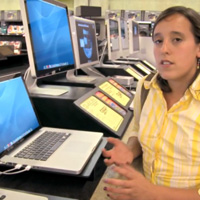
Thanks to Apple's well-publicized complaint about Microsoft's "Laptop Hunters" advertisements (Kevin Turner, Microsoft's Chief Operating Officer called it "the greatest single phone call in the history that [he'd] ever taken in business,") the ads have been changed.
Apple's legal department called demanding that Microsoft change the "Laptop Hunter" ads because they are factually inaccurate. In response, Turner said, "We're just going to keep running them and running them and running them."
Palm Pre gets iTunes sync again
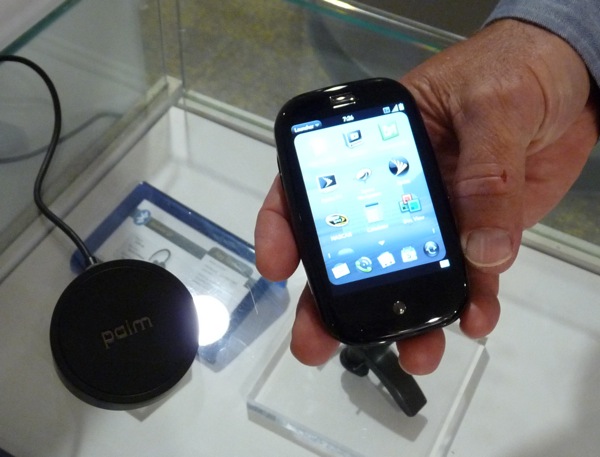
Only nine days ago, Palm Inc.'s flagship touchphone, the Pre, lost its unofficial compatibility with iTunes when Apple updated the media management software to fix "an issue with Verification of Apple devices." After users updated the software, and plugged in their Pres, they found the software no longer recognized the device for syncing.
Already, an over-the-air WebOS update (v1.1) has been made available which renews the device's ability to be paired with iTunes. The update includes new feature support in Exchange ActiveSync, the ability to include emoticons in e-mail, MMS, and SMS, and the new NFL Mobile Live app from Sprint. As an additional jab at Apple, when Palm's Vice President of Business Products, John Traynor announced the update in the company's blog yesterday, he listed all of these features, but saved the iTunes fix for last, and prefaced it by delivering Steve Jobs' now trademark line: "Oh, and one more thing..."

Live long, Prosper...and crunch those numbers
This episode of Recovery is brought to you -- literally -- by the free Wi-Fi at the Sacramento Amtrak station. Isn't it funny how the train station can offer it but most airports don't. Funny. Ha.
I spent some time this week bopping around Prosper, the peer-to-peer lending site. I'd signed up with them several years back, intending to test the system for a write-up at Another Publication. I liked what I saw so much so that I stuck with it until economic events last year caused the service to go temporarily dormant. They're back now and I thought I'd see how my people were doing.

Twitter extends a hand to clueless potential users
Afternoon of July 23, 2009 • David Letterman's comments about Twitter being "a waste of time" earlier this week gave fans of the service a good laugh, but the 62-year old chat show host who doesn't "know anything about the Twitter" actually posed a sound question. When posting a message, where does it go?
This kind of question probably wouldn't even occur to a regular user of the service, but to those unfamiliar with feeds, status updates, live blogging, and the like, Twitter offers very little to grab onto. Getting started is not as easy as it could be.

Bezos says Kindle 1984 deletions were 'stupid', doesn't say how Amazon will solve illegal book problem
Nearly a week after it deleted illegal copies of George Orwell's 1984 and Animal Farm from customers' Kindles without warning, Amazon's CEO Jeff Bezos posted a personal apology to the Kindle user forums. Bezos called the company's handling of the decision "stupid," and said it would learn from the mistake. But he didn't say what would change, if anything.
This is an apology for the way we previously handled illegally sold copies of 1984 and other novels on Kindle. Our "solution" to the problem was stupid, thoughtless, and painfully out of line with our principles. It is wholly self-inflicted, and we deserve the criticism we've received. We will use the scar tissue from this painful mistake to help make better decisions going forward, ones that match our mission.

Microsoft takes big hit: Q4 revenue falls for all product divisions
Microsoft closed fiscal 2009 with a whimper -- feeble performance not seen since the last recession in 2000-2001. Microsoft's fiscal year ended on June 30.
For fiscal fourth quarter, revenue fell -- often double digits -- for every Microsoft division: Client, Server and Tools, Business, Online Services and Entertainment & Devices. I can't recall the last time, if ever, there was such an occurrence.

With a booming business in streaming media, there's no stopping Netflix
In case there was any doubt of the momentum Netflix has been able to build as video stores continue to cede market dominance to on-demand streaming and by-mail and kiosk-based rentals, the company today announced that it has 40% more subscribers, 21% higher revenue, and 22% higher profits than last year.
"We believe that the inclusion of streaming in our service has broadened the appeal of Netflix and is driving growth...essentially, both Netflix and Redbox are growing at the expense of video stores." said Netflix CEO Reed Hastings in the company's earnings call this afternoon.

Fiscal Q4 numbers for Microsoft disappoint, net income down 29%
Analysts had been settling on 13% as the average earnings hit that a company in the IT sector should take in this down economy, which some believe may be finally on the mend. But the early report from Microsoft, minutes in advance of its quarterly conference call Thursday, was not good by comparison: Net income was down 29% year-over-year to $3.05 billion, on revenue that was down 17% from the year-ago quarter to $13.1 billion.
It could be Microsoft's first genuinely bad quarter since the year terrorism struck the US, and it has managed to drive its full-year net income down 18% over fiscal 2008.

South Carolina Attorney General still fights Craigslist
Earlier this year, Craigslist came under fire from several different parties for its "erotic services" section. First it was singled out by Cook County Illinois Sheriff Thomas Dart in March, and then in May, South Carolina Attorney General Henry McMaster did the same.
McMaster sent Craigslist CEO Jim Buckmaster a letter demanding that he remove sections of the South Carolina Craigslist site "which contain categories for and functions allowing for the solicitation of prostitution and the dissemination and posting of graphic pornographic material" within ten days of receiving his letter or face criminal investigation and prosecution.

WiMAX Forum opens 2.3 GHz certification process
For most of the world, WiMAX resides in the 3.5 GHz block of spectrum, but in the U.S., it encompasses the 2.3 and 2.5 GHz frequencies. The most famous WiMAX deployments -- those by Clearwire and Sprint -- are all licensed in the 2.5 GHz block of spectrum. But there have been very few deployments in the 2.3 GHz frequency. Even though it has been allocated to Wireless Communication Services (WCS) since 1997, buildouts in that range have been very limited because of a major conflict with Sirius and XM satellite radio.
Satellite radio employs thousands of terrestrial repeaters which were FCC compliant, but due to uncertainty in technical requirements in FCC regulation, were found in 2006 to have serious potential interference problems in 2.3 GHz WiMAX transmissions. Companies such as AT&T, BellSouth, Comcast, Sprint, and NextWave had 2007 construction deadlines on their 2.3 GHz licenses, which the FCC then pushed back to July 2010 after hearings with the WCS Coalition and Sirius and XM.
Dying for an iPhone: Questions raised by the Foxconn suicide
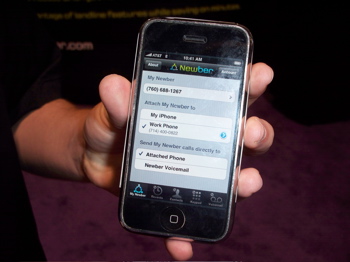
If you've got your cell phone or smart phone handy, I'd like to ask you to pull it out of your pocket or off your desk and give it a long, hard look.
By any definition, it's a pretty impressive piece of technology. You can call anywhere in the world, surf the Web, IM your parents, and even orchestrate meetings with far-flung team members you'd rather not meet in person. When you're done working, toss a stereo Bluetooth headset on and take in a movie without the hassle of overpriced theatre popcorn or whining kids kicking the back of your seat.