
Boku aims to bridge micropay gap with mobile-phone ease
A just-launched payment service would allow users to make purchases for virtual goods via their mobile phone, rather than by credit card or online payment service. Boku follows a model familiar to many mobile-phone users: an approved charge appearing on one's mobile bill.
Forget your late-'90s memories of Beenz and such; the pay-by-mobile model is already quite popular in Asia, and virtual goods -- an $8 billion annual market, according to Boku -- are a good fit.
Capitol v. Thomas, day 2: Say what?!
Day two of the Jammie Thomas-Rasset file-sharing trial included a statement by the defendant that even the most sympathetic observers found hard to follow -- "balanced" by a procedural error on the part of the RIAA's legal team that had Judge Michael Davis invoking skunks and threatening to toss all evidence from the morning's witness.
That wasn't Dr. Doug Jacobson's fault. The Iowa State computer science professor was simply the guy who examined the data presented by Charter Communications (Ms. Thomas-Rasset's ISP) and MediaSentry (the tracking firm retained by the RIAA). His testimony was fairly clear-cut stuff until he mentioned a log file that the defense team had never heard about -- one that Dr. Jacobson had previously mentioned to the RIAA's team.

Mozilla posts Firefox 3.5 RC1, announcement expected
The announcement has not yet been publicly made, but Mozilla posted a fresh build of Firefox 3.5 on its servers that it is officially calling Release Candidate 1. Not just "Release Candidate," which implies that a second round is indeed possible.
After a security run-in following some unrelated tests, we've found ourselves having to reset and restart our test platforms, so our usual round of Betanews performance tests is forthcoming. Also expect the latest numbers from the Opera 10 beta, which now includes provisions for the Unite browser-based server feature.

Largest US WiMAX deployment is official
As Clearwire announced just one month ago Atlanta, Georgia's WiMAX network has officially launched, and is the biggest United States deployment of the 4G technology to date, covering some 1,200 square miles with more than 400 cell sites.
Like Clearwire's Portland WiMAX network, Atlanta's core network equipment from access points to consumer equipment has been supplied by Motorola. Future deployments, however, will be built upon Cisco equipment, Clearwire announced early last May.
What will MySpace become after a 30% headcount reduction?
The question financial analysts are asking this afternoon in the wake of News Corp.'s layoff of 30% of MySpace employees is not, "Will this help?" Or even, "Does this make things better." It appears to be, "Will this be enough?"
In a frank statement this afternoon demonstrating he hasn't lost his touch since leaving AOL, News Corp.'s Chief Digital Officer Jonathan Miller pronounced the deed done, saying, "MySpace grew too big considering the realities of today's marketplace. I believe this restructuring will help MySpace operate much more effectively both structurally and financially moving forward. I am confident in MySpace's next phase under the leadership of [CEO] Owen [Van Natta] and his team."
'Computer, on screen!': A look at Google's voice recognition engine
Google's voice recognition technology took to the mobile sector with voice-powered search applications for iPhone, Android and BlackBerry. Naturally, Google's own mobile operating system Android has begun to reap special benefits of the powerful technology with some new voice-enabled features.
Yesterday, an unforced update to Android's native Google Maps application endowed the software with speech recognition capabilities. Addresses, business names, and attractions can all be searched by spoken word. The app is now one of several that tap into Google's speech recognition engine, such as the voice-to-text app which recently turned up in the Android Market, simply named Voice Text for Android. That app allows the users to dictate text messages.
How secure is Opera Unite?
The notion of converting conceivably every computer on the planet into a server is certainly not new. But almost everywhere the notion has been attempted, it's been exploited. Microsoft's ActiveX experiment in the mid-1990s was a notorious example of collective inattention to the entire topic of exploitability, though it's not the only one. Since then, millions have willingly made their Web clients into P2P servers in the interest of file-sharing -- authorized or not -- while some of them unknowingly exposed their file systems to the whole planet, exposing sensitive government documents in the process.
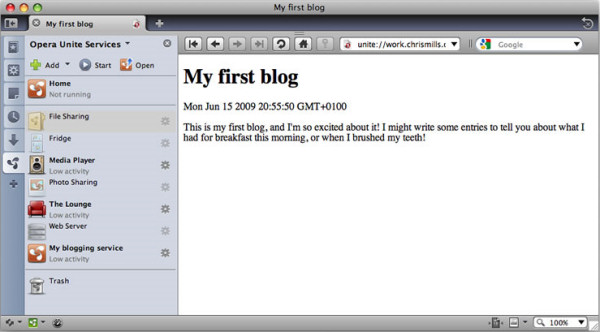
History tells us to be skeptical when any software purports to enable ordinary computers, especially Web browsers, to act as servers. This morning, Opera Software unveiled its Unite server networking protocols, which consist of extensions to the existing widget system for its Opera Web browser. The objective there is to enable any Opera user to be a server in her own right, potentially serving up blogs, tweets, and files. Opera's own bank of servers -- which are already put to use providing pre-rendered pages for its "Turbo" feature -- serves as an intermediate proxy for all communications between Unite-enabled browsers.

DSL may be the key to holding down 'smart grid' costs
The US government is attaching new priority to the task of reducing nationwide energy waste, with one approach being to modernize the country's aging power grid. By creating a "Smart Grid," or a self-monitoring and balancing network of electricity, the US may be able to utilize all forms of power (solar, fossil fuel, hydroelectric, wind, nuclear) in a more efficient and less wasteful manner.
Because $4.5 billion of national stimulus funds have been allocated to the creation of such a smart grid, a host of companies have sprung up, ready to provide the technology. However, just as the forms of energy are coming from disparate sources, there are different communications networks, metering software and central management systems at play. Just one week ago, the National Institute of Standards and Technology (NIST) released its first preliminary List of Smart Grid Interoperability Standards, and according to the group, it could take several hundred different standards to achieve a secure, end-to-end interoperability across a fully implemented smart grid.
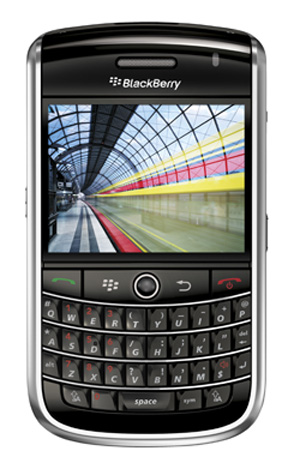
The latest BlackBerry goes on 'Tour' this summer
Both Sprint and Verizon will be getting Research in Motion's new BlackBerry Tour 9630 later this summer. Both "America's most dependable 3G network" and "America's best 3G network" will make the device available for $199.99 with a two-year contract and related rebates.
The BlackBerry Tour is a hybrid of features found in other BlackBerry models, such as the Bold and the Curve 8900. Its chassis is slightly slimmer and lighter than the Bold, but larger and heavier than the Curve. The Tour measures in at 112mm x 62mm x 14.2mm with a weight of 130g, while the Bold is 114mm x 66mm x 15mm and 160 grams in weight and the Curve is 109mm x 60mm x 13.5mm and 109.9 grams.
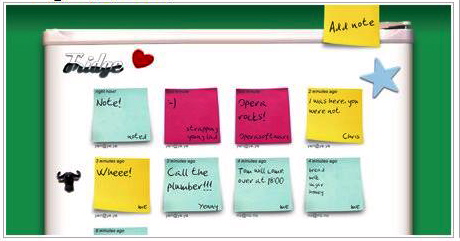
Everyone's a server! Opera calls upon browsers to 'Unite'
In an announcement early Tuesday morning, Opera revealed the parameters of Unite, a product it says will "enable a whole new class of social software on the Web." The platform is designed to better facilitate multiuser online applications and to give users greater control of their data even while making it available (if they so choose) to others online.
The Unite platform converts any PC that runs it, as Opera puts it, into both a client and a server; a small Web server lies at the heart of the browser-based system itself. For instance -- as Opera demonstrated in an application already written for Unite -- perhaps you'd like to share a file with a friend, but don't want to end up like Jammie Thomas. The file-sharing functionality Opera showed generates a URL for the folder in which you've stored your file on your own machine. Give that URL to your friend and she can simply browse over to it, with no third-party service required.

Jammie Thomas jury empaneled, RIAA testimony begins
Twitter is currently doing landmark work in providing a voice for the events in Tehran, but on a much smaller scale, it and larger blogging services served well on Monday as Jammie Thomas-Rasset's second trial kicked off in Minnesota. Several bloggers were present in the audience, and readers following the #riaa tag on Twitter were likewise treated to multiple sources of information.
Some of the observers present are "blawgers" -- lawyers who blog. Marc Bourgeois, blogging for Recording Industry vs. The People this week, was in the house, as was Copyrights and Campaign's Ben Sheffner. In all, Bourgeois estimated in a tweet that 15-20 media folk were present. Not tweeting, however, was the seven-woman, five-man jury -- Judge Michael Davis specifically warned them not to tweet, post, email, text, IM, ping, pong, bing, bada or do anything else about the case that could cause a third trial.

Up Front: Congress asks about AT&T iPhone exclusivity
It sounds reasonable enough on the surface to say that a cellular carrier should be able to make a deal with a phone manufacturer for exclusive distribution rights. AT&T used to have one of those for several decades with a company called Western Electric. And while folks complained about the service from time to time, they didn't complain much about the phone...back before they had touchscreens. But what if you're a rural communications company, and you can't exactly make such exclusive deals. Is it unfair that you're not entitled to make a deal for something as hot as the iPhone? Think it doesn't matter much? Ask the state of Vermont, where you can't buy an iPhone...because AT&T doesn't cover Vermont except for roaming. Imagine, the nation's second largest carrier doesn't sign up customers in an entire state represented by Patrick Leahy. That might not be a good thing.
Congress asks about AT&T/iPhone deal, text charges

Mystery of the missing DTV transition panic
By all accounts thus far, last Friday's shutdown of the VHF and UHF video frequencies that supplied Americans with television service since the 1940s, took place without serious incidents. Although the Associated Press over the weekend cited FCC officials as estimating over 800,000 calls to its nationwide DTV call center, that number was trimmed significantly over the weekend, with estimates provided to Broadcasting & Cable up to Sunday coming in at 525,000.
While Friday alone saw a record 317,000 calls within a one-day period, believed to be a single-day record for a federal call center network, all reports indicate the network was prepared to handle the volume.

At long last, Apple patches its Java vulnerability
After nearly a year, Apple has chosen to issue patches for a notorious security flaw in Java long since addressed by other operating systems. The move follows the release late last month of a zero-day release by a security researcher frustrated by the lag in Apple's response to the problem, not to mention a blitz of highly negative press coverage (here and elsewhere) for a company that has historically claimed its products to be more than ordinarily secure.
Both Java 1.4.2_18 and Java 1.5.0_16 have been known to contain multiple vulnerabilities for quite some time. Those vulnerabilities could if exploited allow an attacked to gain elevated privileges on a system, from which s/he could execute other attacks, scoop up sensitive information, or undertake any of the usual sorts of mayhem. The problem was especially dangerous because it was "purely Java" in nature. That is, an exploit could be written in Java and executed on any platform running it -- Windows, Mac, whatever.
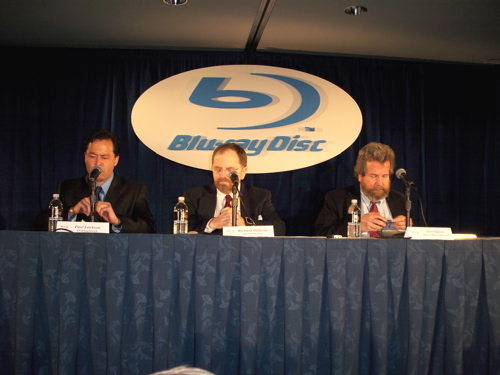
Averting another format war, this time in 3D TV
With virtually every major TV manufacturer now eyeing the release of 3D HDTVs, almost 200 companies in the global entertainment and consumer electronics industries are now working on uniting behind a common set of technology standards for consumer viewing of movies and other 3D content on home TVs.
Their hope is to avoid a repeat of the ugly HD video disc format war, which left Toshiba badly bruised and HD DVD a distant memory.