
SEO mavens find scraping switches in Bing
Microsoft last week released guidance for webmasters and search-engine optimization strategists, explaining what Bing's up to in the background. A look at the white paper revealed some smart thinking about where viewers' eyes move on a page of search results, as well as a much more determined "scraping" effort than Google currently uses.
Betanews asked Dan Rosenbaum, a New York-based SEO expert, to walk with us through the white paper and note any features or telling omissions that caught his eye. Overall, he says, "the big changes from Google are in the user interface, and they look pretty interesting and effective. [Microsoft] took the standard heat map of a search engine results page and said, 'How can we make that useful?'"

The age of egregious Auto-tuning: 1998-2009
When Antares Audio Technologies founder Andy Hildebrand filed for the patent for his digital pitch correction technology more than ten years ago, I wonder if he ever thought that it would be such an inescapable and controversial part of modern music.
After the pop-consuming world was exposed to producer Mark Taylor's use of the inhuman, disjointed vocal effect on Cher in her 1998 single Believe, Antares Auto-tune and its scions became a mandatory fixture in any modern studio. Soon, it catapulted to the position of best-selling audio plug-in of all time. This tool could turn weak tones into strong ones, add vibrato to held notes, and turn a mediocre (or even terrible) singer into a good one, provided a certain willingness to overlook the cyborg-sounding artifacts.
The netbook fraud: Truth, lies, and consequences in the PC market's hottest segment
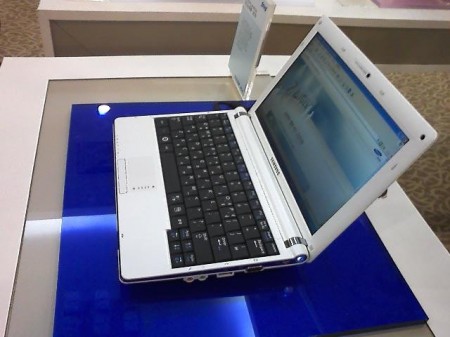
At first glance, today's netbook still looks like a laptop that spent a little too much time in the dryer. But after a few false starts and barely two years of serious evolution, netbooks have the first seriously unique market niche in hardware since laptops initially hit critical mass in the mid-'90s. And what's not to like about them? They're incredibly inexpensive, a lot easier on travellers' already overburdened shoulders and backs, and more than capable of handling the kind of routine work most of us churn through over the course of the average workday.
They're also ridiculously underpowered for anything beyond basic workflow like editing documents, managing e-mail, and accessing the Web. Their tiny, often laughably laid out keyboards make touch typing a fond memory. The small, low-resolution screens turn scrolling into a national sport -- which you'll probably want to avoid given the ergonomically frightening trackpads that are typically crammed wherever there's space. Battery capacity is lousy, too, often barely stretching beyond a couple of hours, if that much.
Bing vs. Google rematch after Microsoft upgrades explicit filtering
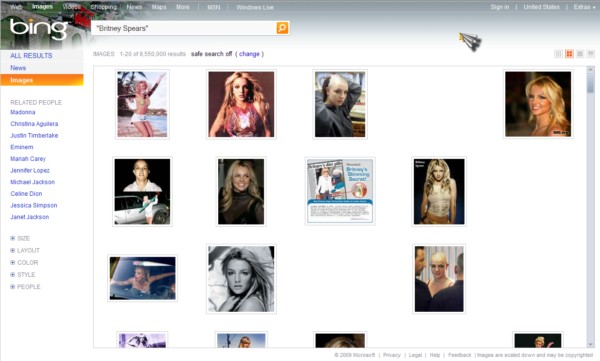
A few weeks ago, in our ongoing series of duels between the reigning champion search engine Google and the contender "decision engine" Bing, we gave Bing the edge in a battle of the image filters: With both search engines' explicit image filtering turned on, we were able to explore a very sensitive topic -- breast cancer -- and have Bing yield sensible and respectful, but sometimes graphic, images without presenting offensive content.
Since that time, as we reported last week, Microsoft has implemented a very practical concept for helping individuals and businesses to ensure filtering takes place -- this after complaints were raised about how ridiculously simple it is for any user to turn filtering off in both Bing and Google. As Bing General Manager Mike Nichols announced on Friday, the thumbnails of images which Bing deems to be of a sensitive nature will be sent through a specific URL, explicit.bing.net. That way, users can take extra steps to filter questionable content.

Tethering may yet come to Palm Pre...Just wait for Verizon
Apparently Palm is perfectly fine with cracking open the Pre and enabling tethering, but the smartphone company doesn't think Sprint will be too keen on the idea.
In the Pre Developer Wiki, the subsection dedicated to tethering has been pulled down at Palm's request, because "any discussion of tethering during the Sprint exclusivity period will probably cause Sprint to complain to Palm, and if that happened then Palm would be forced to react against the people running the IRC channel and this wiki."

Virgin Media downloaders to 'pay it forward' for Universal Music
Many legislators believe the cornerstone to halting the illegal trade of copyrighted music, movies, and software is to work with ISPs. Now, rather than debut a new punishment for downloaders, like the controversial HADOPI law in France, British ISP Virgin Media will offer downloaders the option to pay up front.
Virgin Media announced today that it has partnered with Universal Music Group to launch a new tiered music download service. For a reported £10-15 a month, Virgin Media broadband customers will have unlimited MP3 downloads from an ISP-provided catalog. With that service in place, there will be a diminished need to resort to illegal downloading.

Twitter, Facebook both survive rumored Ragnarok
O NOES!!! 12 Friday was supposed to be disastrous for both Facebook, which threw open the doors on its new personalized URLs for the masses, and Twitter, which some predicted would experience "twitpocalypse" when the number of Tweets passed 2,147,483,647. Both events were far less dramatic than the hype.
Facebook's engineers were prepared for server trouble during the land grab, which kicked off at 9:01 pm PDT. But though the traffic was considerable -- CNET reported 200,000 new URLs registered in three minutes, and Mashable (hunkered down in the Facebook war room) claimed a million settled within the first hour -- the event passed with no reports of even palpable delay in page service.

All eyes on Minnesota as RIAA trial starts over
The only file-sharing trial ever to go before a jury met with a spectacularly unsympathetic one back in 2007. As Jammie Thomas-Rasset (the former Jammie Thomas) prepares once again to face federal charges that she shared 24 songs over KaZaA back in 2005, keep an eye out for these developments:
• Keep your eye on Kiwi. Thomas-Rasset's new lawyer, Kiwi Alejandro Danao Camara, will celebrate his 25th birthday in the courtroom tomorrow, quite possibly by breathing fire. There doesn't seem to be much else beyond the abilities of the Philippine-born Camara, who graduated magna cum laude from Harvard Law in 2004 (at 19) and has a bachelor's degree in computer science.

Up Front: The price of cloud computing gets clearer
I know summer doesn't officially begin until next week, but free time is over already, the whistle is blowing, and everyone out of the pool. It's time for the big boys to clean up. This morning, two big brand cloud services emerge from beta -- one of them geared toward everyday applications, the other toward building custom sales-driven apps. And this means they're no longer free...despite the name on one of them, which just happens to include the word "Free."
Adobe springs Acrobat.com from beta
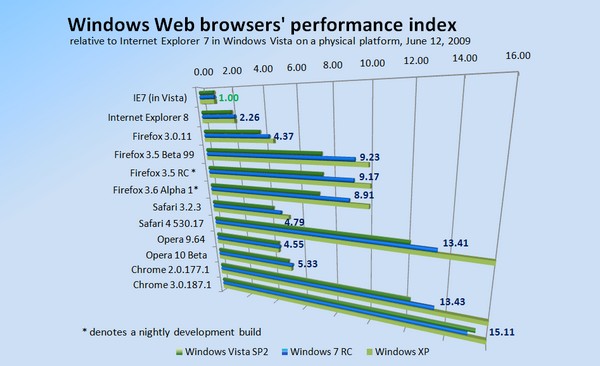
Firefox runs 11% faster in XP than Windows 7; IE, Opera run slower
Download Google Chrome for Windows 3.0.187.1 Beta from Fileforum now.
Since we began our periodic check of the relative performance of the rendering and JavaScript engines in Windows-based Web browsers, where we've seen them run about 14% faster on average now in Windows 7 RC than in Vista SP2, we've been asked...what about Windows XP? It certainly seems like the faster and more nimble platform of the three -- certainly all the netbook manufacturers seem to think so.

Bing makes a change, and the videos get G-rated again
Smart Motion Preview, which allows clips to play samples from directly within Bing search results, took immediate fire upon launch of the site for allowing playback of explicit images and content. Microsoft's hoping that's all over now, as it announces two fixes that should ease the search site back down to safe-for-work territory.
In a blog post Friday afternoon, Bing general manager Mike Nichols outlined the changes. First, a separate domain -- explicit.bing.net -- has been set up for randy images and video. This should allow filtering software or humans looking to eliminate those results from search to do so simply.

If they wanted my workplace to be fashionably decorated, they'd call it the fashionplace
This episode of Recovery is brought to you by the Bing "search overload" commercial and the genius at Woot who thought to take a camera to E3 and document all the Woot T-shirts on the show floor: One of them looks like the inside of my head, the other looks like the outside of the rest of me.
So tonight's the night: Facebook vanity URLs for everyone! The digital switchover is upon us. As Tim told us yesterday, about 2.2 million people aren't ready; as you see from the comments on his article, some folks have valid tech reasons for that. Ready or not, you should cruise by YouTube and enjoy the four classic-TV episodes they've put out front for you today.

Earth to Europe: You won. Microsoft complied. Live with it.
A note of full disclosure first, to quell any dispute over which "side" I'm on: I've been a Windows user for 20 years. And today -- but perhaps not tomorrow -- my Web browser is Mozilla Firefox. Do I like Firefox? On days when it doesn't crash, yes. The moment someone else makes a more suitable Web browser than Firefox for my extremely heavy duty purposes, I will switch. I test the competition almost every day now, so I literally do mean the moment that happens.
The tying of Internet Explorer with Windows was a scheme by Microsoft to eliminate Netscape's market presence -- a devious, immoral, illegal, and effective scheme. Today, Netscape is nothing more than a flavor of an AOL Web portal page, a skin. No more damage can be done there. Does any technical reason remain for a Web browser to continue to be tied to, or bundled with, an operating system?
Sen. Hatch rails on the Pirate Bay, Canada
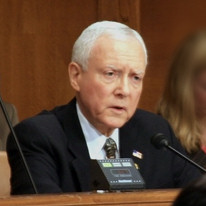
At this week's World Copyright Summit in Washington, DC, Sen. Orrin Hatch (R. - Utah) spoke to the group of more than 500 attendees, and noted the Anti-Piracy Caucus' 2009 Country Watch List, which lists countries with the most intellectual property violations. There, he noted the latest edition of the list contains a familiar neighbor.
"This year, it was particularly disappointing to see that Canada, one of America's closest trading partners, was listed on the Watch List," Sen. Hatch said. "This is another sobering reminder of how pervasive and how close to our borders copyright piracy has become in the global IP community." Canada ranked in the top five problem countries along with China, Russia, Mexico, and Spain.

Europe: Microsoft's IE move gives Windows users no choice
The initial response from the European Commission this morning, to the news that Microsoft has decided to remove Internet Explorer from Windows 7 for European customers, is that it leaves customers no option or choice with regard to which Web browser they should install.
"The development of new online services makes Web browsers an increasingly important tool for businesses and consumers, and a lack of real consumer choice on this market would undermine innovation," reads this morning's statement from Brussels.