Acer shakes hands with Android
Acer could have an Android-based netbook ready as early as the third quarter of this year, according to statements from the company's Global President for IT Products, Jim Wong.
At a conference at the Computex trade show in Taipei, Taiwan, Wong expressed confidence in Android and its "incredibly fast wireless connection to the Internet," saying that since the OS has become more common, it has a growing network of developers supporting it.

McAfee warns of the risks, dangers, and threats posed by online song lyrics
Anne Hathaway was cute as a button with that guitar on NBC's Late Night last night, explaining to Jimmy Fallon how she was teaching herself to play by watching YouTube videos and searching for chords online. But kind friends need to warn her that one wrong step in her searches could lead to serious trouble. That's according to a recent report from security researchers at McAfee, who say that searches for some types of song information are most likely to lead to a nasty computer infection.
"The World's Most Dangerous Search Terms," released last week, says that searches on song lyrics returned, on average, one site in twenty that could (if visited) infect the guest's machine with some species of malware. In some cases, a page of search results might have an many as 25% of its results plagued with infection. That "maximum risk" number was the highest for any category the survey covered.
You can say 'netbook' now, the Supremes will look at patents, Tetris turns 25
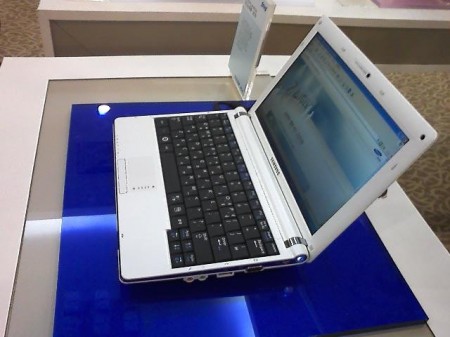
Usually when a company coins a term or a phrase, or attempts to, it checks around to see whether someone else has thought of it first. But in the case of "netbook," it seemed to be a term that entered the popular vocabulary just before marketers got a hold of it. Or so we thought. But this story turns out all for the better, as we can all say "netbook" now with confidence.
Psion tells Intel it can use "netbook"

Apple's vulnerability patch count: 10 QuickTime, 1 iTunes, 0 Java
Is Cupertino straining at gnats while much larger objects float in the punchbowl? Security professionals might wonder, as Apple on Monday released a 7.6.2 update to QuickTime that patches ten security holes in that player. The notorious Java hole reported last year and exploited at pwn2own in February remained untouched.
Many of the patches address -- what else? -- buffering issues. A problem brought to Apple's attention by a researcher working with TippingPoint's Zero Day Initiative, in which a heap buffer overflow could be triggered by a maliciously crafted FLC file, has been addressed. Compressed PSD files could also be used to trigger a buffer overflow; that's been taken care of. (Another score for the Zero Day Initiative, by the way, which gets full or partial credit for six vulnerabilities addressed this time around.) Heap buffer overflow issues with MS ADPCM-encoded movie files, CRGN (Clipping Region) atom types in movie files, and JP2 files also met their makers.
Microsoft's 'One More Thing:' Full game downloads
After two hours of exclusive game premiers and announcements regarding Microsoft's Xbox Live platform, Microsoft pulled its own version of Apple's trademark "One More Thing" announcement, or the footnote that trumps the entire presentation.
In August, Xbox Live subscribers will be able to buy and download full Xbox 360 titles with real money (not Xbox 360 points). The service will premiere with 30 games to start with and will add new titles weekly that will coincide with retail release. Unlike Xbox Live Arcade and WiiWare, these will be "disc-sized" games, and not games designed specifically for download.
Spielberg endorses Xbox 360 motion controller
Microsoft's E3 keynote packed a lot of rumor confirmations into its celebrity-filled presentation this morning. Paul McCartney, Ringo Starr, Olivia and Dhani Harrison, and Yoko Ono appeared for Beatles Rock Band; and Tony Hawk discussed the new skateboard controller for Ride, but those titles aren't exclusive to Microsoft's console, and the real power in today's keynote came in the news unique to the 360.
Microsoft is working on a camera-based controller While it has been rumored for several months, Microsoft managed to make its "controller-free controller" look so exciting that legendary Hollywood director Steven Spielberg actually came out on stage to talk about how cool it is.
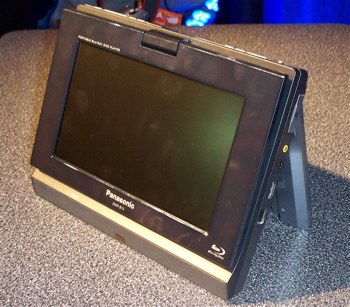
Panasonic debuts Tiny HD with portable Blu-ray
The Portable Blu-ray viewer/player that Panasonic showed off in its CES keynote this year was officially announced today, and will be available this month for $799.95.
Panasonic's DMP-B15 utilizes the same technologies as the company's full-sized Blu-ray players, so it can be used as a standalone player, or as a component in a home theater setup. It includes support for BD Live and Viera Cast functionality, which requires an Ethernet connection and opens the device to Amazon's Video on Demand, YouTube, Picasa Web albums, and more as services are added.


AMD to ship its six-core Opteron server CPU
At a press conference from its Round Rock headquarters this morning, AMD made good on one of its most important promised milestones: It's preparing to deliver its six-core Opteron server processors, which will beat Intel to market with the first drop-in six-cores for 4P and 8P configurations. Shipping, according to executives, begins now. Intel isn't expected to have Nehalem generation EP- and EX-class Xeon processors in configurations other than 2P until sometime next year.
As the company's server business director John Fruehe told reporters this afternoon, this new class of six-core Opteron will feature a new element of its HyperTransport bus, called HT Assist. As Fruehe explained, this feature will enable all the processors in a multi-way configuration to share portions of their L3 cache as a pooled lookup table. This way, calls to the table are directed to the appropriate processor, even across processors. The promise here is to dramatically reduce crosstalk and traffic, and cut stream memory bandwidth by as much as 30%.

Palm post-Pre: One handset won't cut it
This is the week we all root for the underdog.
I suspect I'm not the only one who's stood by and watched -- or winced -- as Palm stumbled ever further from the heights of nerd-worship it enjoyed a decade ago. I've cringed as a company that for a time seemed capable of doing no wrong instead spent more time reorganizing its corporate org chart while its iconic products gathered dust.
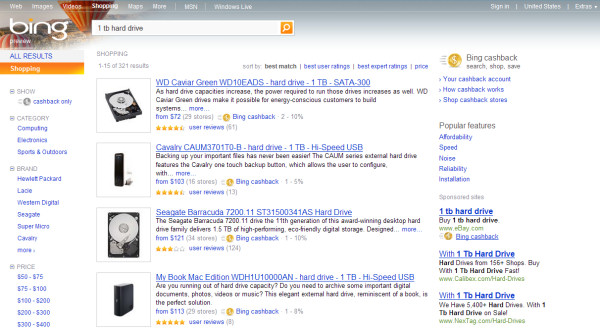
Bing vs. Google face-off, round 1
Easily the biggest single change to the way I do business over the past quarter-century -- bigger than the ubiquitousness of e-mail, bigger than the mouse, bigger than push-button piracy -- is the search engine. Google is an invaluable research tool that my colleagues and I might have invested literally thousands in to be able to use, were it available two decades ago; though in all fairness, the search engine that truly blazed the trail in functionality in the early days of the Web was AltaVista.
Even AltaVista has some unique linguistic tricks that, if they could be applied to Google's colossal index, would yield mind-boggling results; so the notion that Google cannot be bested is probably false. But this time it's Microsoft once again that's laying down the gauntlet. This time, its search engine's latest revamp sheds what some had seen as its biggest liability: its brand name's ties to Windows, as if using Windows Live Search had anything to do with using Windows. The choice of Bing as the final title indicates that most of the good dot-com names really have already been taken; but that criticism aside, Bing deserves a fair shake.

Adobe un-Flexes Flash, a surprise DoJ move on copyright, and scary ex-employees
For the love of Pete don't tell Joe Biden, but a brief handed down Friday by the US Justice Department turns its back on movie and TV lobbyists in favor of the reality-based community. That's coming up in What's Next. First, we have snapdragon sightings, some more scary ex-employees, and the press discovers what many of you beta testers already know and love, a Microsoft gift for Firefox users that just keeps on giving.
Adobe releases bevy of dev tools, fixes naming weirdness

Loving the octothorpe; or, why Twitter's hashtags really do reflect reality
This episode of Recovery is brought to you by the Three Wolf Shirt and the newly leaked Palm Pre default ringtone. If one doesn't leave you awash in win, the other will. Both together, however, will probably cause your puny mortal frame to go supernova, so knock that off.
The new social-media doyenne at The New York Times is dutifully twittering away, asking the community to send suggestions about how the paper could better use the resources available. (Unlike the rest of us, the folks at the Times would't do anything so undignified as learning by doing. They also find proper sourcing a bit beneath them, but we'll save that conversation for another day.) She's getting a mixed bag of responses, of course, but one from @rkellett stands out for me: "Get the NYT to standardize, push, create hashtags on breaking news."
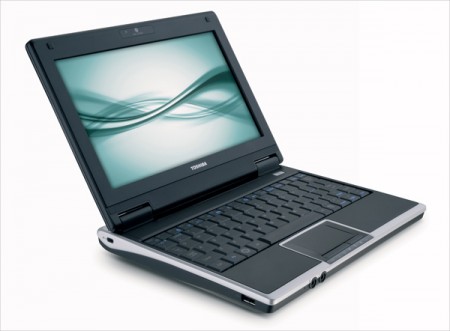
On second thought, Microsoft lifts Windows 7's three-app limit for netbooks
If it's a counter that's determining arbitrarily how many applications your limited edition of Windows 7 should be allowed to run, how much precious system resources does that counter consume? And couldn't that memory and space be put to better use, say, running an app? Where and how should netbook manufacturers tell customers they can only run three Windows apps at a time? These were the kinds of questions Microsoft's engineers have been fielding with regard to a limitation in the company's forthcoming Windows 7 Starter Edition, a SKU of the operating system it wants netbook manufacturers to pre-install.
In an indication this afternoon that all this listening to consumers' wishes may be giving Microsoft's people a headache, the company's Win7 evangelist Brandon LeBlanc announced this afternoon the addition to Starter Edition of a kind of feature, if not in fact the subtraction of a feature that nobody wanted: The three-app counter will be gone.
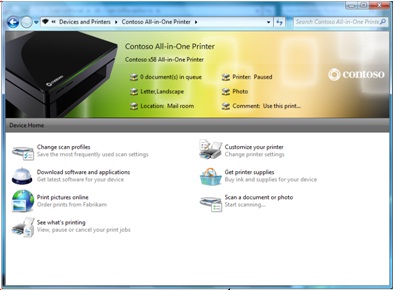
Top 10 Windows 7 Features #2: Device Stage
If the strange feeling that Vista was less secure than XP was topmost on critics' gripe lists over the last three years -- regardless of the facts which contra-indicate that feeling -- running a close second was the feeling that very little, if anything, outside of the PC worked with Vista when you plugged it in.
Here, the facts aren't all there to compensate for the feeling. Even in recent months, Palm Centro users complained about the lack of a Vista driver for connecting Centro to the PC outside of a very slow Bluetooth; Minolta scanner users were advised to hack their own .INF files with Notepad in order to get Vista to recognize their brands; and Canon digital camera owners are being told by that company's tech support staff that Microsoft was supposed to make the Vista drivers for their cameras, but didn't.