
Microsoft re-invents itself in search with Bing
Today, Microsoft officially unleashed Bing upon the world. It's a brand that will be associated with intelligent search, and is hence classified as a "Decision Engine," rather than a search engine. Rollout of the new service (to be located at www.bing.com) begins over the next few days and will be completed in under a week, with the target deployment date of June third.
Click the Bing logo for slideshow.

Meet Bing: Microsoft's new search engine in pictures
Microsoft on Thursday took the wraps off its new Google competitor, a revamped Live Search dubbed "Bing." The site focuses on answering queries without requiring the user to leave the search page. But will it be enough to enable Microsoft to start taking back some search share from Google? Bing officially launches June 3, but we've put together a slideshow to give you a taste of what's to come.

Google shows off Android 2.0
During the keynote at Google I/O yesterday, Android Interface Toolkit Engineer Romain Guy provided a first look at three big developments in Google's open source mobile OS which will be part of the 2.0 update, codenamed "Donut."
The first new feature Guy showed off was "Android Search," a universal search tool that allows contact information, applications, songs, and more in-phone content to be located in addition to content on the Web. It's not unlike the "Spotlight" feature that is included in the iPhone 3.0 update. The most recent and most-frequently searched terms come in a pre-populated list when Search is launched.

How soon will AOL become Google's prime competitor?
It's time to stop with all the "I told you so's" and the gloating and the self-congratulation, on the part of everyone (myself included) who never saw synergies between the former America Online and Time Warner, who are just as capable of reading the big, fluorescent handwriting on the wall as anyone else. We knew it wouldn't work. End of part one.
The task before Tim Armstrong -- minted as CEO of AOL in March -- and his team is to define the company. It has some very old parts and some very big assets, but other than that, it's a startup. If you "Google" Tim Armstrong (a number of ironies latent in that phrase), you discover almost instantly the type of independent CEO he will be. He helped build Google into the advertising sales giant it is today (its merger with DoubleClick notwithstanding), and he takes the knowledge of that blueprint with him to AOL. He is an ad man, and AOL will be an advertising platform.

A look at Eeebuntu Base 3.0
Download Eeebuntu Base Edition 3.0 from Fileforum now.
Eeebuntu is a custom Ubuntu distro optimized for use on Asus' Eee PC line of netbooks. By incorporating Ubuntu with the Array Kernel and EeeConfigure, Eeebuntu eliminates much of the massaging Ubuntu would require to fully work on Asus' popular netbook.

The end of Time Warner + AOL... White MacBook gets bolder... Windows 1, Linux 0
It's a term first popularized by R. Buckminster Fuller just after World War II: synergy. I could present his own definition here, but you wouldn't have time to read it. But it's essentially the idea that, at least in nature, all living, breathing entities were designed to exist in a kind of interdependent harmony (his "Synergetics" was the study of how that worked). That term was leveraged by Steve Case's AOL and Jerry Levin's Time Warner repeatedly, to discuss the reason for their little get-together. This morning, that term is finally proven to have been a misappropriation of the highest degree.
Time Warner minus AOL

Adobe brings its own PowerPoint-style app to the cloud
Acrobat.com Presentations offers way to create simple Flash-based slideshow presentations online which can be worked on by numerous Adobe.com members simultaneously and then be presented from their online location or exported as .PDF files for offline use.
The app's interface is similar to Adobe's Web-based Photoshop Express, and provides a comparable level of functionality: basic, but elegant and aesthetically pleasing. While the same Adobe user ID can be used to access both Presentations and Photoshop Express, the two applications are actually separate branches of Adobe's growing arsenal of Web-based services.

Psystar promises bankruptcy court it will rethink its business plan
It isn't Psystar's legal tangle with Apple Inc. that led to its Chapter 11 bankruptcy filing in a Florida federal court last Thursday. Rather, seven of the independent PC maker's top 10 creditors were credit card processing services, making up about 44% of its outstanding debt to those top 10 creditors. The IRS accounted for less than 5% of that debt. This according to court documents obtained by Betanews from the US Bankruptcy Court for Southern Florida.
Although Psystar also didn't blame Apple in its petition for an emergency relief hearing the following day, it did mention the company as the developer of the operating system on which its Open-brand PCs are based. Instead, the story Psystar told is one that could apply to a thousand independent PC makers across the country, except for one important element: It's almost impossible for an OEM of Psystar's size to compete in the PC market on price alone, while still maintaining profitability.

AT&T announces 7.2 Mbps HSPA upgrade
It has been one year almost to the day that AT&T completed its initial HSPA rollout, adding 800 Kbps HSUPA. As was promised on the operator's roadmap, the company announced its next network upgrade will begin later this year.
This upgrade will increase HSPA's maximum downlink speed from 3.6 Mbps to 7.2 Mbps, which will pull AT&T up into the majority bracket of HSPA operators (or those whose speeds max out at 7.2 Mbps or higher), and consequently increase the global average speed due to the company's ballooning subscriber base of more than 78 million.

Small-town thinking leads to a healthcare privacy smashup
I swear I don't mean for Lockdown to turn into the "What The Hell Are They Thinking?" weekly security rant, but as that legendary site used to say, a fish, a barrel, and a smoking gun. This week, we travel to Yakima, Washington, which on further reflection may turn out to have been our first mistake.
Yakima isn't Seattle, or even Tacoma -- it's about two hours away from either of those cities, and in either case its 81,214 residents live on the other side of a rather large mountain range that separates lovely Western Washington from the flatlands of the central area. The point is that while they're not entirely in the sticks out there, the local options for medical care in Yakima are a bit more limited than those to which you might be accustomed. Keep that in mind, if you would. There will be a quiz.

Microsoft plies Mediaroom on rural IPTV operators
Today, Microsoft announced that its Mediaroom IPTV platform now supports virtualization, which will facilitate cheaper IPTV deployments with a faster time to market.
Microsoft's IPTV platform has never been a huge sensation, despite its considerably strong portfolio of capabilities which include time shifting, video on demand, six-channel simultaneous channel view, and home media sharing. Since debuting as Mediaroom (its sixth brand name change) in mid-2007, it has been adopted by 20 major IPTV providers worldwide, and has over three million households using it. With today's announcement, Microsoft is making a play at the smaller regional service provider.
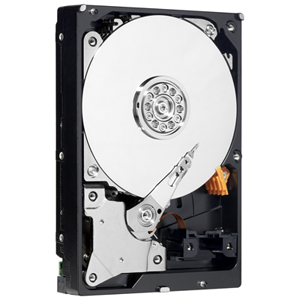
6 Gbps SATA transfer speed is on its way
The solid-state disk drive is supposed to be fast. After all, it's mostly made of memory -- and last we checked, flash RAM was fast. In practice, however, some applications with SSDs can be slower than with HDDs, the reason being the way data is cached as it's collected and moved through I/O channels into system RAM.
The transfer interface is the bottleneck, and the engineers that contribute to the Serial ATA (SATA) transfer specification admit that fact openly. Just a few years ago, you might never have thought that 3 gigabits per second (Gbps) would end up causing problems; but as it turned out, the faster SATA 2.0 maximum transfer rate enabled new applications, which ended up introducing users to those bottlenecks for the first time.
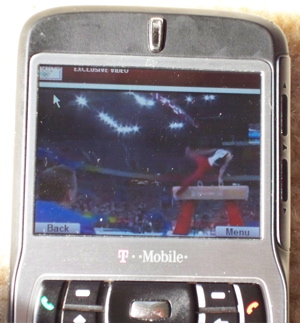
Skyfire 1.0 mobile browser launches today
Since launching in public beta last September, full-featured mobile browser Skyfire has been installed by more than a million North Americans. Today, the official first version has been released, and is available for free on Windows Mobile 5 and 6, and Symbian S60 3rd Edition handsets.
Skyfire has striven to provide a PC-like browsing experience on phones since its earliest stages. All pages are rendered on Skyfire's servers instead of in-phone, and it supports Flash 10, Silverlight 2, Ajax, and JavaScript, making most rich media fully available even on 2G data connections.

Switzerland sides with Microsoft...Facebook's $240 M payday...Digg shouts up
Welcome to What's Now | What's Next. Our objective is to present the news that people will be talking about today, and insight into what they'll be thinking about tomorrow.
Red Hat takes Switzerland to task for lack of neutrality

Sonia Sotomayor and technology: What we know so far
President Obama stepped around two Silicon Valley-area judges to nominate Sonia Sotomayor for the open Supreme Court post. What might the tech world expect from the Bronx-born, Ivy-educated, baseball-saving justice?
Say "Hmm," contractors. A lot of freelancers know the centrist Sotomayor best from NY Times Company v. Tasini, in which a large group of freelance writers sued the Times for putting their articles into LexisNexis without further permission or compensation.