
Fifteen years after 9-11, threats have evolved too
Fifteen years after 9-11 it’s interesting to reflect on how much our lives have -- and haven’t -- changed as a result of that attack. One very obvious change for all of us since 9-11 is how much more connected we are to the world and to each other than we were back then. Politico has a great post quoting many of the people flying on Air Force One that day with President George W. Bush as his administration reacted to the unfolding events. Reading the story one thing that struck me was the lack of immediate information about the attacks available to the airborne White House. They had televisions with rabbit ear antennas and rarely more than a few minutes of TV coverage to watch at a time as they blasted around the midwest at mach 0.94.
Even Mary Alyce and I, sitting on our Wine Country hillside, were watching satellite TV that day. Today, of course, we all have news and social media coming-in through a wide variety of channels and nothing is very private for long.

New version of RAA ransomware only goes after business users
A new version of the RAA ransomware was found recently by security researchers at Kaspersky Lab. This one, written completely in Jscript, seems to be targeting business users exclusively, the researchers claim.
It comes as they all do: through an email with the malicious attachment. This one, however, comes in a password-protected zip file. This method does two things:
Intel Security will revert to the McAfee name
Intel has made the decision to sell off a majority stake in its security software arm, which was previously known as McAfee, to the private equity firm TPG.
In 2010, the chip maker acquired the security software company for $7.6 billion and then four years later it decided to do away with the McAfee name entirely in favor of Intel Security. TPG, which will own 51 percent of the company after the sale, will be reverting the company name back to McAfee, likely due to the security software being a household name and having a large user base.

Niche software vulnerabilities leave enterprises open to attack
News of software vulnerabilities often centers on products from well-known companies that potentially put large numbers of end users at risk.
But a new report from software solutions company Flexera Software reveals that the niche products used by specialist industries can be just as much of a problem.
Protecting your wireless security camera footage
About four years ago, before I had children, I was quite surprised when friends of mine had a baby monitor with a video display -- not because I didn't think something like that was possible, but the fact that it was normal and available in a nice wireless package was striking for someone inexperienced in the baby world.
Several years later, my wife now checks on our younger child every night with one. The sense of security and convenience that come with a device to instantly check on someone or something that you care about can be extremely valuable.

Chrome to warn users of insecure HTTP sites that transmit passwords or credit card info
With Chrome, Google is on a mission. A mission to make the internet a safer place. Its ultimate goal is to display a warning that HTTP sites (rather than HTTPS) are insecure, but this is a long-term plan and there are many stages to go.
Starting at the beginning of next year in Chrome 56, the plan moves to its next stage. As of January 2017, any HTTP sites that transmit passwords or credit card details will be flagged up as being insecure.

New cloud suite aims to eliminate passwords
Passwords are old technology and were never really designed to protect public access to sensitive information like bank and healthcare details. Yet despite the introduction of new technologies like two-factor authentication, biometric recognition and others, the password continues to cling on.
Identity and authentication platform Trusona wants to hasten the death of the password with the introduction of its Cloud Identity Suite, offering three tiers of identity-proofing and authentication, and making the basic level available for free.

More than half of malware infected files in cloud apps are shared with others
The latest report on enterprise cloud usage and trends from cloud security specialist Netskope reveals that 55.9 percent of malware-infected files found in cloud apps are shared publicly.
It also finds that ransomware is now one of the most common threats, with 43.7 percent of malware infections found in enterprise cloud apps having delivered ransomware. These include Javascript exploits and droppers, Microsoft Office macros and PDF exploits.
New solution helps identify security blind spots
One of the biggest problems companies have in keeping their system secure is a lack of integration and coordination between security and operations. This can lead to security blind spots and processes that are isolated from protection solutions.
IT solutions provider BMC is announcing extensions to its BladeLogic Threat Director product that allow for the rapid identification of unsecured assets, and provide visibility into application dependencies. This means operations teams will be better able to anticipate the impact of actions on end users.

Android's September security update patches Quadrooter flaws
Google has released a new Android security fix that deals with the final two flaws in the Quadrooter set of vulnerabilities that was discovered last month.
Quadrooter refers to four undiscovered security vulnerabilities found in Android phones and tablets containing Qualcomm chips. These vulnerabilities are particularly troubling as they were found on every version of Android and affected at least 900 million devices.
How to crack Windows and OS X passwords
A security researcher has revealed a way to determine the password needed to access a protected Windows or OS X account. Using Rob Fuller's technique, it doesn't matter if the computer in question is locked, and it uses a USB SoC-based device to crack user credentials.
By modifying the firmware of a USB dongle, Fuller was able to make the device appear as an Ethernet adaptor. By spoofing a network connection, it is then possible to trick a target computer into giving up an account password.

Growing number of cyber attacks suggests no one is safe
I've been at CloudSec 2016 in London, listening to various security professionals from the likes of Trend Micro and Microsoft talk about the challenges businesses face in securing their data in the cloud.
As you could probably have guessed, talks have centered around the ever-expanding threat landscape, the continued industrialization of cybercrime through various underground marketplaces around the world and general cyber security trends.

Limelight launches web application firewall
Increased reliance on the Internet means businesses face a number of different security threats aimed at bringing down websites, impacting performance or stealing information.
Many of these attacks are aimed at the application layer. Content delivery specialist Limelight Networks is adding to its Cloud Security services with the launch of a new Web Application Firewall (WAF).

New alliance of security companies aims for a holistic approach to data breaches
One of the biggest problems organizations have in staying secure is a lack of visibility across the whole enterprise, giving hackers the opportunity to exploit gaps between security solutions.
Access control specialist SecureAuth is taking the lead in the creation of a Connected Security Alliance with the aim of building a reference architecture that will help organizations address every stage of the attack lifecycle from initial penetration, to lateral movement, to escalating privileges.
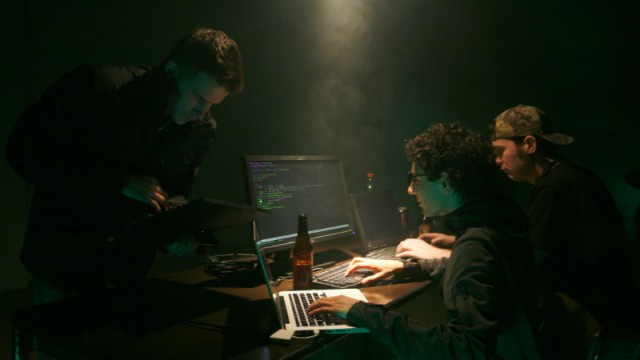
Why businesses should build 'human firewalls'
It is often the illusive H Factor -- the human element -- that ends up being the weakest link that makes cyber-attacks and data breaches possible, sometimes even more so than hackers exploiting zero-day system vulnerabilities or employing new malware.
According to the 2016 Verizon DBIR, human errors are a major factor in most data breaches. This human touch is especially true with the growing mobility of employees and BYOD (Bring Your Own Device) policies that are becoming more widespread. Therefore, while technological cybersecurity solutions take center stage in many businesses' cybersecurity plans, addressing the human element is as important as the technological one.