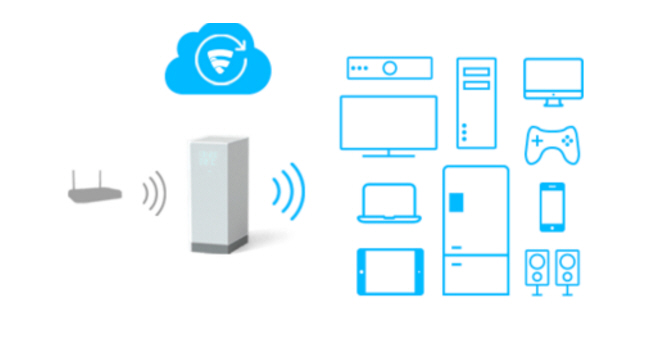
Streamlining home network security [Q&A]
Whilst businesses can call on expert resources to secure their systems, for many home users protecting a home network and the devices attached to it can be something of a dark art.
Finnish security company F-Secure is aiming to make securing systems simple even for the non-technical with its forthcoming SENSE product. We spoke to Mika Majapuro, F-Secure's director of product management, to find about more.

Gozi Banking Trojan is now fully compatible with the Edge browser in Windows 10
Banking trojans, like ransomware, have become big business today. And the people behind all of these malicious products are always moving forward, innovating with the times in an effort to keep up with technology and victims.
There is a virtual smorgasbord of malware out there just looking for ripe pickings. One is the Gozi Banking Trojan, which injects its code into the operating system via the browser. With Windows 10 being offered (pushed) for free, malware makers are scrambling to cover the adoption rate by updating their products.

The majority of IT pros view email as a major security threat
Sixty-five percent of IT professionals don’t feel equipped to defend against email-based cyber attacks, according to the findings of a report carried out by email security and archiving company Mimecast.
The global study of 600 IT security professionals -- Mimecast Business Email Threat Report 2016, Email Security Uncovered -- also found that 64 percent of respondents regard email as a major security threat and one third believe email is more vulnerable today than it was five years ago.
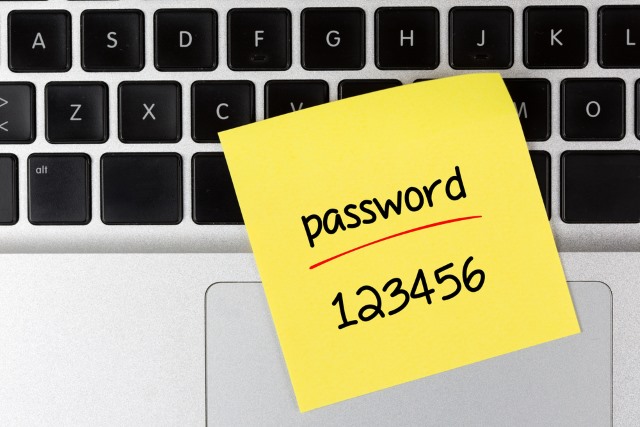
95 percent of US consumers share their passwords
It seems that convenience trumps security when it comes to passwords. Although 73 percent of US consumers believe sharing login details is risky, 95 percent do share between one and six of their passwords with other people.
A new survey by LastPass also reveals that only 19 percent of respondents say they don't share passwords that would jeopardize their identity or financial information, leaving a scary 81 percent of people who would share them.
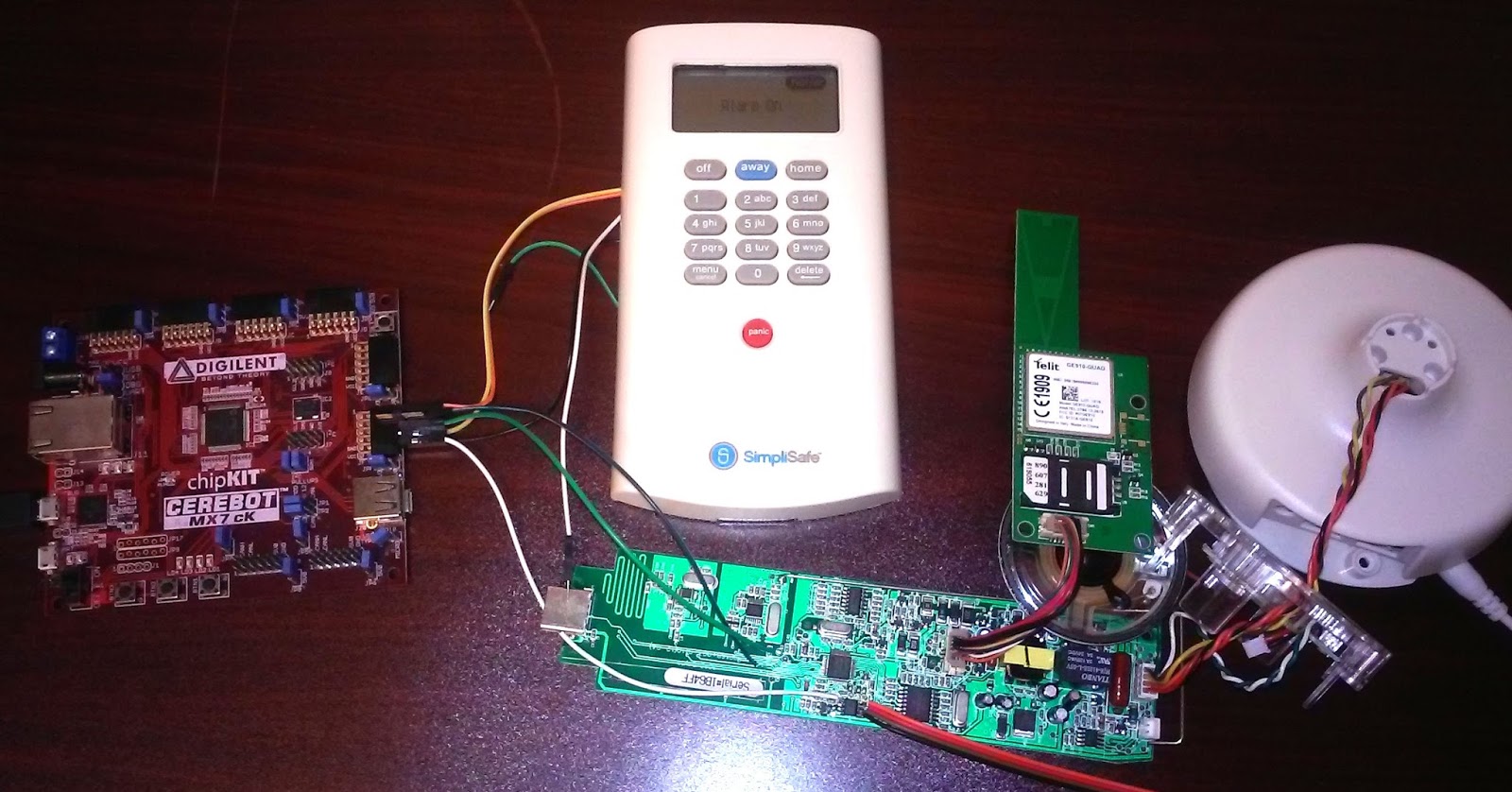
New research suggests alarm system SimpliSafe simply isn't safe
If you watch TV at all, at least in the US, you've likely seen the ads for the latest technologies being pushed to market. While many folks like to be early adopters, there's something to be said for ignoring that pie-in-the-sky pitch and waiting until something has had time on the market and been thoroughly tested.
We recently saw this with the Ring doorbell, a product that continues to run endless TV commercials, perhaps just banking on appealing to the average person who doesn't look into things too carefully. Another one taking up your screen time these days is a new alarm system calling itself SimpliSafe. The problem is, research indicates it may not be living up to its impressive moniker.

IT professionals' bad security habits exposed
Many IT personnel don't follow the same security protocols they’re expected to enforce according to the results of a new survey of over 500 professionals working in IT security roles.
The study by Absolute Software Corporation shows that 45 percent of IT professionals admitted to knowingly circumventing their own organization's security policies. In addition 33 percent of respondents admitted to successfully hacking their own or another organization.
Cisco announces Firepower Next-Generation Firewall
Cisco has released a new firewall solution which aims to completely change how security services tackle cyber-threats.
The new product, Cisco Firepower Next-Generation Firewall (NGFW), is built to detect threats on a system, and not keep the system on a lockdown. Here’s how Cisco explains the new product

The role of collaboration in GDPR compliance
As the European Union reaches an agreement on the General Data Protection Regulation (GDPR), which will require companies to comply with state-of-the-art cybersecurity requirements, security firm Palo Alto Networks has surveyed businesses to see how much they know about cyber-security and where the responsibility lies.
The survey suggests much work still needs to be done, particularly in areas of collaboration and responsibility sharing.

Tim Cook is absolutely right
Some documents are historically significant. They mark moments, comment on them, in manner demanding future citation and even use in courts or classrooms. That's how I read Apple CEO Tim Cook's "Open Letter to Our Customers", about breaking iPhone encryption. His exposition spotlights seminal moment in the United States of America: Government's further expansion of powers encroaching indiviuals' rights to privacy and one company standing up and saying "No".
Some people will scoff at my comparison, but it truly is what I see. Cook is like Rosa Parks, refusing to take a seat at the back of the bus—or in this instance behind one court judge and the FBI. Cook and Apple stand up for us all. I applaud law enforcement's efforts to protect us from terrorism but tyranny shouldn't be the means; taking away Constitutionally-given freedoms to protect them. Tim Cook is right.

Malwarebytes launches new endpoint detection platform for enterprises
Traditional endpoint security often ends up generating lots of false alerts which take up valuable support time to investigate and resolve.
Anti-malware specialist Malwarebytes is aiming to make things easier for businesses with the launch of its latest Breach Remediation product, a platform that improves organizations' ability to remove advanced threats from their endpoint systems.

Your VoIP phone could be used to spy on you
You should be careful when running voice-over-IP (VoIP) phones, as weak passwords could turn your device into a covert spying tool.
Security consultant Paul Moore says he has discovered how default and weak passwords on enterprise-grade Snom VoIP phones could allow attackers to make their own calls using your service, or listen to your conversations.

ID as a Service solution helps to secure digital access
Identity and access management (IAM) is a growing field, expected to be worth around $18 billion by 2019 according to a recent report.
This is partly down to cloud growth creating the need for a secure solution that can scale quickly, in on-premise environments and across cloud applications, without additional costs for installation and extra hardware.
Threat Stack launches integrated cloud security suite
Keeping systems secure has become more complicated as companies adopt cloud and hybrid environments for their systems.
To eliminate the need for multiple different security products and give users a single-pane view into workloads, infrastructure monitoring, vulnerability management, threat intelligence and compliance reporting, Threat Stack is launching a new Cloud Security Platform.

Experiment tracks what happens to stolen credentials
We all know that hackers are looking to steal credentials and get their hands on sensitive data, but exactly how does this process work?
Researchers at data protection company Bitglass carried out its second 'Where’s Your Data' experiment, creating a digital identity for an employee of a fictitious retail bank, a functional web portal for the bank, and a Google Drive account, complete with real credit-card data.

Critical security gaps found in secure web gateways
Attack detection and analytics specialist Seculert has released a new report identifying critical security gaps in popular web gateway solutions.
During the first 10 months of 2015, Seculert observed the web gateway performance of Barracuda, BlueCoat, Fortigate, Ironport, McAfee Web Gateway, Palo Alto Networks, Websense and Zscaler to determine whether existing gateway solutions were allowing infected internal devices to communicate traffic outside the organization.