
HSBC online banking hit by DDoS attack
As workers eagerly awaited the arrival of their first payday of 2016, and others rushed to file their tax returns ahead of Sunday's deadline, HSBC's online banking services were knocked offline today.
The banking giant was hit by a DDoS, but it is not yet clear who is responsible. The attack meant that customers were unable to access their online accounts, and it is just the latest in a strong of high-profile security issues to affect well-known sites.

IT security professionals are looking for a challenge
The notion that IT security professionals are mercenaries when it comes to work and would most likely move if given an opportunity to earn more is, by a large margin, incorrect.
That’s basically what a new report by AlienVault says. The report, entitled Blood on HR's floor -- The Challenge of Retaining IT Security Skills, has a couple of interesting points.
Lenovo fixes SHAREit security flaw
Lenovo has issued updates to address a hard-coded password flaw and other security issues with its file sharing utility SHAREit.
Lenovo has addressed a serious flaw in its PC and Android versions of SHAREit, which enabled anyone on a LAN or wireless hotspot to potentially view and copy files from another computer or device running the SHAREit application. Though that was always the intention of the application -- to make file sharing painless -- it was probably not intended to be so open to anyone.
Wendy's investigating a possible credit card breach
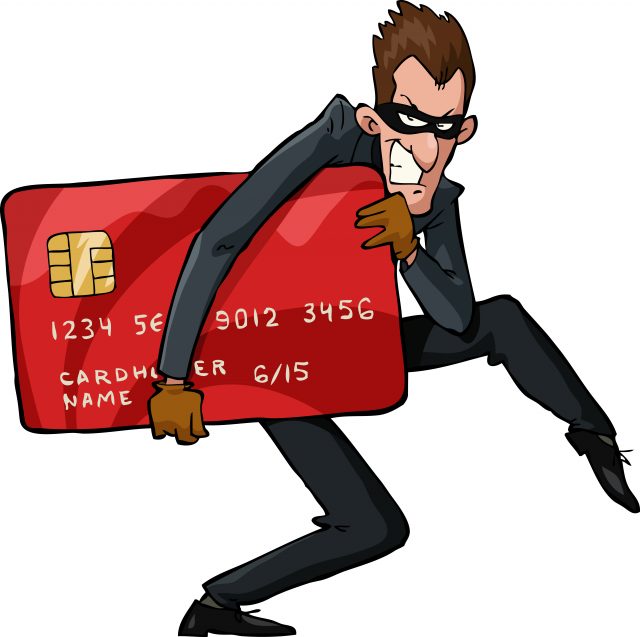
There have numerous instances of credit card breaches recently, with many popular companies affected by the problems. News of one more seems to be expected these days, and now it is beginning to break that a fast food chain may be the latest in this growing line.
Before you panic, this is only being investigated at the moment, so everything may be fine. So far all that's known is that several banks reported a pattern of fraud charges and the common link was that each had been used at a Wendy's location.

One in three home routers will double as a public hotspot by 2017
Would you be willing to share your Wi-Fi router so that everyone around you could use it as a public hotspot? Your Internet connection would stay secured behind a firewall.
This is actually not a rhetorical question, but an inevitability, according to a recent Juniper Research report. According to the market analysts, by 2017, one in three home routers will be used as a public Wi-Fi hotspot, and by 2020 there will be a total of 366 million of these units worldwide.
Phishing attacks grow in volume and complexity
According to a new report from security awareness specialist Wombat Security phishing attacks are on the rise and are supported by increasingly aggressive social engineering practices that make them more difficult to prevent.
Organizations surveyed indicated they have suffered malware infections (42 percent), compromised accounts (22 percent), and loss of data (4 percent) as a direct result of successful phishing attacks.
Bittium Tough Mobile is ready to take on Blackphone for the most secure phone crown
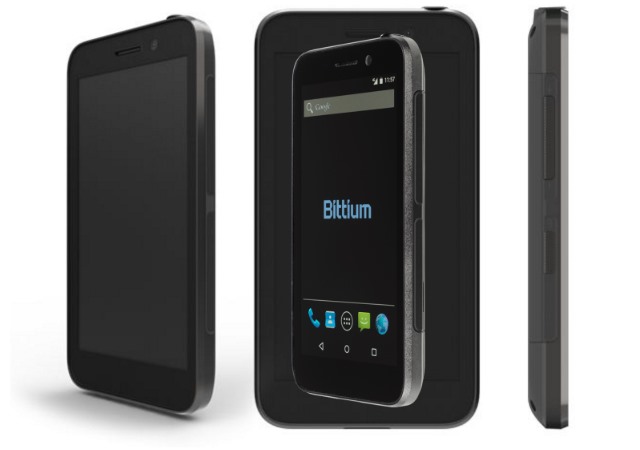
Surveillance, privacy concerns and other issues have brought security into sharp focus for mobile users the world over. Apple, Google and Microsoft all offer encryption options, but for those with real security and privacy worries, the likes of Silent Circle's Blackphone 2 and the ARCHOS GranitePhone have a healthy following. Now there's a new security and privacy-focused handset vying for attention: the Bittium Tough Mobile.
At Mobile World Congress 2016 in Barcelona next month, Bittium will show off not only its secure smartphone, but also its Bittium Secure Suite device management and encryption software. With these and Bittium SafeMove -- a secure remote access tool -- the company hopes to increase business and enterprise confidence in mobile and the Internet of Things.

One in three Americans are victims of healthcare data breaches
In the last year there have been a number of data breaches involving the healthcare industry. These included high profile attacks such as those on Premera Blue Cross and Anthem compromising millions of records.
According to the 2016 Healthcare Breach Report from cloud access specialist Bitglass more than 111 million individuals' data was lost due to hacking or IT incidents in the US alone.
Continuous security helps protect consumer data
As individuals, the amount of personal data we have online has grown thanks to social networking and the number of organizations that encourage us to do business via the internet.
It's set to grow still more as the Internet of Things takes off, and this presents problems when it comes to sharing information. Conventional solutions rely on checkboxes or cookies, but these struggle to cope with current demands.
6 essential security tips for Data Privacy Day
Data Privacy Day may not sound like the most exciting event to add to your calendar, but it serves as a hugely important reminder of the value of security. January 28 is the big day, and there has never been a better time to ensure that you are following best practice -- and there's no reason not to get started ahead of time.
35 years ago, Data Protection Day was launched, and over the years this evolves into Data Privacy Day. The aim is to improve privacy and security awareness online, on mobile, and on computers in general. Whatever you use your phone, computer and other devices for, there's plenty you can do to increase your security and privacy.
Free tool launches to evaluate privileged password management
It's easy to set rules for handling privileged account passwords, but harder to ensure that they're being followed and that they meet best practice and security guidelines.
IT security specialist Thycotic is aiming to help organizations by launching a free online tool that demonstrates how companies compare to other, similarly-sized, organizations when meeting password management practices.

Where's my phone? A couple in Atlanta don't have it
Smartphones are a hot commodity, meaning thieves want them, but they are also relatively small and easily lost or forgotten. There's an app for that. Well, several apps in fact. Creating ways to find misplaced or stolen phones has become a cottage industry, but these products have limitations.
Locating a device isn't an exact science. It's more just narrowing down an area and then making it a guessing game through triangulation via cell towers -- although using GPS works rather better.

Turkey becomes top target for DDoS attacks
The final quarter of last year saw Turkey suffer an onslaught of denial of service attacks, the number growing ten-fold to more than 30,000 events per day, according to security company Nexusguard.
The company's Q4 2015 Threat Report shows that 81 percent of the top 10 attack destinations were Turkish-based IP addresses. It's thought that the spike in attacks could be related to rising tensions between Russia and Turkey.
DDoS attacks and how they work
DDoS attacks are one of the greatest threats that companies face and can lead to financial losses and damage to customer relationships.
But how exactly do these attacks work? Cloud delivery security company Incapsula has put together an infographic explaining the anatomy of an attack.

Privacy ombudsman could handle European complaints about US surveillance
The importance and awareness of online privacy issues have been brought into sharp focus in the 21st century. It's not entirely down to Edward Snowden, but the revelations from the former NSA contractor are a constant reference point for those concerned with privacy, security and freedom of speech.
One of the greatest problems facing anyone trying to tackle the problem of privacy on the web is dealing with the ideologies of different countries, and how this affects data sharing. A level of surveillance that is deemed acceptable in the US, for instance, may be considered completely objectionable in another. The latest suggestion to help overcome this seemingly insurmountable problem is to set up a privacy ombudsman that would be able to handle European complaints and queries about US surveillance.