
The role of encrypted traffic analysis for threat detection [Q&A]
Everyone is striving to make their systems more secure and in many cases that means adopting encryption in order to protect data.
But the use of encrypted traffic over networks presents a headache for security teams as malicious content can be harder to detect. We spoke to Thomas Pore, director of security products at Live Action, to find out more about the problem and how it can be addressed.

Researchers uncover cybercriminal stronghold targeting Facebook users
The Facebook Messenger 'Is That You?' video phishing scam has been around since 2017, but a recent investigation into it by researchers at Cybernews has led to the discovery of what they're calling a 'cybercriminal stronghold'.
Threat actors are using this to infect the social network with thousands of malicious links each day. The research has also identified at least five suspects, thought to be residing in the Dominican Republic.

BEC attacks get more businesslike to trick users
Business email compromise attacks are up 53 percent over the last year and are increasingly trying to look more like legitimate emails in their use of language.
A new report from Armorblox shows 74 percent of BEC attacks are using language as the main attack vector.

Business-critical systems going unsecured and unmonitored
According to a new poll 40 percent of enterprises don't include business-critical systems such as SAP in their cybersecurity monitoring. In addition, a further 27 percent are unsure if systems are included in their cybersecurity monitoring at all.
The survey from Logpoint also shows only 23 percent say the process of reviewing SAP logs for cybersecurity events or cyberthreat activity is automated through SIEM, with almost 19 percent still doing so manually.

Identity-based attacks are top threat to businesses
Ransomware, software supply chain attacks, data breaches, and more have become an almost daily occurrence in an increasingly challenging threat landscape.
Automated threat detection company Blumira has released a new report based on its security detections which reveals that identity-based attacks and living off the land behaviors were the top threats organizations faced in 2021.

Website shadow code represents major risk for enterprises
A new report from web application protection specialist Source Defense highlights the risk presented by the use of third and fourth party code on corporate websites.
The digital supply chain means that highly dynamic and unpredictable scripts and code from third parties and beyond, permeate every aspect of a business's web presence. This shadow code has led to some high profile breaches including the British Airways hack in 2018.

Two-thirds of data breaches at UK legal firms caused by insiders
New analysis of data breaches in the UK legal sector reveals that 68 percent were caused by insiders.
Analysis by secure cloud platform NetDocuments of data from the Information Commissioner's Office (ICO) reveals evidence of a 'Great Exfiltration' where employees are leaving their jobs and taking their company's data with them.

How secure is your supply chain?
Supply chains are fast becoming one of the top targets for cyber criminals, so when it comes to supply chain risk management, organizations in every industry need to start paying more attention.
While the vast majority of business leaders recognize that cybersecurity is now a key priority, the UK’s Department for Digital, Culture, Media and Sport (DCMS) recently noted that in too many instances, actions aren’t keeping up with intentions. In fact, nearly a third of UK companies admitted they aren’t currently taking any preventative action at all.

Why the voice network is a blind spot for security professionals [Q&A]
We're familiar with threats to data and data networks, but there's another part of corporate communication that's often overlooked yet represents an equally valid attack vector and equally high risks.
We spoke to Mutare CTO Roger Northrop to find out more about the risks voice networks present and why organizations need to take them seriously.

The current state of intelligent automation adoption in cybersecurity
In the past year, research indicates that nearly a third of organizations have accelerated their plans to automate key security and IR processes, whilst another 85 percent plan on automating them in the next 12 months.
Despite the positivity of these statistics, many organizations struggle to change to a more automated process. This was highlighted at a recent webinar we held with a panel of senior cybersecurity experts from a multitude of sectors. The discussion revealed that, while most organizations are exploring automation, few have made significant progress and they attributed this to a combination of factors including needing an improved understanding of automation, increased help from vendors and a lack of good IT foundations.
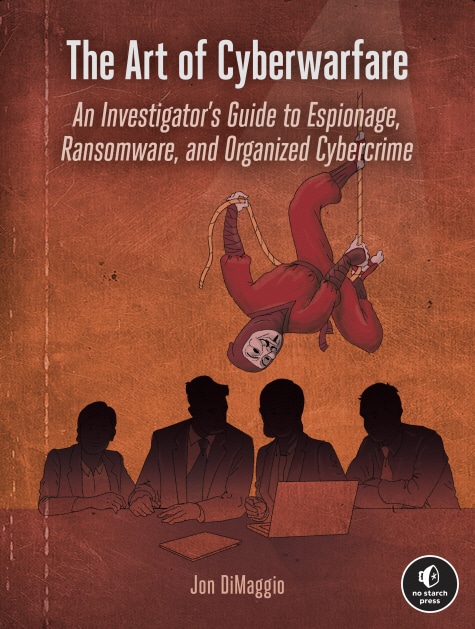
The Art of Cyberwarfare [Review]
In recent years cyberattacks have evolved from being the preserve of individual hackers to something much more serious, carried out by organized criminals and even nation states with the aim of espionage and financial gain.
This makes the process of investigating and defending against attacks more important than ever, but the sophistication of the methods used doesn't make the process any easier. This new book from security strategist Jon DiMaggio offers an investigator's guide to understanding the latest generation of threats.

UK police force becomes first to deploy new digital forensics solution
Thanks to increased use of computers and mobile phones almost every crime now has some form of digital element. This has put a strain on the police's ability to investigate effectively and inevitably led to delays.
West Midlands Police in the UK has become the first to deploy a new cloud-based digital forensic solution from Exterro which allows greater collaboration between officers and means cases can be worked on remotely and resolved at greater speed.

Want a well-paid a career? Have you considered cybercrime?
OK, so there may not be a pension scheme and a company car, but rookie fraudsters are taking home approximately $18,700 (£15,000) a month with 'cybercriminal CEOs' making up to three times as much as their counterparts in legitimate businesses. According to a new report from Arkose Labs.
The return on investment for launching cyber attacks or committing online fraud is larger than ever before. Some of the highest earning fraudsters are known to be making around $7.5 million (£6 million) a year according to even the most conservative estimates. This is almost three times the amount that FTSE 100 chief executives were paid in 2020, when they earned an average $3.4m (£2.7m).

New solution aims to address quantum security threats
We all know that quantum computing is going to offer a major boost in computing power. But that power also represents a threat to cryptographic systems, potentially putting the world's data at risk.
To address the issue QuSecure is launching an industry first end-to-end post-quantum cybersecurity (PQC) software-based solution designed to protect encrypted communications and data with quantum-resilience.

DDoS attacks fell last year but remain above pre-pandemic levels
The number of DDoS attacks dropped 13 percent in 2021 compared to 2020, but remained well above pre-pandemic levels.
Research from Nexusguard also shows that while the average attack size fell by 50 percent over 2021, the maximum attack size nearly tripled, growing by a whopping 297 percent over the same period.