
Ontrack Remote Data Recovery service can keep businesses running during coronavirus lockdown
It can hardly have escaped your attention that huge numbers of people are now working from home. This has placed ever growing demands on the internet in general, and numerous specific services have struggled to cope.
One thing that hasn't changed is companies' need for reliable access to data -- if anything, the higher number of remote workers make this even more important. To help with this, data recovery specialist Ontrack has announced that its Remote Data Recovery (RDR) service is ready to cope with an upsurge in demand during the current COVID-19 crisis.

American schools are banning Zoom and switching to Microsoft Teams
After many schools adopted Zoom to conduct online lessons during the coronavirus lockdown, concerns about security and privacy have led to a ban on the video conferencing software across the US.
The chancellor of New York City's Department of Education Richard A Carranza sent an email to school principals telling them to "cease using Zoom as soon as possible". And he is not alone; schools in other parts of the country have taken similar action, and educators are now being trained to use Microsoft Teams as this has been suggested as a suitable alternative, partly because it is compliant with FERPA (Family Educational Rights and Privacy Act).

Zoom enables meeting passwords and virtual waiting rooms by default as it attempts to beef up security
Zoom's skyrocketing popularity in recent weeks has been both a blessing and a curse for the company. Clearly it welcomes the additional users and, presumably, the income generated, but the company has also found itself under the spotlight resulting in startling revelations about security and privacy.
Having already apologized for a series of issues, Zoom is not taking steps to improve security. In an email sent out to users, the company explains how the virtual waiting room feature will be enabled by default, and meeting participants will now be required to use passwords to join.

Zoom admits to routing some US calls through China
As if the various privacy and security concerns that have plagued Zoom recently had not been enough, now it has been revealed that the company has been routing some calls made in North America through China.
Asking whether Zoom is a "US company with a Chinese heart", security researchers at Citizen Lab reported their discovery that during test meetings, encryption and decryption keys were routed through a server in Bejing. This raised eyebrows, and the company has now tried to explain what happened and issued its second apology this week.

Security researcher discovers vulnerabilities in iOS and macOS that could be exploited to hack webcams
After discovering a no fewer than seven security vulnerabilities in Safari for iOS and macOS, a researcher has received a $75,000 bug bounty pay out from Apple.
Ryan Pickren, a former Amazon Web Services (AWS) security engineer, found a series of security flaws in Apple's web browser, some of which could be exploited to hijack the camera of a Mac or iPhone to spy on users. The webcam hacking technique combined a total of three zero-day bugs.
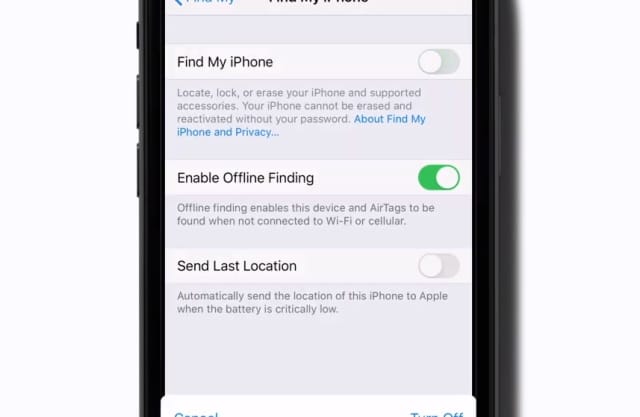
Apple accidentally leaks details of its unreleased AirTags tracking tags
Heads are likely to be rolling at Apple after details emerged online about its unreleased AirTags. A video that references the tracking tags appeared on Apple's official Support account on YouTube but it was removed after the company seemingly realized its mistake.
The revelation came in a video tutorial about how to erase data from an iPhone. In the footage, a screen can be seen which makes reference to AirTags under an Enable Offline Finding heading.
How to lock down Zoom to improve your privacy and security
Zoom has received a lot of attention because of the increased number of people working from home, some good, some bad. There have been various security and privacy issues with the video conferencing app, but there are steps you can take to lock things down a little.
Following numerous controversies, Zoom has not only issued an apology but also put a stop on the development of new features while it gets itself in order. In the meantime, there are a various things you can do to increase your privacy and security when you're using Zoom.

Zoom issues an apology for privacy and security issues, will enact a feature freeze to focus on fixes
Zoom has been in the headlines a lot recently -- and not always for the reasons the company might have wanted. Thrust into the spotlight due to massively increased usage during the coronavirus pandemic, Zoom has been plagued with numerous security and privacy issues.
Now company CEO Eric S Yuan has issued a lengthy statement to Zoom users, apologizing for "unforeseen issues" and promising to improve things. For now, Zoom will get no new features as the company is focusing on fixing what is wrong, and regaining customer trust.

Cloudflare launches DNS-based parental control service 1.1.1.1 for Families
Cloudflare's 1.1.1.1 DNS resolver has been around for a couple of years now, helping to cater for those looking for a more private and secure internet connection. Now the company has announced a new version of the product, this time with extra protective layers.
1.1.1.1 for Families is essentially a parental control filter, automatically blocking access to "bad sites". This means not only sites that deliver malware, but also adult sites that might not be suitable for younger internet users. But while parents may welcome this automated filtering, 1.1.1.1 for Families has already come in for criticism for incorrectly blocking sites.

Cloudflare announces free VPN tool WARP for Windows and macOS, with Linux to follow
If you're in the market for a free VPN for your desktop PC or laptop, Cloudflare will soon have a new offering.
Following on from the success of its free VPN for mobile devices, the company that's also behind the 1.1.1.1 DNS resolver is now bringing WARP to Windows and macOS -- and there is a Linux version in the works. Cloudflare's WARP is currently available in beta, but not everyone will be able to get access to it straight away.

Slack launches new integrations for Microsoft Teams and more
The problem with messaging and video conferencing platforms is that there are just too many of them. You and your work colleagues might be happily working away in Slack, but need to communicate with another team using Microsoft Teams.
To help get around this issue -- and to save you from having to switch allegiances -- Slack is launching new integration options via a new add-on app. This means it is possible to place a Teams call from Slack, and there are many more integrations to come.

Zoom claims to offer end-to-end encryption -- even though that's not strictly true
Security is a serious concern for anyone using the internet, but it most certainly is for businesses. In seeking a video conferencing tool to see them through the home-working coronavirus has forced many people into, Zoom has proved to be an incredibly popular choice, and its proclamation of offering end-to-end encryption very probably swayed a few decisions.
An investigation carried out by the Intercept found that, despite Zoom's claims, the service does not really support end-to-end encryption for video and audio content. In reality, all it offers is TLS, but Zoom has chosen to refer to this as being end-to-end encryption.
Zoom security vulnerability can be used to steal Windows login credentials
Zoom's popularity has accelerated in recent weeks thanks to the number of people now forced to work from home and conduct meetings online. Now security researchers have discovered a worrying vulnerability in the software that could be used to steal Windows login credentials.
The vulnerability steams from the fact that Zoom converts URLs that are sent in messages into clickable links. The same is true for UNC paths, and if such a link is clicked, it is possible to grab a user's login name and their NTLM password hash and decrypt it.

Microsoft releases PowerToys v0.16.0, adding four new tools including Image Resizer and Window Walker
Since Microsoft first announced PowerToys for Windows 10, there was great excitement about the return of the collection of utilities. The company has been drip-feeding us new features over the last few months, and now PowerToys v0.16.0 has landed, bringing with it no fewer than four new tools.
The most interesting new arrivals are the Image Resizer Window Shell extension which provides easy access to image resizing options from the context menu, and Window Walker which is a text-based Alt-Tab alternative.

Marriott International reveals details of another data breach
Towards the end of 2018, Marriott International suffered a data breach of its Starwood Hotel reservation database. Now the hotel chain has revealed that it suffered a second data breach earlier this year.
The company says that at the end of February it noticed that an "unexpected amount of guest information" could have been accessed using the login credentials of two employees. It is thought that this access started in the middle of January, and up to 5.2 million customers have been affected.