
Mozilla confirms Firefox Screenshots is here to stay, although one key feature will be lacking
It has been a busy time at Mozilla recently, with the relaunch of Mozilla Labs and the closure of the Firefox Test Program. The second piece of news -- coupled with the shelving of certain changes to Firefox -- led to speculation about the future of Firefox Screenshots, but Mozilla has come forward to try to calm these fears.
The company says that the screengrabbing tool -- which has become loved by many users since it launched nearly a year and half ago -- is here to stay. It's not all good news, however. One major feature is getting the axe: the ability to save screenshots to a Firefox-hosted server.

Advance warning: Facebook is closing down photo-sharing app Moments in a month -- time to save your pictures!
Facebook is throwing in the towel on Moments as the company kills off yet another of its apps. The photo-sharing app will close down on February 25, meaning there's just a month left for the service.
If you're one of the relatively small number of users, you don't have long to grab a copy of the photos you want to save. Facebook has set up a special website to help you to download copies of your images.

Take this quiz to see if you can spot a phishing scam
If you're anything like me, you probably inwardly roll your eyes -- or laugh outright -- when you hear of someone falling for a phishing scam. Surely you'd have to be a certified idiot to be taken in by one of these, right?
You may have avoided falling victim up until now, but maybe that's been more through luck than good judgement. Or perhaps you really do think you could spot a phishing scam at a hundred paces. If you think you're up to it, why not put yourself to the test and take Google's phishing quiz?

Even Microsoft Edge thinks the Daily Mail website is an untrustworthy source of news
Users of Microsoft Edge have a new feature to help protect them from fake news. The Android and iOS versions of the Edge browser now offer NewsGuard integration, warning when people visit untrustworthy sites.
The feature may only just have gone live, but there are already some amusing -- or pleasing, depending on your point of view -- results coming from it. Perhaps the most notable is that the Daily Mail website, Mail Online, is flagged up as "generally fails to maintain basic standards of accuracy and accountability".

Torrent-Paradise launches a Pirate Bay alternative that takes decentralization to the next level
While the BitTorrent protocol is, by its very nature, decentralized, the same cannot be said of torrent search engines such as the Pirate Bay. Torrent-Paradise, however, is a little different.
A new version of the site uses the InterPlanetary File System (IPFS) to provide decentralized torrent searching. The idea behind how the system works is very similar to the way BitTorrent makes it possible to download files without the need for a central host.

WhatsApp imposes five-recipient limit on forwarded messages to limit 'misinformation and rumors'
All social networks and messaging tools have been used as platforms to distribute fake news. Companies have taken various steps -- such as introducing fact-checking -- to help curb these problems, and now the Facebook-owned WhatsApp is introducing new measures that limit the number of people users can forward a message to.
The company has previously allowed messages to be forwarded to up to 20 people, but now -- in a bid to limit the spread of "misinformation and rumors" -- this has been reduced to just five.

Court orders Apple to withdraw misleading statement about iPhone availability
As part of its ongoing legal battles with Qualcomm, Apple was last month banned from selling the iPhone 7 and 8 in Germany. Despite this, the company issued a press release stating that the handsets would remain available through thousands of resellers.
Now a court has ordered Apple to stop making this claim, with the ruling describing this section of the press release as "misleading" and "potentially deceptive".

How to export your saved passwords from Google Chrome
From social media sites to online stores, from forum accounts to financial institutions -- there are now so many websites that require the use of a username and password, it's little wonder than so many of us turn to some form of password manager to save them.
If you use Google's Chrome browser, you have almost certainly saved numerous passwords so you don't have to manually enter them every time they are requested. You may have wondered how to export these passwords for the purposes of backing them up, or to import into another password manager. Here, we show you how.
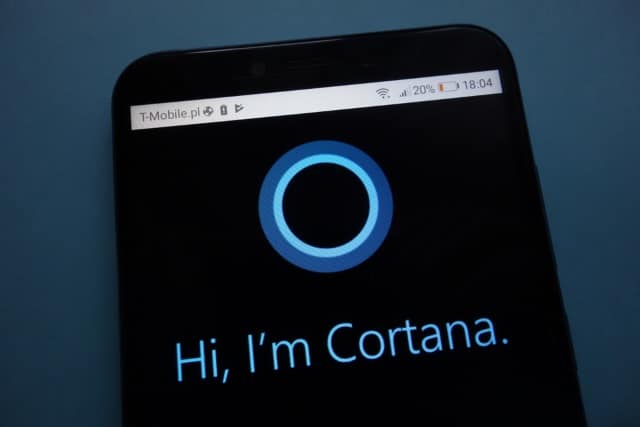
Microsoft concedes that Cortana can't -- and won't -- compete with Alexa and Google Assistant
Microsoft has seemingly admitted defeat in the digital assistant wars, with CEO Satya Nadella saying he does not want to compete with Amazon's Alexa or Google Assistant.
Rather than planning a Cortana-powered smart speaker or other device, Nadella has demoted Cortana, signaling that Microsoft wants to focus on bringing it to other platforms as a "skill". He believes users should be able to use Alexa or Google Assistant to call on the capabilities of Cortana through close integration.

How to view Wi-Fi passwords in Windows
You have probably used your laptop in all sorts of places. As well as at home and in the office, you may well have used it in hotels, coffee shops and other locations that offer Wi-Fi access.
As such, you've almost certainly got a large number of Wi-Fi passwords saved on your computer, passwords that are seemingly inaccessible. But these saved passwords are accessible -- if you know where to look, that is. This is handy if you need the password to get your phone online, or another laptop. Here's how to recover saved Wi-Fi passwords.

Huge Collection #1 database leak exposes 773 million email addresses and 21 million passwords
A massive database leak -- dubbed Collection #1 -- has made its way to hacking forums, exposing millions of email addresses and passwords. The news was first shared by Troy Hunt -- the man behind Have I Been Pwned? -- who explains that the leak comprises, "many different individual data breaches from literally thousands of different sources".
Hunt explains that there are "1,160,253,228 unique combinations of email addresses and passwords", so there are a very large number of people that may have been affected by the leak.
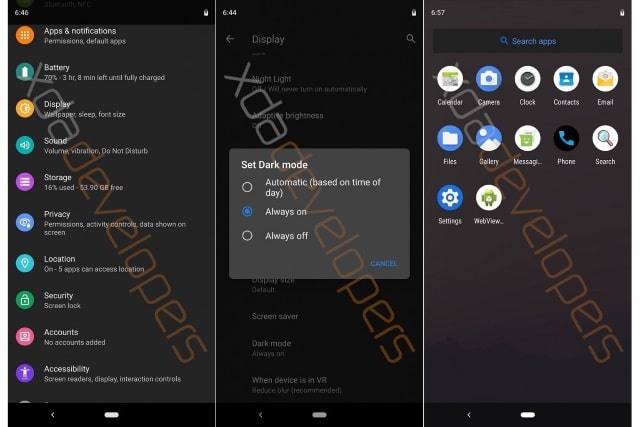
Android Q leak shows dark mode, improved privacy and intriguing Desktop Mode
The inclusion of a system-wide dark mode in Android Q is something that has been rumored for a little while now, and a new leak of the next version of Google's mobile operating system seems to confirm this.
A leaked build of Android Q not only features a customizable dark mode option, but it also shows that Google has tightened up permissions to help improve privacy. There are also exciting references to a Desktop Mode feature which would appear to be similar to Samsung DeX in making it possible to connect a phone to a monitor and use it like a desktop computer.

Google pushes Android devs to move to 64-bit as it timetables new app requirements
While 64-bit software is pretty much the norm on the desktop, the same cannot -- yet -- be said on mobile platforms. There is a steady movement away from 32-bit apps, and Google wants to accelerate things.
The company is encouraging Android developers to concentrate on 64-bit versions of their apps as it sets out its timetable for the end of 32-bit software.
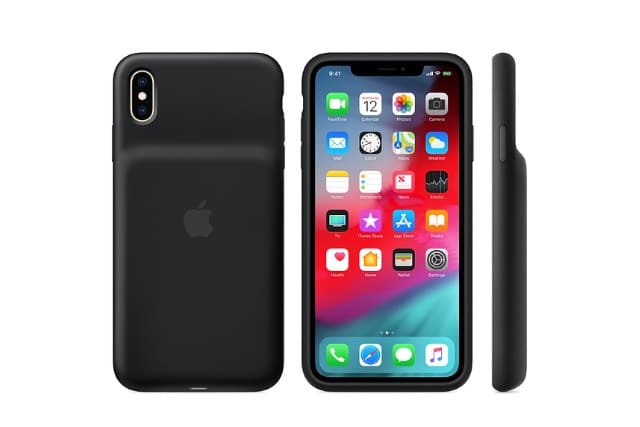
Apple releases expensive battery cases for iPhone XS, XS Max and XR, with wireless Qi charging
If you're a heavy user of your iPhone, you'll be aware of the need to keep your battery topped up. You could carry around a battery pack, or you could stick your charger in your pocket in the hope that you'll be a near a power outlet. Or, you could invest in one of Apple's official charging cases.
The iPhone-maker has just launched a trio of smart battery cases -- for the iPhone XS, XS Max and XR -- which allow you to protect and charge your phone at the same time.

Privacy-centric DuckDuckGo shuns Google and turns to Apple Maps for location-based searches
With the emphasis it places on privacy, it should come as little surprise that search engine DuckDuckGo is less than keen on Google. The latest demonstration of this is the company's decision to eschew Google Maps in favor of Apple's MapKit JS framework to power its map-related searches.
DuckDuckGo says that this brings users a "valuable combination of mapping and privacy", both on the desktop and on mobile.