Chrome for Android beta adds key features, broadens global availability
Last February, Google launched the first version of its Chrome Web browser for Android 4.0, undoubtedly one of the most significant applications that could be released for Android. While it was received with great fanfare, I said it was still far too early to call it a real winner due to a few missing features.
Tuesday, Google issued a major update to the young browser that added a few of those features, significantly advancing Chrome for Android against its competition.

Microsoft releases System Center 2012 to manage private clouds
Microsoft is pushing the cloud heavily at this years Microsoft Management Summit in Las Vegas, and its private cloud offerings are taking center stage. The company announced the general availability of System Center 2012, its private cloud management platform.
Private cloud deployments are exactly what the name entails -- for consumption internally -- and can be hosted either internally or by a third-party provider. System Center's public cloud equivalent is Windows Intune, which launched last March.

Sencha Architect 2 is the new name for HTML5 UI tool Ext Designer
Developer tool and software company Sencha Inc. on Tuesday announced a new brand in HTML5 UI design and coding called Sencha Architect 2. The software is aimed at Web designers and users who want to create cross-platform HTML5 apps in a visual, drag and drop environment.
Sencha Architect 2 is an upgrade from the company's Ext Designer HTML5 layout product and can be used with Sencha's other products Touch 2 and Ext JS 4 to facilitate touch-based mobile app development or development of standalone desktop Web apps. Sencha says it dropped the name "Designer" because it no longer described the functionality of the software. It's moved from being a User Interface design tool to a more all-encompassing package that lets engineers and designers work together in the same environment.

Meet Windows Server 2012
It's codename Windows 8 Server no more. Keeping with previous year nomenclature, Microsoft today officially announced Windows Server 2012, during its Management Summit in Las Vegas. Corporate vice president Brad Anderson also confirmed the software would ship later this year, another indicator Windows 8 is on track for autumn launch.
Microsoft tends to be very specific with products that have a year in the name. Windows Server 2008 got its name in Mid-May 2007. The company has some rules about nomenclature, and that one foreshadowed late-year release at best (the software launched in February 2008). The deliberate 2012 nomenclature signals Microsoft's confidence that the new Windows Server will ship this year and likely sooner than later.

Dead rapper performs at California music fest
My daughter watched him sing last night on YouTube, so it must be true.
The Coachella Valley Music and Arts Annual Festival is underway here in California. Weekend 1 just finished, with another three days of performances coming April 20-22. Third night's bang-up headliner: Rapper Tupac Shakur. He died in 1996.
O&O Defrag Professional 15.5 remotely primps your hard drive
Berlin-based O&O Software GmbH has released O&O Defrag 15.5 Professional Edition, the latest version of its renowned drive layout and defragmentation tool. Also available as a dedicated 64-bit build, version 15.5’s adds one major new feature: remote control.
Remote control gives users the ability to connect to another networked computer running O&O Defrag 15.5 and access the program as if they physically sit at that PC. It will appeal largely to network and system administrators, but may also prove beneficial to those running two or three PCs in separate rooms at home.

WinZip 16.5 gets Office-like ribbon, AMD speed boost
Stalwart of the file compression world WinZip has received a major upgrade that sees the introduction of a number of new features along with other enhancements and performance improvements. WinZip 16.5 has a strong focus on performance with a completely upgraded 64-bit engine as well as improved performance when used in conjunction with AMD processors.
Anyone with AMD Fusion processors and AMD Radeon GPUs will see the speed, but the overall performance of the app as a whole feels snappier. There is also a new look for the program, and the facelift helps to breathe new life into an archiving tool that many people have been using for a decade or more. The ribbon-style toolbar takes inspiration from the likes of Microsoft Office and gives a more streamlined feel while providing access to a huge range of features and options.

Comodo updates PC and cloud storage apps
Comodo Group has released new versions of its backup tools for Windows users. COMODO Backup 4.1.2 introduces a number of new features, including an automatic option for creating WinPE-based rescue discs, while Comodo Cloud 2.1.6 is a maintenance release offering a number of minor bug fixes.
COMODO Backup 4.1.2 allows users to back up selected files and entire drive images to just about any location, including external drives, optical discs, network, FTP and, of course, Comodo’s own cloud-storage servers, with 5GB of online storage provided free of charge. Comodo Cloud 2.1.6 is Comodo’s standlone client for exclusively connecting to your Comodo cloud-based backup space via Windows -- a mobile app is also available for iOS and Android users.
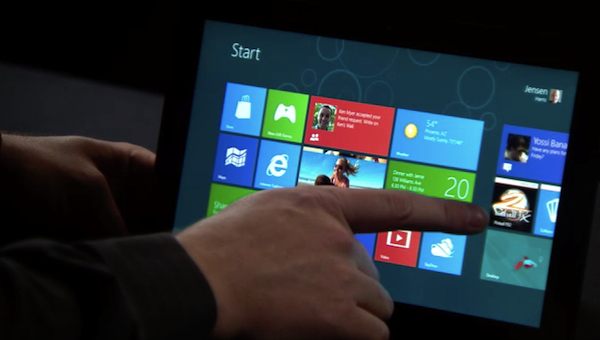
Three Windows 8 editions is just right
Common sense has returned to Windows product marketing. After rumors of nine Windows 8 editions sent me into near cardiac arrest last month, Microsoft instead has gone back to basics. The new operating system will come in just two editions for x86 processors -- Windows 8 and 8 Pro. If you're running Windows XP today, as most people still are, these two will be familiar to you, right down to the major differences between them, being similar to Home and Professional Editions. The third, Windows RT, is for devices running ARM processors, and, as Microsoft previously disclosed, will only be available on new hardware. You can install Windows 8 or Pro on your PC, but RT comes preloaded.
Hot damn! There's seriously fresh thinking going on over at the Windows & Windows Live division. Someone pinch me and pray tell I'm not dreaming. The only thing better than this would be lower pricing, which, admittedly, I'm not hopeful for. But one can dream within the dream!

Has programming lost its way? Part Two
Whether you are an engineer, a designer, a programmer or of any other trade that requires skill, the one lesson many have been taught early on is "keep it simple". Sadly this lesson is often lost in the name of progress, especially when it comes to programming.
Let me give you one example. I know this won't go over well with most programmers, but it needs to be said. Languages like C++ simply are not simple by design. Object-oriented programming, while possibly having some value for specific tasks, does not make programming simpler. I would venture to say that the so-called benefits of object-oriented programming has more to do with the feature set of the higher level objects that some languages provide, more so than it being accomplished using OOP.

What is the most popular household gadget?
Surely it's no surprise that nearly nine out of 10 American adults owns a cell phone. But would you believe that 19 percent own an ebook reader or tablet? Or that one in five dosen't use the Internet? These are among the fascinating findings from a fresh Pew Internet report "Digital Differences".
The findings are a blueprint for understanding Americans' digital lifestyles and what gadgets -- and supporting products and services -- fit in where. Major tech companies create distinct digital lifestyles people buy into, which is particularly true for Apple, Dell, Google, Microsoft, Samsung and Sony among others. Apple, Google and Microsoft are in pitched lifestyle product competition, and should look to studies like this one to understand the stunning nuances connected, so-called post-PC devices bring to consumer behavior.

FluffyApp 2.0 lifts Windows users to the Mac cloud
Richard Wang has released Beta 2 of FluffyApp 2.0, his free Windows client for accessing the CloudApp file-sharing service. CloudApp allows Mac users to quickly and easily share files via free and paid-for cloud-based storage, and FluffyApp brings this functionality to Windows users.
Version 2.0’s main improvement is in its user interface, introducing a flyout for displaying drop history as well as providing tabs for uploading files and publishing text and shortened links. Other changes include a consolidated area for options and Hotkeys using the standard Windows mechanism.
Don't cry for me, iPhone
Mark April 16th on your calendars as a day to remember -- and not because your taxes are due tomorrow, Americans. The weeks ahead promise cool ways to spend your refunds (assuming the tax man giveth back to you). Some of the best smartphones will arrive this week, with a blockbuster announcement coming in 17 days -- from Nokia and Samsung and another Samsung but with a big dash of Google sprinkled in. And Apple? Aaaaaahnt! Sound the game show buzzer. LTE iPhone is nowhere to be seen.
Coming April 22nd are not one, but two tasty 4G treats. As previously announced, Nokia Lumia 900 Windows Phone comes to AT&T all decked out in white -- yours for 100 bucks. Meanwhile, announced today, for an extra C Note, Sprint subscribers can get Galaxy Nexus along with fat $50 credit to put in their Google Wallet; the only real Google phone comes to the only national carrier with unlimited data. Looking ahead, Samsung today dispatched invites for a splashy May 3rd launch event -- it's the next Galaxy phone, baby. Don't cry for me, iPhone!
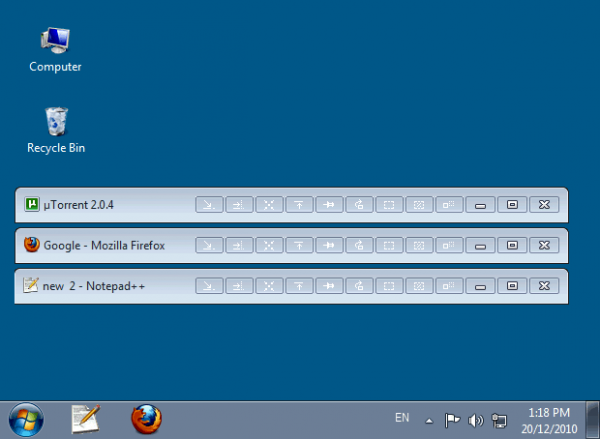
Get more from open windows with eXtra Buttons
As standard, Windows gives you very little control over windows that you may have open. The title bar is usually home to just three buttons to close, maximize and minimize the current window. You can have more -- eXtra Buttons is a great, free tool that can be used to add a host more controls. This affords you a far greater level of power when it comes to managing your windows and enables you to perform a number of handy options with just a click of the mouse.
Unlike other similar tools that provide you with extra title bar buttons for programs and windows, eXtra Buttons feels like a natural part of Windows. In fact you’re likely to find that when you have used the app for a little while, moving to a computer that does not have it installed will feel like something is missing. In total there are thirteen different buttons that you can add to your title bars, and you can pick and choose which you would like to have active.
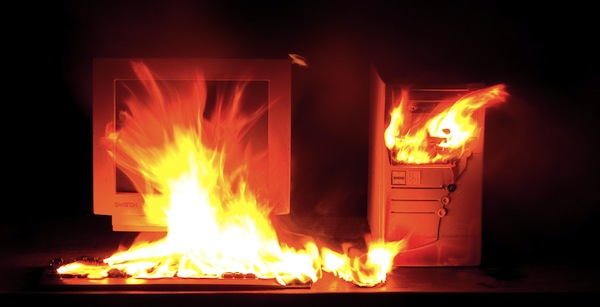
As Metro debate smolders, will it burst into flames and consume Windows 8?
On Friday, colleague Ed Oswald opined "Metro apps on Windows 7 is a bad, bad idea". I agree. Ed responded to Adrian Kingsley-Hughes' ridiculous commentary: "Bring Metro apps to Windows 7 to encourage developer growth". He usually writes good stuff, but this one is a stinker. Metro doesn't belong on Microsoft's current OS, and BetaNews commenters raise legitimate questions about how much it belongs on Windows 8.
Metro is a hotly-debated topic here, and on other sites where Windows enthusiasts gather. There's general consensus that Metro works for touch, albeit with too much scrolling to the left once there are many apps, but controversy about its functionality with mouse and keyboard and position as primary user interface is fierce. Some readers here also question whether or not touch should be the future Microsoft bets on. Windows 8's success depends on Metro -- businesses, consumers and developers embracing it. If they don't, the OS could be the biggest flop since Windows ME or Vista. Take your pick which!