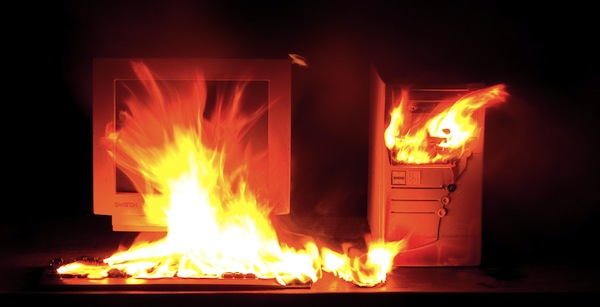
As Metro debate smolders, will it burst into flames and consume Windows 8?
On Friday, colleague Ed Oswald opined "Metro apps on Windows 7 is a bad, bad idea". I agree. Ed responded to Adrian Kingsley-Hughes' ridiculous commentary: "Bring Metro apps to Windows 7 to encourage developer growth". He usually writes good stuff, but this one is a stinker. Metro doesn't belong on Microsoft's current OS, and BetaNews commenters raise legitimate questions about how much it belongs on Windows 8.
Metro is a hotly-debated topic here, and on other sites where Windows enthusiasts gather. There's general consensus that Metro works for touch, albeit with too much scrolling to the left once there are many apps, but controversy about its functionality with mouse and keyboard and position as primary user interface is fierce. Some readers here also question whether or not touch should be the future Microsoft bets on. Windows 8's success depends on Metro -- businesses, consumers and developers embracing it. If they don't, the OS could be the biggest flop since Windows ME or Vista. Take your pick which!
As if Nokia Lumia 900 Windows Phone didn't have enough problems...
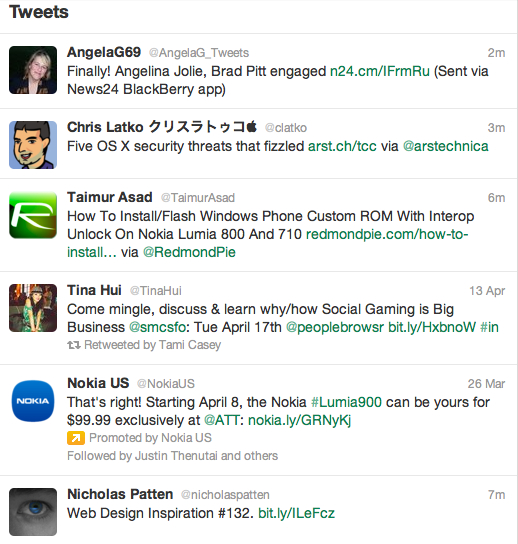
Nokia has enough Lumia 900 marketing problems, without twitter making more. The photo with this post is pretty self-explanatory and shows how nasty promoted tweets can be.
The smartphone went on sale from AT&T April 8 for $99.99 -- that's quite a good price. Then almost immediately users started complaining about Internet connectivity problems, and Nokia quickly responded by making a magnanimous offer: $100 back to the people who already bought the phone and were willing to install a software update. Anyone else: Phone replacement. Meanwhile, Lumia 900 is free to new buyers until April 22. Okay, so why is there a promoted tweet in my feed on April 15: "That's right! Starting April 8, the Nokia #Lumia900 can be yours for $99.99 exclusively at @ATT"?
Metro apps on Windows 7 is a bad, bad idea
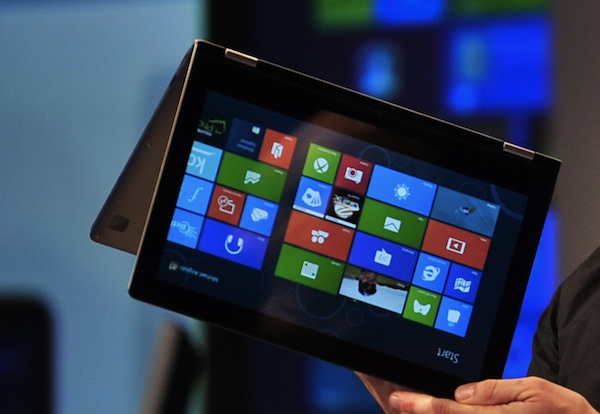
As we move closer to the launch of Windows 8 -- and the sea change that the Metro user interface brings to the platform -- there's an ever increasing drumbeat of both skepticism, concern, and apprehension depending on who you talk to.
End users are skeptical of Metro because they do not see its value. The interface completely changes how we interact with Windows, and in some cases will confuse us. I point you to this video of tech pundit Chris Pirillo's father attempting to use Windows 8 for the first time without instruction as an example. Microsoft may have unintentionally added an extra layer of complexity in an effort to simplify the OS.
NovaBACKUP 13 improves disaster recovery
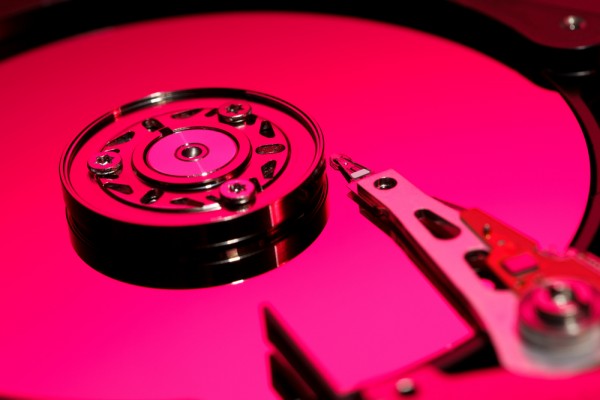
NovaStor has released NovaBACKUP 13, the latest edition of its flagship backup suite. And the big news this time comes in some major additions to the program’s Disaster Recovery abilities. NovaBACKUP now supports full, incremental and differential drive imaging, for instance, which should deliver significant performance improvements for most people.
The program now allows you to access individual files and folders within an image, as well as restoring the entire backup. The Windows PE-based boot disc provides a familiar environment to recover your system, should disaster strike. The program can now recover a disc image to another PC with different hardware.
Apple defends ebook price-fixing by calling Amazon a monopoly
Apple shot back at critics and the Justice Department late Thursday, denying claims that it colluded with publishers to keep the price of ebooks artificially high. Even more interesting? The Cupertino, Calif. company took a veiled shot at Amazon, saying its actions were necessary to break up the retailer's monopolistic grip on the industry.
These claims are interesting considering the same argument can be made against many of Apple's own key businesses. The Cupertino, Calif. company controls 70 percent of media downloads according to Nielsen, while Gartner says Apple's iPad holds 61 percent of the tablet market. The App Store makes a dollar for every 23 cents generated by Google Play, according to mobile advertising firm Flurry. By what measure is monopoly then?

Got the Flashback Trojan? OS X update removes it
I'd clap my hands and slap Apple on the back, but yesterday's Flashback fix took too long -- and lots of negative publicity with it -- coming. There shouldn't have to be an uproar, or massive Mac botnet, for Apple to get an urgent security fix out there. Technically, a fix released last week. This one goes further and does what many Mac users will need most: Malware removal.
Criticism aside, there is reason for praise. The update disables Java applets from running. If the user flips on the switch but no applets run for awhile, the capability is disabled again. Smart. Apple already takes a heavy hand to Adobe Flash in Safari. Disable all plug-ins by default, I say. Let people use them only if needed, and when not used for awhile bugger them.
Mistakenly type LIKE THIS? Try CapsUnlocker
It’s a common keyboard annoyance: you’ve pressed the Caps Lock key, either not realized or just forgotten about it, and then typed a whole line of text IN THE WRONG CASE, or maybe wondered why a website password hasn’t been recognized, before you’ve noticed. Sounds familiar? Then you might be interested in CapsUnlocker, a new tool that can help in a variety of ways.
At its simplest you can use the program as a Caps Lock status indicator, handy if you don’t have one already. (It’s surprisingly configurable, too -- you can choose the icon to display when the key is on or off.) You might disable Caps Lock entirely by choosing the relevant right-click option from CapsUnlocker’s system tray icon.
Google is evil
In the Biblical story, the serpent tempted Eve by offering something she desired -- to be like God. It's appropriate metaphor for every shyster that followed. Evildoers follow a consistent pattern of offering something tempting that masks something else. It's the art of misdirection that assures them power or profit -- often both. If there is a definition of evil, it's taking advantage of others for personal gain. The more people, the more evil. Greater the trickery, eviler still.
That sums up my assessment of Google's non-voting split revealed yesterday concurrently with first-quarter earnings. Stock-split seemingly gives investors twice as many shares as they have now. But half will be non-voting ones, diluting shareholders' say in Google's doings. Essentially, the company seeks to have it both ways -- be private while having the benefits of public investment. The most disruptive company of the 21st century is at it again. The implications are seemingly astounding.
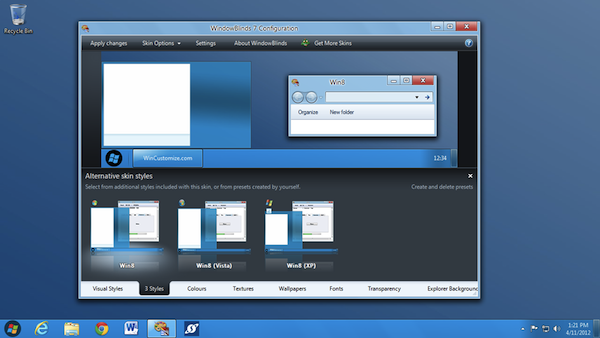
WindowBlinds 7.4 supports more programs, transparent scrollbars
Anyone with more than a passing interest in tweaking the look and feel of Windows is likely to be aware of the existence of WindowBlinds. This highly impressive customization tool from Stardock has been updated with added support for transparent scrollbars in Explorer windows in Windows 7 as well as updates to the Start button and changes to higher DPI settings. WindowBlinds 7.4 also includes a number of fixes for bugs and problems that have been discovered.
Support for a number of specific programs has been improved so if you have noticed issues with Yahoo Messenger, you’ll be pleased to find that the correct theme is now used on frames while a problem with black menu bars in Total Commander has also been addressed. Other program-specific changes that have been made include a number of fixes for Internet Explorer 9 related problems such as better styling for groupboxes and scrollbars.
Want to code your own Android, Flash or iOS game? Try Stencyl 2.0 beta
Coding a game may be something you like the idea of but, much like putting together a website, without the right tools to work with it can seem like an incredibly daunting task. There is no piece of software that is going to create a game for you, but Stencyl is an incredibly intuitive game creation engine that can be used by anyone with the right idea -- it does not matter if you are able to code by hand or not.Stencyl 2.0 beta is the latest release of the software and it packs some serious impressive features.
Version 2 of the program, which is available not only for Window and OSX, but also Linux, picks up from where previous releases have left off, proving you with a set of tools that enable you to do everything from designing in-game graphics to using drag-and drop-action building to determine how different elements will interact with each other. This is an interesting approach to game production, and this is a tool that can be used to make Flash games as well as games for iOS and Android.

If my language is as foreign as Klingon, try TranslateClient 6.0.618
The language barrier isn’t quite the impenetrable wall it used to be. These days you can often muddle through when confronted by what appears to be a stream of gibberish in some random foreign language, but if you find yourself regularly dealing with another tongue, it helps to arm yourself with the right software.
One desktop tool for Windows users worth checking out is TranslateClient 6.0.618, which gives you translation services from within any open application, including your web browser. The free version provides services from Microsoft Translator, while a paid-for Pro version adds Google Translator as well as a number of other additional options.

Sophos Virus Removal Tool is slow, but free
Sophos has released a free on-demand Virus Removal Tool. The program previously was available to the company’s larger customers to help them clean up infected PCs, but now to anyone to download.
The Virus Removal Tool is extremely easy to use, with no settings to configure, no scan modes to figure out: it’s purely about on-demand full system scans. But this simplicity does mean you should be able to install the program and run it alongside just about any other security suite, as there’s no real-time access component to cause conflicts.

Boeing phone to take flight with Android later this year
A company more known for its work in the aerospace industry is now Android's newest partner. Boeing this week announced plans to release a smartphone aimed at those requiring super-secure communications, yet the convenience of a widely used mobile operating system. Calling it the "Boeing phone", the device is slated to launch by the end of the year.
What business a company like Boeing has in hawking smartphones is unclear, but it has the market. Most of Boeing's current clients are in sectors where confidentiality and security is at a premium. Similar devices cost $15,000 to $20,000, but the Chicago based company plans to come in at a price point below that. Not something you or I could afford, mind you, but definitely more reasonable.
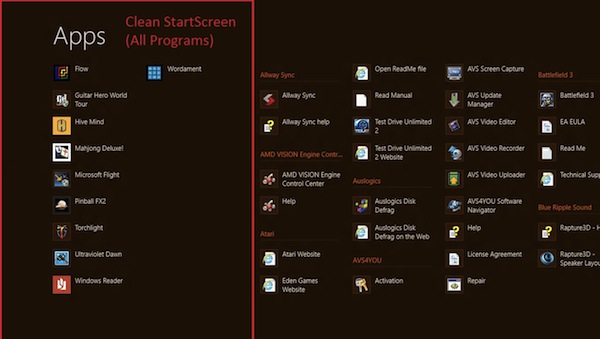
Is it worth having the Start Menu alongside the Windows 8 Start Screen?
The simple answer here is yes.
There has been much debate about the merits of the traditional Start Menu versus Metro's Start Screen since Windows 8 Developer Preview released last year. Microsoft did away with the Start Button in Windows 8, replacing it and the supporting menu with the Start Screen, which is primed for touch. Supporters, and that includes Microsoft, say it's better. But the argument that the "Start Screen can do everything the Start Menu can is the biggest BS to date.
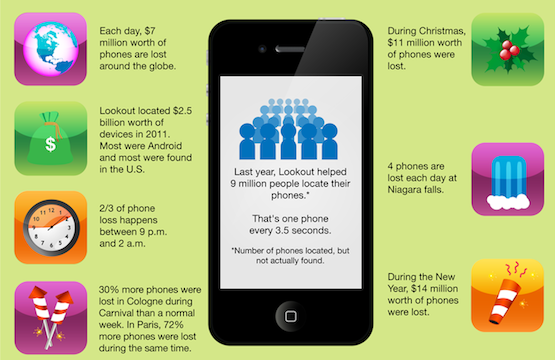
$7 million worth of phones will be lost today [infographic]
Not a day passes by without a couple infographics dropped in my inbox and somehow I just don't get around to posting them. My bad, since they can be fun and informative. Granted the producers hope for a little promotion along the way, but hey.
This one comes from BackgroundCheck.org, which blogs stuff like "8 Crazy Nannies Who Should’ve Been Background Checked" and "7 Things You Should Know Before Choosing a Babysitter" (Hey, whatever happened to 10 things?).