
5 ways to protect your Android phone from malware
As most of you by now know, last week the Android Market, the official store for applications on Android mobile devices, withdrew a number of apps that had been reported as harmful.
Why is Android encountering challenges where the iPhone isn't? Apps available for download on the Android Market aren't screened as stringently as they are on other public stores such as Apple's. The policy is in keeping with Android's open-source operating system, effectively allowing anyone with programming skill to create apps for mobile devices.

Tip: Mac users, never miss another bill payment
One of the most effective ways of saving money is simply by tracking your finances. If you know exactly how much money is currently in your account you can go a long way to ensuring you always stay in the black, simply by cutting back on non-essential spending when money is tight.
But it's not enough simply to know how much is currently in your account: what bills are left to be paid before the next payday? It's no good thinking you've got hundreds of dollars left if your mortgage hasn't yet been paid, and what happens if you're the sort of person who regularly forgets to pay their bills? Financial Armageddon might ensue, but if you're a Mac user you could avoid this meltdown by investing a relatively paltry $21 in Chronicle.

Rockmelt beta is available to all
The Chromium-based social browser RockMelt has generated plenty of press coverage since rumors of its capabilities first appeared some 18 months ago. It was only available on an invitation-only beta, though, so you may not have had a chance to try out the program for yourself, but that's all changed today with the company's release of the first RockMelt Public beta.
The new build of the browser looks much like previous versions. Essentially it's Chrome with additional panels to display your Facebook stream, Twitter account, Facebook friends and more, so you can keep up-to-date and chat with your contacts without ever having to visit the Facebook site.

Will ARM or x86 win the mobile processor wars?
Two questions for you: Which is the more powerful architecture, ARM or x86? Which one is the lower power architecture? If you answered ARM to either question, you'd be wrong. You'd also be wrong if you said x86.
Lost in the latest war of words between the two camps is that neither architecture is inherently better for smartphones or supercomputers or anything in between. True, most ARM processors have been designed primarily for low-power duty inside wireless handsets. And, yes, most available x86 processors are better suited for higher-performance applications.

My shocking visit to the Apple Genius Bar
For years, I've asserted that in selling products and building up brand loyalty, feelings are more important than rational things. People are more likely to make purchase decisions based on emotions than intellect. Oftentimes, particularly with brands that evoke loyalty, buyers' emotional responses are irrational. I see this characteristic among hardcore Apple fans, who brisk at what they perceive to be the slightest criticism of the company or its products.
I must say that I'm feeling surprisingly good about Apple today. For the second time in nearly three years, Apple gave me a new computer to replace one recently purchased -- each a MacBook Air. But is it good customer service or faulty products?
Google lets you 'block all' search results from specific sites
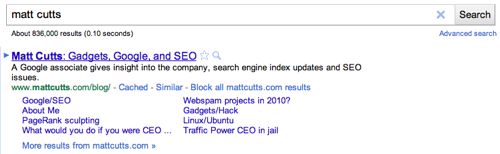
Top search engine Google on Thursday introduced an experimental feature which continues its mission to chip away at undesirable search results and information from "content farms": the ability to block all results from a particular URL.
Now, when search results are returned, there is a button next to each link labeled "Block all [URLNAME] results." When clicked, that site is sent to a block list, which can be managed in the user's Google account.

Google pwns: Chrome goes untouched at hacking confab
For a third straight year, Google's Chrome browser has gone unhacked at a yearly event aimed at exposing the security flaws of today's modern browsers. The Mountain View, Calif. search company put its money where its mouth was too: last month it offered $20,000 to the first team able to hack the company's browser.
Pwn2Own is part of the CanSecWest security conference, held yearly by HP TippingPoint. Contestants are tasked with hacking each of the major browsers -- Internet Explorer, Firefox, Safari, and Chrome -- and the first teams to do so not only win a $15,000 cash prize but also the computer they hacked the browser on.

iPad market share plunged 20 percent in Q4 2010
IDC walloped and bear hugged Apple a day before iPad 2 officially goes on sale. During fourth-quarter 2010, iPad market share fell from 93 percent to 73 percent sequentially, according to the analyst firm. However, IDC expects iPad market share to remain in the 70 percent to 80 percent range throughout 2011. Additionally, IDC released data on ebook reader shipments, which more than doubled quarter on quarter to 12.8 million units.For all 2010, 18 million tablets shipped, with iPad capturing 83 percent market share.
Well, so much for the nearly 100 tablet contenders. Then again, these mobile device markets are so fast changing, it's hard to trust any analysts' projections, particularly when there is no consensus on definitions. For example, Canalys and NPD DisplaySearch classify tablets like iPad as PCs. IDC does not. It's definition: "Media tablets are tablet form factor devices with color displays larger than 5 inches and smaller than 14 inches running lightweight operating systems (such as Apple's iOS and Google's Android OS) and can be based on either x86 or ARM processors. By contrast, tablet PCs run full PC operating systems and are based on x86 processors."
Microsoft rolls out new virtualization tools for Desktop Optimization Pack
Thursday, Microsoft announced two updates to its Software Assurance Desktop Optimization Pack for enterprise Windows deployments are available immediately: App-V 4.6 SP1, and MED-V 2.0.
Microsoft Application Virtualization, or App-V, is the solution which turns software applications into centrally managed, virtualized services that don't have to be installed on client machines. With the SP1 update, Microsoft has introduced package accelerators in the new App-V Sequencer, which Microsoft has been discussing since mid-2010. Package Accelerators are files that admins can combine with install media to automatically convert applications into virtual packages. They are released 1:1 with the applications they work with, and the first accelerators will be available in early April, and will include Project, Adobe Reader, and Office 2010.

IObit Unlocker cracks open locked files
IObit Software has released a public beta of a new file-unlocking tool. IObit Unlocker Beta 1.0 is designed to allow users to access files that have been locked by running programs or processes for the purposes of deleting, renaming, copying or moving.
IObit Unlocker can be invoked from its own shortcut, or accessed by right-clicking any file and choosing IObit Unlocker, which will launch the program with that file selected. It will display what process is locking the file, and give the user various options for unlocking the file.
ESET SysInspector sniffs out malware but can't kill it
Your PC is unstable, behaving very strangely, and you think there's a good chance that it's been infected by malware. Yet your antivirus software hasn't noticed anything at all. So what do you do now?
ESET SysInspector provides an easy way to begin the detection process. It's portable, so there's no need to install anything -- just download the executable, run it, and SysInspector will examine your system files, startup programs, running processes, network connections and other details, before issuing a report highlighting anything it thinks is suspicious.

Firefox 4 nearly ready, but IE9 may be faster
The Mozilla Foundation has announced the release of Firefox 4 RC1, earlier this week. This is a feature-complete release, and could even morph into a final release with no further changes, particularly if Mozilla is keen to steal some thunder from the imminent arrival of Internet Explorer 9, which Microsoft has just confirmed will be available from Monday.
Firefox 4 will, like its rivals, be much lighter in weight than the current version (3.6), which will ensure better performance. Like Chrome and IE9, the user interface has been redesigned to maximise screen real-estate for viewing web pages. It will be available for Windows, Mac and Linux.

Which is the more popular web browser?
Late yesterday, I asked "Which web browser do you use?" -- not really planning a follow-up post. But given Betanews reader response, the informal -- and purely anecdotal -- poll warrants something more. Drum roll, please. And the most popular browser -- Chrome, Firefox, Internet Explorer, Opera, Safari or something else -- is: none of them. Betanews readers generally use more than one, which supports what I explained yesterday: NetApplications' monthly browser stats refer to usage share, not the stated market share.
That said, you generally prefer the newest browser(s) when available, and some of you generally use one lots more than others. Very few respondents cited need to use Internet Explorer for corporate compatibility reasons, suggesting Microsoft's efforts to move enterprises away from ActiveX has largely succeeded. In fact, only one respondent mentioned ActiveX at all, which further supports my supposition.

Which web browser do you use?
Whoever said web browser development is dead? Geez Louise, could there be any less, or is that more, browser news this month? Microsoft is trying to kill Internet Explorer 6 (again). Internet Explorer 9 releases on March 14, while Microsoft is preparing to debut early IE 10 at MIX11 in April. Yesterday, Google popped out Chrome 10, while today Apple released Safari 5.04. Opera opened an app store yesterday. Not to be left out, Mozilla posted Firefox 4 Release Candidate 1. Did I miss anything?
Given all this browser buzz, it's good time to do an informal survey of Betanews readers. Yes, I could check the site logs (and may still) but I want to know specifically which browsers (since many people use more than one) and why. If IE 7, why not IE 9 RC? Perhaps you spend most of the day using an iPad and mobile Safari. Or maybe your work PC has (cough, cough) IE 6, but you use IE 8 and Chrome at home. I'd like to know, and I'm betting there are other Betanews readers who are interested, too. So please answer the question -- "Which web browser do you use?" -- in comments, or email joewilcox at gmail dot com.
Printopia for Mac 1.0.4: Printing from iOS devices made easy
The ability to print documents from iOS is something that huge numbers of iPhone and iPad owners have been waiting for -- it was a feature implemented by Apple when AirPrint was added, but this proved to be less than ideal for many users. Using Printopia for Mac, it is possible to share the printer that you have connected to your Mac so it can be used by your iPad or iPhone.
Unlike AirPrint, which has been found to be very fussy about which printers it will work with, Printopia for Mac can be used with virtually any printer regardless of make or model.