
In search of better Web security: Three approaches
It feels as if we've been waiting forever for Microsoft Internet Explorer 8, which is why the fuss a few days back over Microsoft Research's "Gazelle" project -- ZOMG NEW BROWSER MAYBE!!!! -- was sort of refreshing and fun, if pretty far removed from reality as we know it.
The confusion came down to some observers' misunderstanding of the relationship between Microsoft Research and the parts of the company that actually ship products. Microsoft Research is, of course, a research facility; they think interesting thoughts, they test their theories, and after that maybe their ideas are taken up and maybe they're not.
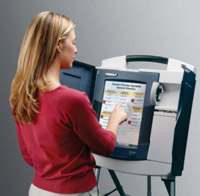
Diebold admits serious design flaw in e-voting machines
Premier Election Systems -- the company formerly known as Diebold -- admitted in a public hearing on Thursday that the software used to manage audit logs on their electronic-voting systems had flaws that would not only drop certain votes entered into the system, but can delete the audit logs that could indicate a problem.
The testing, conducted after an election last June in Humboldt County, Calif., revealed at the time flaws in Diebold / Premier's GEMS system later confirmed by the California Secretary of State. The hearings now underway will help state officials to decide whether to decertify the GEMS v. 1.18.19 system for use in future state elections. The Humboldt testing revealed that the software dropped ballots under certain circumstances. Further investigation by the Secretary of State's office confirmed that problem -- and revealed that the audit logs themselves could be radically altered, sometimes with just one click. The problems with the audit logs, had they been known during the certification process (as Diebold knew for years, it was revealed today), should have disqualified the systems from being certified at all.

Palm, holding tight for Pre, reports Q3 earnings
Thursday's Palm Q3 2009 earnings call in a nutshell:
Analysts: Are we there yet? Palm: No. Analysts: Are we there yet? Palm: No. Analysts: Are we there yet? Palm: No. Analysts: Hey, are we there yet?You can't blame them for asking. As predicted by virtually everybody, Palm is, as CEO Ed Colligan put it during the call, "proceeding through a challenging transitional period" as the company gears up for the Pre and the WebOS future. The firm on Thursday reported that total Q3 revenue for the quarter ended February 27 was $90.6 million; after expenses, there's a gross profit of $4.2 million. Total operating expenses were $106.4 million. The let loss for the quarter was $95 million; so far in FY 2009, Palm's net loss is $640.7 million.

720p for keeps: iTunes gets HD movie downloads
Apple has turned up the juice on its iTunes movie store and now offers HD downloads of Hollywood motion pictures.
To download HD movies, users must have iTunes 8.1, which was released to coincide with the launch of the third generation iPod Shuffle last week. This is the first time movies can be purchased in HD through iTunes. Prior to this, only certain television content was available for purchase in HD, while H.264 movies in 720p were only available for rent.

IDC: Linux poised for more growth when economy recovers
In a new survey, IDC found that existing users of Linux servers are "highly satisfied," with plans to deploy more Linux at such time as financial constraints start fading away.
"Given the severity of the current economic downturn and the potential for a lengthy and gradual recovery that will likely take years rather than months, Linux is in a desirable competitive position to emerge from this downtown as a stronger solution with a key position in the industry," according to IDC's report.

Samsung launches a beta of its movie download service
In Germany and the UK today, consumer electronics company Samsung launched the Samsung Movies beta on its mobile portal. The dedicated movie download shop lets users rent or download Hollywood movies and TV shows on their PCs and Windows Media Player-equipped Samsung handset. The only device that supports the beta service is the S8300 Tocco Ultra.
Windows Media Player version 11 is required to watch downloaded content on the PC and sync with the mobile device. An active Internet connection is also required to receive the license key that makes the content viewable. Rentals can sit unopened indefinitely, but once the key is retrieved, the file is only usable for 24 hours.

Performance test: IE8 easily doubles IE7 speed
Download Internet Explorer 8.0 for Windows Vista from Fileforum now.
During his keynote address today at MIX 09, Internet Explorer 8 product manager Dean Hachamovitch repeatedly used the phrase "real-world" in talking about endowing his team's Web browser with performance that the "everyday" user can see and feel. (That sounds almost like it came from AMD's playbook.) Hachamovitch showed some videos demonstrating IE8's performance gains in loading and rendering, particularly versus Firefox 3.0.5 and the "latest" Google Chrome (no version number, so presumably version 1 and not the beta of version 2). And he conceded that some of these gains can't be seen without a good stopwatch, so they'll only make sense to the end user if they can be felt by him.

Analysts' roundup: What in the world would IBM want with Sun?
While IBM would pick up more technology, products, users, and revenues, integrating the two companies might not be any picnic, and some Sun customers certainly wouldn't be happy campers, analysts told Betanews this week.
Industry observers have been pondering the possible ramifications ever since a Wall Street Journal report yesterday stating that the two OEM giants are in acquisition talks.
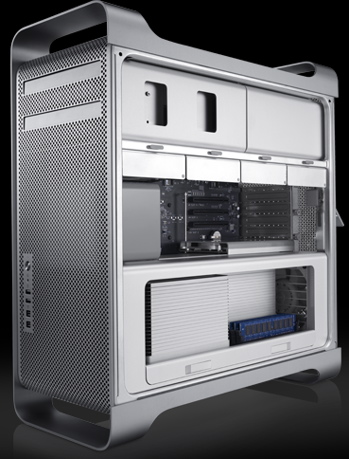
Psystar releases yet another 'Mac clone'
Psystar has hung on for nearly a year, continuing to offer "Mac clone" desktop systems equipped with OS X, despite the nonstop litigation they bring the company.
The Florida-based company has released its fourth OS X package, the Open(3) with Mac OS X. In its base configuration, the Open(3) is equipped with a 2.8 GHz Intel Core 2 Duo E7400, 2 GB DDR2 800 MHz RAM, a 500 GB 7200 RPM SATA hard drive, and an Nvidia GeForce 8400GS 256 MB graphics card. It includes a SATA DVD R/W drive, gigabit Ethernet, 8 USB ports, LPT and RS-232 ports, as well as two PS/2 ports, despite the fact that MAC OS doesn't support them.

From MIX '09: Internet Explorer 8, at last
Download Internet Explorer 8.0 for Windows Vista from Fileforum now.
For too long, Web site developers have found themselves having to "code to IE6" -- a process meaning, making sure their sites' appearances don't look altogether funky in Internet Explorer 6.0, still one of the world's most used Web browsers. Even Microsoft would like to kick the legacy of IE6 out the back door along with MS-DOS 5.0 and Bob, and now IE8's product manager will make the case to developers about how they can help way too many Web users help Microsoft do just that.
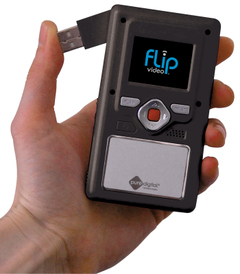
Cisco to acquire Flip Video maker Pure Digital Technologies
This morning, Cisco announced that it is acquiring Pure Digital Technologies, better known as the company responsible for Flip Video cameras, the pocket-sized digital camcorders.
Today's announcement confirms earlier speculation that the company was interested in acquiring Pure Digital. Cisco's plans for the next five years revolve around developing three major areas: the connected home, the media-enabled home, and visual networking. Pure Digital's products fit into the second of these three categories, and will flesh out the company's growing catalog of consumer products.

Microsoft: The real Silverlight premiere is now
Since the very beginning of Microsoft's venture into distributed video platforms, it's intended to make a system for enabling developers more conventional languages like C++, C#, and Visual Basic to produce truly distributed applications. The code word for this is "n-tier logic," and it refers to the ability for a core application to assume its input/output is being handled by a set of graphical resources, while enabling any number of intermediate layers to connect the core with the graphics. That way, the only technical differences between a local app, a network app, and an Internet app take place in the middle of the chart -- for example, is there IIS or isn't there?
When Microsoft started testing what it had called Silverlight 1.1, it was with the idea to introduce .NET app languages to the mix, and to go beyond JavaScript. Sometimes you still hear a hint of the arbitrary dividing line at Microsoft, between C# "developers, developers, developers" and JavaScript "designers." During the learning process, the company evolved the 1.1 project into Silverlight 2.0, whose stated goal was to provide fluid graphical functionality for rich Internet applications (RIAs) using any .NET language.

Sony takes a swing at Kindle with free books
Sony today announced that its eBook store now carries over 500,000 free public domain titles, thanks to a partnership with Google.
The company's eBook Library desktop software is designed like a stripped down version of iTunes, organizing the user's content library, and serving as a portal to the eBook Store from Sony. Today, the software features a link called Unearth a Classic which goes to Google's Book Search database of public domain content optimized for the Sony Reader.

Sun: Open source frees CIOs (and others) from 'slavery'
Vendors can build revenues from services and subscriptions, while CIOs, CEOs and the businesses they lead are freed from the "slavery" of traditional software procurement processes, said Sun's Simon Phipps, speaking at a Sun developers conference in New York City.
In the midst of industry speculation that IBM might buy Sun for some $6.5 billion, Sun also used the event this week to announce the Sun Open Cloud Platform, a.k.a., "Sun Cloud," along with the first two services from Sun to be based on the new private and public cloud environment.

New Internet Explorer 8 secures, slices, smokes
Download Internet Explorer 8.0 for Windows Vista from Fileforum now.
As suspected, Microsoft used this week's MIX09 conference to unleash Internet Explorer 8, downloadable as of noon today (EDT). Our initial tests on the final release indicate that Microsoft's promises of better performance and security are realized, and that the team goal of creating "a better way to waste time on the Internet" has been realized too -- in the good sense.