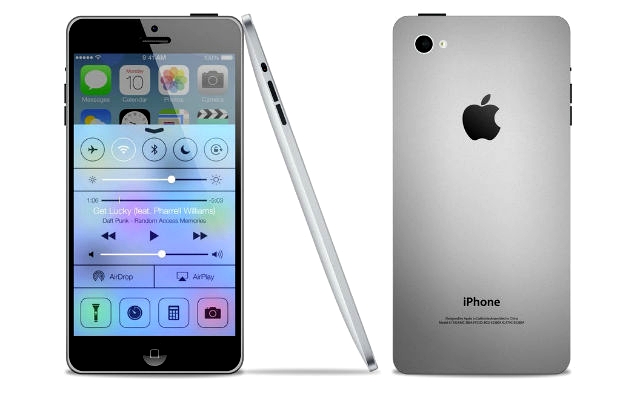
Fans already lining up for the iPhone 6 in New York
Never mind the on-sale date, the next-gen iPhone won't even be revealed until next week, and yet already people are queuing outside Apple's New York flagship store to be first in line to purchase the phone(s).
In fact, the first people in line (well, they were first -- we'll explain in a moment), cousins Brian Ceballo and Joseph Cruz, told CNBC that they've been in line at the Fifth Avenue store since Sunday night, well over a week before the launch.
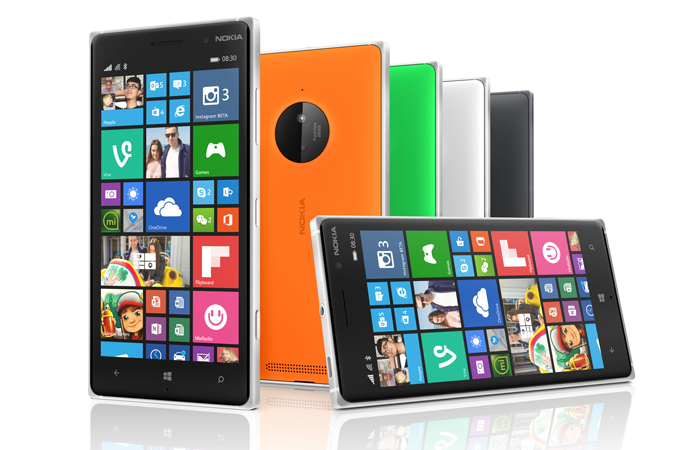
Advertise you can't afford to own iPhone 5s or Galaxy S5 with Lumia 830
Microsoft today introduces Lumia 830, a new Windows Phone 8.1 device that is advertised by the software giant as "the first affordable flagship" smartphone. The device is touted to give rival devices from Apple and Samsung a run for their money, so let's take a look at what it has to offer.
The highlight of Lumia 830 is its PureView-branded main camera, which is paired with some very interesting software features, which allow users to, for instance, change the intensity of the flash in the captured still, after the fact. It is aided by optical image stabilization. To showcase just how capable the 10 MP unit is, Microsoft inexplicably compared Lumia 830 with an outdated flagship, Apple's iPhone 5 which is verging on two years of market time. Thankfully, Microsoft has not gone crazy (well, maybe it did).
Secure your Apple iCloud account by enabling two-step verification
Unless you've been completely avoiding the news over the past few days, you will have heard about Apple's little problem with nude photos being stolen from celebrity accounts. The company has strongly denied that there has been a security breach, but in a statement it advised its customers to check the strength of their passwords as well as enabling two-step verification.
Two-factor authentication -- also known as two-step verification -- is a stronger method of security because it relies not only on something you know (your password), but also something you have (like your iPhone). Sounds good, but how do you do about doing it for your Apple account?

Isn't Siri just terrible in Microsoft's Windows Phone ads?
The advert wars continue with comparative ads aplenty fired at each other by the big tech giants, and the latest one extols the virtues of Microsoft's voice assistant compared to Apple's effort.
The "mirror mirror" commercial (spotted by the Verge) tries to promote the natural voice and manner of Cortana, and contrast it with Siri, which is made to sound clipped and robotic in comparison.

Apple confirms that celebrity accounts were compromised in targeted attack
Since a cache of nude photos of celebrities appeared online, Apple has remained fairly tight-lipped about what may or may not have happened. Right from the start rumors were flying around that Apple's iCloud service may have been comprised or that Find My iPhone may have been to blame. The company said that it was "actively investigating" the suggestions but then things went quiet again. The FBI became involved, but it has been a frustrating 48 hours for anyone trying to find out what happened. Now Apple has issued a statement making it clear that a security attack did indeed take place.
Entitled Update to Celebrity Photo Investigation the statement reads:

I'm anti-censorship! I won't try to silence those who criticize me
A week ago I wrote about my feelings of ennui towards the iPhone 6, asserting that there was just nothing to get excited about. Some people agreed, but many didn't -- it was to be expected really. What was particularly interesting was not just the discussion that started here in the comments on BetaNews but also that the article spread further afield. It was picked up by Macworld whose resident columnist The Macalope, er, disagreed with what I had to say. You'll notice that I've provided a link to the Macworld article which, despite quoting 46 percent of my post, The Macalope failed to do initially.
If you take the time to read the Macworld article you'd be forgiven for thinking that I was hurt at having my work pulled apart. Not a bit of it. No, I'm not concerned about being criticized. I've been writing for approaching 15 years now, and I know I'm going to piss people off from time to time. That's not to say that this is necessarily my intention -- in addition to news, I like to share my opinion and there will, of course, be some collateral damage that follows. Despite The Macalope's suggestions to the contrary, this was not designed to be a "link-baity" piece. Like Joe Wilcox, I've written about the importance of writing for the reader rather than writing for Google, and this is an ideology I firmly subscribe to.

Apple finally opens up about why it rejects certain apps
It may have been something of an unknown quantity for years now. Just why was a particular app denied entry to the App Store? Now Apple -- the company so famed for its secrecy -- has finally laid its cards on the table and revealed the most common reasons apps are rejected. Taking a snapshot from the last week of August, the new Common App Rejections page on Apple's Developer site details the top ten problems that prevent apps from making their way to the App Store. Accounting for more than a quarter of rejections (14 and 8 percent respectively) are apps that do not have enough information and those that exhibit bugs.
Six percent of rejected apps fell foul of terms in the Developer Program License Agreement -- although no further breakdown is given -- and the same percentage of titles were given the thumbs down for not meeting Apple's exacting standards. "Apple and our customers place a high value on simple, refined, creative, well thought through interfaces. They take more work but are worth it. Apple sets a high bar. If your user interface is complex or less than very good, it may be rejected". Apps that are either misleading or similar to other apps, and those with inappropriate names and artwork were also stopped in their tracks, each accounting for 5 percent of vetoed apps.
Windows 8.x gains usage share at the expense of Windows XP
New data which was just posted by web analytics company NetMarketShare shows us that, in August, Windows 8.x managed to gain precious usage share in the desktop operating system market. This happened mainly at the expense of the 13 year-old Windows XP, which is seeing its usage share slowly decrease as new devices, toting newer OSs, are brought into the fold.
The good news, however, comes from the rise in usage share of Windows 8.1, which is now at 7.09 percent, up from the 6.56 percent from July. Windows 8 also grew, to 6.28 percent from 5.92 percent, but this is of a lesser importance, as its successor's fate is far more important. Meanwhile, Windows XP decreased to 23.89 percent from 24.82 percent. Still, it is obvious that the oldest of the three still has a terribly long way to go before it reaches similar usage share levels (we're looking at a couple of years, at least) as Windows 8.1 touts now.
I am not kind to Apple
A day after I posted "Apple's march of the lemmings", 9to5Mac published Mark Gurman's gripping inside look into Apple's PR strategy. The story, "Seeing Through the Illusion: Understanding Apple's Mastery of the Media", is fine example of the kind of news reporting too often missing on the web today. His multi-section report is well-organized, believably-sourced (even where anonymously), and accurate -- to which I can attest based on my experience dealing with Apple as a journalist. Gurman also validates many of my ongoing complaints about how bloggers and journalists report about the company.
As expressed three-and-a-half years ago, "I am not anti-Apple". But I am against the unquestioning pro-Apple caucus the news media has become. As stated on my birthday in 2011: "My problem isn't Apple, but all the news and misinformation about the company. You can chock up any tone in my Apple posts to them. Someone has to counterbalance this crap".
What you really want is iPhone 6 with sapphire display
What do you want to see most on the new iPhone 6 (if you care about Apple's upcoming device, that is)?
That was the question posed by Usell.com in a poll of a thousand mobile owners across the US, and the resoundingly top response was the much talked-about sapphire screen. 45 percent of respondents said they wanted a super-tough sapphire display, with 50 percent of Android and iPhone users saying they would ditch their current smartphone for the iPhone 6 if it came with such a screen.

Apple and Samsung may have to settle in patent litigation
Apple and Samsung are reportedly close to reaching an amicable conclusion in a long-winded patent litigation battle after the US firm lost another court case against its rival.
The familiar US District Judge Lucy Koh ruled against Apple's bid to impose a sales ban on some older Samsung smartphones in the US and it follows the decision to drop all suits against each other in a range of different countries in the past few months.
Smartphone shipments show strong growth as Android dominates emerging markets
More than 1.25 billion smartphones will be shipped worldwide in 2014, up 23.8 percent over last year, despite a slowing of growth in more mature markets, according to the latest data from IDC's Quarterly Mobile Phone Tracker.
Growth in mature markets has slowed to 4.9 percent but emerging markets are surging ahead with 32.4 percent growth. Since these emerging markets have accounted for more than half of smartphone shipments since 2011 this is perhaps not too surprising.
Apple's march of the lemmings
So the Apple media invites are out, and I am laughing my ass off at how effectively the company manipulates the Fourth and Fifth Estates and how willing are the lemmings to be led. (I got no invite, by the way, and didn't expect one.)
So what? We've got the same venue where Steve Jobs unveiled the Mac in 1984. Thirty-year anniversary. Check. The hall is considerably larger than the two others more typically used. Check. Add them together and you have a writ-storm of speculation -- and soon purported, unconfirmed leaks -- about something really big coming on September 9th.
Are weak iPad sales just a 'speed bump' as Tim Cook says?
In usual fashion, Apple has been the talk of the tech world over the summer, and for good reason. As well as being one of the premier companies in the world, it recently signed a landmark partnership with old enemy IBM and is set to launch a brand new batch of iPhones in a fortnight.
However, the Cupertino-based firm has also come in for a lot of criticism, especially where the iPad is concerned.

There is simply no reason for anyone to care about the iPhone 6
Let's cut to the chase. No, they shouldn't. The iPhone used to be exciting and interesting. It used to be aspirational and high-end. Now the world and his dog has an Apple handset and it's turned from something special into a poor substitute for one of the countless alternatives. This is not to say that the popularity of the device in itself makes it less appealing, but it certainly seems to have made Apple lazy. Innovation has gone out of the window. We've had the same design for the handset for what seems like an eternity. It looks as though there might be something of a change in style this time around, but is this really enough to make the iPhone exciting -- or even interesting -- once again?
By far the biggest problem with the iPhone is the lack of choice. While Android users (and even Windows Phone fans) have a huge number of handsets to choose from, the same cannot be said of those sucking on Apple's teat. Things did improve slightly when the 2013 iPhones were released, but you're still stuck, essentially, with two phones to choose from -- the really expensive over-hyped one, or the pale imitation wannabe version. Some choice. To be clear… I've been an iPhone owner. It's a functional phone, but Christ it's dull.