
Android gets augmented reality for stars, check out the barcode
Today, Google released Sky Map for Android, a free program which uses GPS, compass, and other sensory data to label the stars, constellations, planets and other heavenly bodies when a user aims his android device at the sky, sort of a handheld extension of Google Sky, which debuted almost two years ago.
Since Sky Map doesn't require a line of sight to ascertain the user's location, the phone can be aimed in any direction, and locate constellations wherever they happen to be in space relative to the user's position. This means night or day, indoors or out, the phone can be aimed in any direction and grab any celestial data and still have the app weigh in at only 60 KB.
Every UK home to get a smart meter
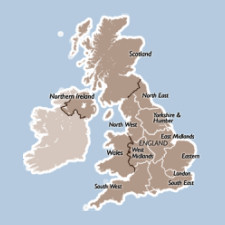
By 2020, every British household could be equipped with a smart meter -- a device that will allow for a higher level of granularity in tracking a home's energy consumption, and could lead to an overall reduction in carbon waste. Last October, the UK Government announced that intended to mandate smart meters for all households and small and medium-sized business sites.
Yesterday, the Department of Energy and Climate Change's (DECC) Ed Miliband announced the government has launched a public consultation (found here) on the implementation of smart meters which will be open until August 3.

Nokia's file sharing site gets de-prioritized
Nokia's Ovi Share has been put into stasis. Ovi Share was built from Redmond startup Twango which Nokia purchased in 2007. As a part of its online services restructuring that the company announced in late April, Ovi Share will continue to exist, but with a considerably dimmer future.
A Nokia representative was quoted by Reuters today as saying the service is just "planned to be maintained in its current state," with no further investments being put toward development as the company restructures its services department.

Islamic Linux distro changes its name to avoid trademark dispute
We all remember Windows Me. It's a moniker that has become synonymous with incomparable stability problems and generally ridiculous bugs. Did you know that until recently there was also an Ubuntu Me? The "Me" in its case stood for "Muslim Edition."
Currently, however, the Linux distribution catering to the Islamic faith has sloughed off both its association to "Me" as well as its outward association to Ubuntu, and has changed its name to Sabily, a term taken from a Qur'anic verse which translates to "my way."
Developer registration opens for Windows Mobile Marketplace
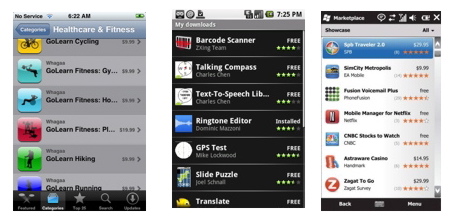
Coinciding with Tech Ed's WM6.5 sessions today, the Windows Mobile team has opened developer registration for the Windows Mobile Marketplace.
First discussed in March, this is the only the initial step for developers to take toward making their apps available for the Marketplace when it debuts. Developers will be charged $99 to sell up to five apps annually, and will receive 70% of revenue from each app submitted and approved for sale.

Oklahoma: Texting takes on twisters
Oklahoma is the heart of "Tornado Alley," with more than 25 category F3, F4, and F5 tornadoes (the three most intense types) per 3,700 square miles per year. The National Oceanic and Atmospheric Administration recorded 77 incidents last year alone.
Now, coinciding with the spring and summer tornado season, the Oklahoma state legislature and the National Weather Service are reminding residents of the area that they can receive free emergency notification e-mails and text messages to supplement the familiar blaring air raid sirens and high-octane TV tornado warnings that echo throughout the Sooner State.

Britons confused about their broadband, says survey
Following up on a report by Ofcom that UK broadband subscribers only get half of their promised speeds, comparison shopping site Broadband Genie today says not only are connections slower, but subscribers don't know what they're paying for.
Using the Thinkbroadband speed test, Broadband Genie surveyed customers of the top 8 UK broadband suppliers, asking what broadband package they subscribe to and what the promised speeds are. Like Ofcom's report (PDF here) which said Britain's average downlink speed is 3.6 Mbps of a promised 7.2 Mbps, the data showed that the average actual downlink speed for UK customers is 45.8% of the advertised speed limit.
Windows Mobile 6.5: What we should expect
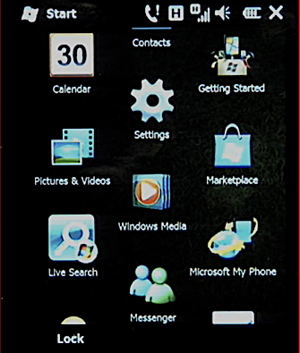
All indications are that today is the day Microsoft will officially launch Windows Mobile 6.5, the incremental update from Redmond that seeks to bring the resistive touch OS up to speed with the "finger friendly" capacitive touch devices that led the market last year.
Since last November, when CEO Steve Ballmer announced Windows Mobile 6.5 at a conference in Australia, the OS has been on a hurried path toward launch. It was introduced at Mobile World Congress, and then received a graphical overhaul in time for MIX 09, when the trademark on-screen "honeycomb" was eliminated. Shortly thereafter, Ballmer essentially dismissed the whole update as a provisional release prior to Windows Mobile 7, forestalling his marketing team's effort to build up momentum prior to today.

Prototype kits for bigger E-paper displays available now
Now that the Kindle DX is available, the E Ink Corporation has made its 9.7" E-paper display prototype kit available to the public.

Wi-Lan settles with Infineon, gains hundreds of patents
More than a year and a half after suing 22 companies for infringement of three of its Wi-Fi/ODFM patents, Ottawa, Canada-based Wi-Lan Technologies has just settled with one of the defendants, Infineon Technologies, who has agreed to a licensing deal.
As a part of the settlement, Infineon will license several Wi-Lan patents in wireless and wireline technology, including xDSL and Wireless LAN. While most terms of the deal are confidential, a separate transaction occurred between the two companies this week, in which Wi-Lan purchased a number of patents from Infineon.

Dish Network adds remote DVR access
Following in the footsteps of TiVo and DirecTV, Dish Network today launched Dish Remote Access, which lets customers access and program their home DVRs from any Internet connected device.
Users can search for, and schedule to record, content on multiple receivers up to nine days in advance. Searches can be filtered by genre, channel, content rating, language, and more. There are currently a few limitations to the service, which include a lack of control over external hard drives, no ability to switch between Tuner 1 and Tuner 2, and over-the-air listings that are subject to irregular availability.

EA invites beta testers for Ultima Online expansion pack
Electronic Arts' MMORPG-centric studio Mythic Entertainment, is now accepting applications for the closed beta of Ultima Online: Stygian Abyss, which will begin later this month.
Ultima Online is one of the most popular and longest-running massively multiplayer games in existence, which according to EA was the first of its kind to reach a subscriber base of more than 100,000 active users. Stygian Abyss focuses on Gargoyles, characters that have been central to the Ultima series since Ultima VI was released nearly 20 years ago for DOS, Amiga, Atari ST, and Commodore 64.

Canada's Rogers to get both 'Google phones'
Canada's largest mobile carrier Rogers Wireless announced today that in addition to carrying the iPhone, it will soon have both "Google phones" from HTC, the Dream (also known as the G1) and the Magic.
Rogers has a countdown timer on its site, which promises that the "revolution" will occur on June second, but details of subscription packages and subsidiaries have not yet been mentioned.

Here comes WiGig, another shot at wireless HD
With support from more than fifteen major companies including Microsoft, Intel, Marvell, Nokia, and NEC announced today, the new Wireless Gigabit Alliance is pushing for yet another brand name wireless standard in the already overcrowded wireless spectrum. WiGig works on the 60 GHz frequency band and promises a 6 Gbps data transmission speed.
The 60 GHz band is an unlicensed portion of the electromagnetic spectrum that has typically been used by the intelligence community for point-to-point data links. It's best suited only for very short distance communication (under 2 kilometers) because it falls within the "absorption band" for oxygen. In other words, oxygen molecules readily absorb a 60 GHz wave's energy and weaken the signal. In satellite-to-satellite communication, the vacuum of space allows these types of waves to travel greater distances while the Earth's atmosphere acts as a huge shield against terrestrial signal interception.

Blu-ray sales skyrocket, provided you lower the sky
Market data from the NPD Group released this week shows that in the first quarter of 2009, more than 400,000 standalone Blu-ray players were sold, constituting a year-over-year increase of 72%. Dollar sales likewise increased by 14% and hit $107.2 million.
Last month, Futuresource Consulting predicted that 2009 will be the year that Blu-ray breaks, estimating shipments of more than 12 million standalone Blu-ray players for the total year. Futuresource's Jack Wetherill said his group anticipated 1.2 million units would ship in Q1 2009, some three times more than NPD says were sold to consumers.