
Got Ice Cream Sandwich? Get Google Maps 6.5 for Android now
Google isn't waiting for the install base of Android users to move to Ice Cream Sandwich, not that carriers or handset manufacturers help much (if you're waiting for that upgrade from Gingerbread, you know what I mean). Today the search and information giant updated Google Maps for Android to version 6.5, packing in capabilities specific to version 4.x. Don't you feel cheated? I would.
Google offers the best to a minority of users, and small is too big a word to describe them. According to Google's official stats, as of March 5, Ice Cream Sandwich accounts for a mere 1.6 percent of Android devices. But, hey, many of these users are the bleeding edge of influencers Google should want to reach -- and keep enthusiastic.
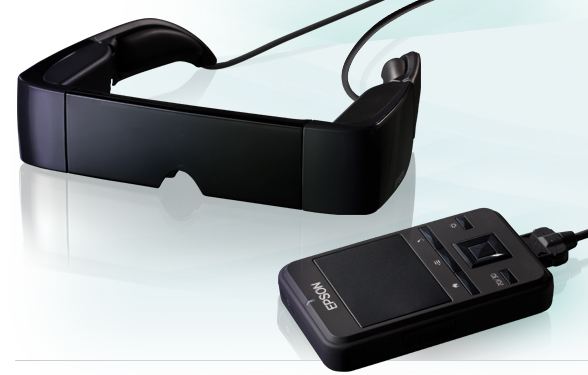
Epson's Android-powered display glasses: do want...don't know why
Proving that head-mounted displays aren't just PC peripherals, Japanese electronics company Epson on Wednesday launched the Moverio BT-100, the first self-contained, Android-powered head-mounted display.
The $699.99 unit include stereoscopic .52-inch (960×540) TFT LCD displays that create a perceived 80-inch display, which is powered by Android 2.2 touch navigation. Since you can't touch the actual screen without jabbing yourself in the eyeball, all touch interface activity is done through a handheld touch pad.
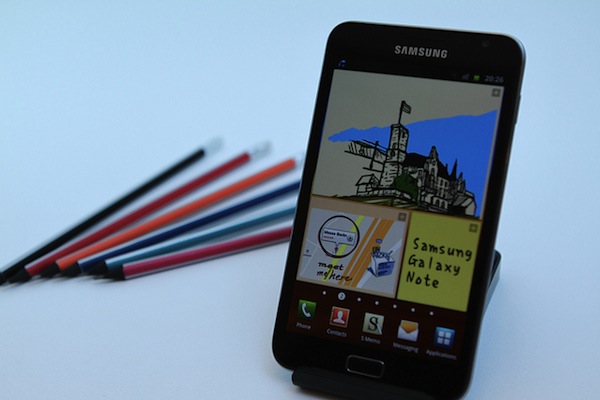
Who bought 5 million Galaxy Notes, because I want to know
Today's big Samsung Galaxy Note announcement -- 5 million shipped in five months -- has me wondering "Who?" Is it you?
It's a big number for an over-sized smartphone, under-sized tablet measuring 146.85 x 82.95 x 9.65 mm, weighing 178 grams and packing beastly 5.29-inch display. On Dec. 29, 2011, Samsung announced shipment of 1 million Galaxy Notes. Just weeks ago Samsung put shipments at 2 million. That's a helluva jump in just three weeks.

Box brings the mobile cloud to the enterprise
Today, cloud-storage provider Box updated its iPad and iPhone app to include support for the newly-launched Box OneCloud. The service is Box.com’s pitch to the enterprise and business market for the “post-PC era”, providing users with a means of using their iPad to directly edit documents that can be stored online, collaborated on and shared with other users as well as accessed via desktop.
Box for iPhone and iPad 2.7.1 is a free-for-personal use app that allows users to access the contents of their Box accounts via their iOS device. The app also allows users to upload files back to the service as well as edit them using supported apps on the mobile.

'This summer, when hunger strikes, and all hope seems lost, a small device will change your destiny' -- the VIP Fridge Magnet
Pack my bags, I'm moving to Dubai.
Local shop Red Tomato Pizza promises to make available a fridge magnet that you tap to place orders. For all I know, it's all gimmick. The promotional YouTube video is a smart production. Spoiler: You will want to order pizza after watching it.

NTIA says public and private sectors could share 95 MHz of wireless spectrum for broadband
This week, the U.S. Department of Commerce and the National Telecommunications and Information Administration (NTIA) announced that they have isolated 95 MHz of "prime" wireless spectrum that could be repurposed for mobile broadband uses.
The 1755–1850 MHz band was examined by NTIA as potentially viable for commercial wireless broadband services (.pdf here.) Currently, more than 20 federal agencies own more than 3,100 individual frequency assignments in this band. Their uses range from law enforcement surveillance, to military tactical communications, to unmanned aerial vehicles, to guided munitions.

Little changes add lots to Kaspersky PURE 2.0 Total Security
Kaspersky LAB has released a new version of its flagship do-it-all security suite, PURE 2.0 Total Security.
Although the upgrade is relatively minor, which is no surprise, really; the previous version did so much that there isn’t much left to add, the company has made a few useful tweaks which should appeal to fans of the package.

Game on with Adobe Flash 11.2 and AIR 3.2
Adobe Flash Player 11.2 and AIR 3.2, major updates to its browser plug-in and runtime environments, are now available. Flash Player, which is built into Chrome and available as a separate download for Internet Explorer, was until the advent of HTML5 the de facto standard for accessing rich, multimedia content on the web.
Both updates are aimed very much at repositioning Flash as a rival gaming platform to consoles, focusing on providing developers with tools to produce immersive, graphically rich games across all supported platforms.

Undo tweets with Windows 8-inspired MetroTwit
Inspired by the look of Windows Metro, MetroTwit is a unique-looking, clean Twitter client that oozes style and simplicity. The app has just hit version 1.0, having already proved itself to be worthy of note in the beta stages. The official release sees the addition of a number of important new features including highly configurable filtering that helps you to ensure that your stream is not cluttered up with tweets you are not interested in.
In a similar vein to TweetDeck, the MetroTwit interface includes multiple columns that can be used to display different aspects of your Twitter account, and there is great integration with Windows 7 that sees notification area popups revealing direct messages and other interactions.

Mobile app developers, don't forget about privacy and security
User experience is important when developing any mobile app but in an enterprise context, what about security? For example, if you are developing an app that stores personal information there are regulations that ask where this information resides. Depending on the industry, mobile app developers may be completely accountable if any security issues happen on an app that they develop.
To ensure that you are in full compliance to any privacy, security or regulatory questions, it is recommended that apps be developed in-house or through a partner. So do mobile app developers need to consider regulatory, security or privacy concerns in advance of mobile app development projects?

CCleaner 3.17 picks up the mess cookies leave behind
Piriform Software has released CCleaner 3.17, the latest monthly update of its immensely popular Windows cleaning tool. Version 3.17 adds wildcard support when cookie cleaning, the ability to clean the Hosts history in Firefox Aurora and Shortcuts history cleaning in Google Chrome Canary.
Version 3.17 also improves various cleanup tools and applications, plus widens its support to cover three new applications: CyberLink PhotoDirector 10, DivX Player and Snagit 11 in addition to the dozens of applications and system settings, including the Registry, already covered by CCleaner.
New Avira security tools come to Android and OS X
When it comes to security, it is fair to say that there is no shortage of apps to choose from. This is especially true for PC users, but anyone with a Mac or Android device now has new tools to add to the list of choices -- thanks to the most recent releases from security experts Avira. Both Avira Free Android Security and Avira Free Mac Security are, as you’ve no doubt determined, available free of charge, and both apps tackle security in different ways.
Avira Free Mac Security is very much what you would expect, offering protection against viruses and malware. This is an app that prides itself on the minimum of interaction that is needed from the user -- for the most part it will sit quietly in the background fending off threats as and when necessary. Definitions updates are made available frequently and the app does its job well. It is sign of a great piece of software when it is not necessary to think about the fact that it is installed.

Google, there's no good 'without doing evil'
When will someone stand up to the bully in the room? He roves around in intimidating manner boasting how kind he is. Hey, he can make friends without being evil. But bully is anything but good. That's how I feel about Google this fine Spring day.
Yesterday, "Google Play", the renamed Android Market, popped up on the black bar adorning my Google search page, with a beaconing red -- or is it orange -- "New". The service is now front and center with other Google services hawked from search, spotlighting an ongoing trend of aggressive integration that has rapidly accelerated under Larry Page's leadership. Microsoft spent nearly a decade under house arrest for doing less.

AVG rolls out two types of 'Do Not Track' in latest antivirus service pack
Dutch security company AVG on Tuesday rolled out the 2012 service pack for all of its security products which adds the new "Do Not Track" and WiFi Guard features to the protections it offers users.
The service pack includes both Passive and Active Do Not Track (DNT) features that are turned on by default as soon as the software is installed. Passive DNT is the World Wide Web Consortium standard HTTP header request, that allows users to browse sites without being tracked.
BlueStacks Android App Player for Windows launches in beta, adds major new features
After a little more than six months in Alpha, the BlueStacks Android App Player has officially been released in beta.
This environment lets users run Android applications on their Windows machine, and it translates the touch- and sensor-based inputs into mouse and keyboard gestures. With this beta release, BlueStacks has added support for accelerometer commands, pinch-to-zoom inputs, and most importantly, support for apps that utilize Android's NDK.