AT&T adds big screened 3D-ready LG Thrill, HTC HD7S to lineup
The nation's largest GSM carrier on Monday announced two new smartphones aimed at the higher end as it works to differentiate itself after losing exclusivity of the Apple iPhone. The LG Thrill 4G, a dual-core 3D-ready Android phone, and the HTC HD7S, a Windows Phone 7 device with a five megapixel built in camera, will be available in the coming weeks.
Both devices will sport large 4.3-inch screens, with the LG Thrill able to run on AT&T's new 4G network. The LG Thrill would also be able to shoot 3D imagery and video through its own built in five megapixel camera, and no glasses would be required in order to view the imagery.
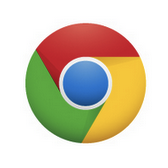
Do you like Google's new Chrome logo?
I can't say that I like the old one. But the new? You simply have to share what you think about it. One of the things the social web is good for is telling vendors where to put their new logos. Many an online social mob has forced vendors to give up a new logo or other branding change. Remember last year's online revolt against the new Gap logo?
So what's your reaction to the new Chrome logo (OK, Google calls it an icon)? Does it appeal to you? Please answer in comments, or email joewilcox at gmail dot com.

Get Firefox 4 final a day ahead of its official release
While the final version Firefox 4 is not slated to release until Tuesday, Betanews' sister site FileForum has obtained the official releases from Mozilla's FTP servers a day early. Those FTP servers are the ones used to populate the company's distribution points for widespread release.
Mozilla strongly discourages direct downloading from these servers as they are not equipped to handle the traffic that major software releases can generate. In the past, the software maker has asked companies to remove any direct links to its FTP servers.

Stop malware at the TrafficLight
The web is a dangerous place, packed with all kinds of threats, so it's important to take steps to ensure your browsing security. Browser add-ons aren't always the answer. Many grab too many resources, and either offer too little functionality, or don't work with all the browsers you need -- a real disappointment.
BitDefender's new TrafficLight beta, however, takes a new approach, and the difference is obvious from the moment you install it. The program adds a service to your PC that filters web traffic at the protocol level, so it doesn't show up as an add-on in Internet Explorer or Firefox, or add an extra toolbar to your browser.
CalendarBar: Easy access to iCal and Google Calendar
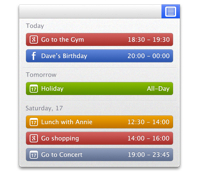
The simplest of tools are often the best, and this is something demonstrated perfectly by CalendarBar for Mac OS X. This tiny utility adds an icon to the menu bar of OS X that provides access to a list of calendar events stored in iCal, Google Calendar or even in your Facebook account. As the app is based in the menu bar, it is always available, eliminating the need to switch apps to check the date or time of an upcoming appointment.
To help make things even easier, a keyboard shortcut can be created to toggle the display of the CalendarBar popup, and the menu bar icon can be configured to indicate the number of appointments that are due today -- ideal for checking how busy your day's schedule is at a glance.

Got video format troubles? Try Media Converter
With so many video codecs to choose from, there will invariably come a time when you want to play back media files on a particular device, or use it in a certain way, only to find that an incompatible format has been used. Ordinarily, converting videos between formats can be something of an arduous process, but the free Mac app Media Converter aims to keep things as simple and speedy as possible.
Unlike other conversion tools, Media Converter offers a number of benefits, starting with the fact that it is free. The software offers support for a wide range of video formats and the process of converting takes nothing more than selecting the desired output format from a drop down menu before dragging and dropping the original video onto the program window.
Google Voice and Nexus S Sprint
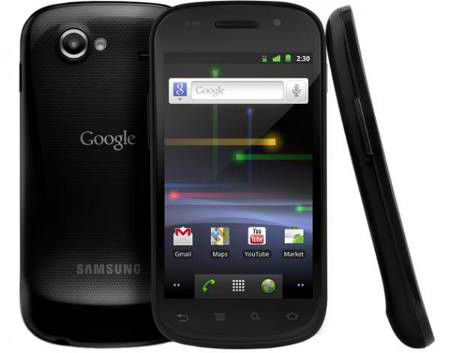
Talk about timing. Today, Google and Sprint made two significant announcements ahead of tomorrow's official opening of the CTIA Wireless trade show: Nexus S 4G and Google Voice. Perhaps it's time the carrier and Android developer got cozier -- now that AT&T plans to buy T-Mobile USA. T-Mobile has been Google's premiere US Android provider, going back to their launch of the first smartphone running the OS, the G1, in September 2008. How quickly times change.
Google Voice is the bigger of the two announcements. The service will be available to any Sprint customer who wants it, and Google Voice will replace Sprint voicemail for subscribers making the switch.
What do you think about the AT&T T-Mobile merger?
As the new work week opens up, AT&T and T-Mobile USA customers have plenty to say about the proposed merger. Yesterday, Deutsche Telekom agreed to sell T-Mobile USA to AT&T for $39 billion -- $25 billion of it in cash. Last night I posted a long analysis about what the merger could mean to subscribers of both carriers, also asking Betanews readers: What do you think of the merger? Whoa, did you answer.
"I have been a loyal customer of T-Mobile for over nine years," Reese Burton writes by email. "Even with Verizon getting the iPhone I did not want to change from T-Mobile. However, if everything in your blog comes about, I will change from AT&T to Verizon. I don't know what Verizon's plans are, but they have to be better than AT&T."
How will the AT&T T-Mobile USA merger affect you?
Surely there are easier ways for T-Mobile USA to get iPhone than to sell out to AT&T. Or for AT&T to dramatically improve the reach of its high-speed network or to increase its cache of Android handsets. Kidding aside, today's merger announcement between AT&T and T-Mobile is simply stunning. It's an atomic blast occurring right before one of the biggest wireless tradeshows of the year -- CTIA, which officially opens on March 22nd.
The real question: What does it mean for you the AT&T or T-Mobile customer?

AT&T to acquire T-Mobile USA for $39 billion
In a stunning development that likely surprised many, AT&T announced Sunday that it had entered into an agreement to acquire T-Mobile USA from Deutsche Telekom in an agreement valued at some $39 billion USD. The combined entity would have approximately 130 million subscribers, far surpassing rival Verizon and becoming the nation's largest cellular provider.
AT&T has committed to pay Deutsche Telekom $25 billion in cash, with the remainder being paid in stock according to a statement by the company. The board of directors of both companies have already approved the deal, and it is expected to close within 12 months.

What if Amazon released Android Kindle tablet?
If you're not asking the question, you should. It makes sense out of Amazon imminently launching an app store to rival Google's Android Marketplace. Why else does Amazon need its own Android app store? Well, there's an answer to that question, too. Read on.
Firstly, in the short term, any Android-based Kindle isn't about Amazon competing with iPad or other Apple iOS devices. Amazon's ambitions are much larger: Capitalizing on the enormous Android ecosystem of applications and devices and extending its core competency as a retailer. Amazon already does this on Android and other mobile operating systems with the Kindle app. But Amazon sells more digital content than just ebooks. Android Kindle -- as device or app -- would allow Amazon to better bundle other digitally downloaded products, like movies, music and TV shows.

The Tech Convention Survival Kit
Tim Conneally is headed to CTIA Wireless, March 21-24. What's in his bag and what should be in yours, other than the obligatory computer and camera?
This time of year is packed with tech industry trade shows. DEMO, GDC, CeBIT, PAX East, SXSWi, and CTIA all butt up against one another and stimulate activity and interest across many different tech sectors. These events may not exactly be the lifeblood of our high-tech economy, but they're serious business and they generate...well, serious business.
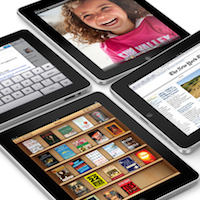
AT&T slashes 64GB 1st-gen iPad 3G price by $300
Well, holy wholesale pricing, Batman. AT&T is having a fire sale on first-generation iPads. Pricing is sure to tempt someone and the discounts even cut below Apple's sale pricing. What? Is sold-out iPad 2 so much in demand that AT&T practically has to give away older 3G models?
When iPad 2 went on sale one week ago -- gasp, it feels so much longer because of shortages -- Apple and AT&T cut prices of the older model by $100. After the discount: $529, $629 and $729 for the 16GB, 32GB and 64GB models, respectively, with 3G and WiFi.
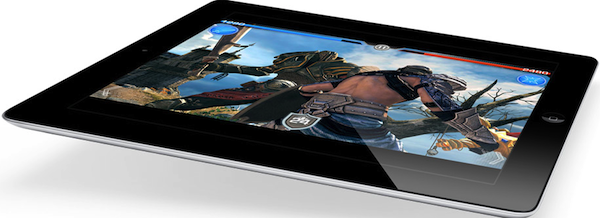
iSuppli: iPad 2 shortages may become worse due to Japan quake
With supplies of the iPad 2 already tight, the ongoing disaster in Japan could make things even worse according to a prominent research firm. IHS iSuppli -- most known for its teardown analyses -- said it had identified at least five parts in the tablet device that are manufactured in the country.
So far the company has identified NAND flash chips from Toshiba, DRAM chips produced by Elpida Memory, an electronic compass from AKM Semiconductor, touchscreen glass overlay believed to be from Asahi Glass, and the system battery produced by Apple Japan.
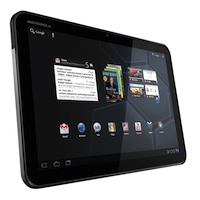
Who will pay $600 for XOOM with WiFi?
Motorola's hot, Android 3.0 "Honeycomb" tablet goes on sale next week -- heck, some retailers are already taking preorders. Amazon has it for $599, Costco $589.99 and Staples $599.98. Surprisingly, BestBuy only lists the $799.99 unsubsidized XOOM with WiFi and Verizon 3G.
In my story two days ago about the official March 27 release, I asked Betanews readers if they would buy the $600 Wi-Fi-only XOOM. Yes, I also asked in February, but that was before iPad 2 was specked, priced, launched and sold out. Unfortunately, I asked the question again before another development. For a second time, AT&T has dropped the price on the original 3G iPad to $429, $529 and $629 for 16GB, 32GB and 64GB models, respectively. As I write the 32GB iPad 3G is sold out. There is no carrier comment. Now to those responses: