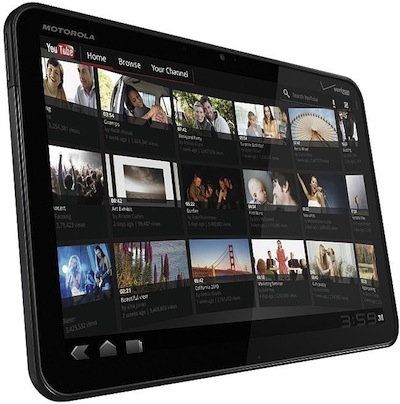
Would you pay 800 bucks for the Motorola XOOM?
Motorola, or is that Best Buy, sure knows how to dampen enthusiasm for what should otherwise be the hottest Android tablet and iPad's strongest competitor (that is, ahead of Samsung announcing the Galaxy Tab successor). I'm not paying $799.99 for the Moto XOOM? Would you? Oh, yeah, there's fine print: One month Verizon 3G data to, get this, activate the WiFi.
In business, pricing and perception are everything. Little does more to create unwanted negative perceptions than high pricing. In mass-marketing there are pricing thresholds that trigger sales, and these are particularly important when bringing new products to market against a successful and dominant competitor. For digital singles, 99 cents was it. For Amazon's Kindle: $139.

Why Microsoft has to open Windows Update to third-party developers
There's a lot of confusion out there about when attacks against computers occur as a result of vulnerabilities in software as opposed to some other weakness, usually social engineering. Considerable progress has been made in protection against vulnerabilities on Windows, and we can make exploitation even harder if Microsoft can be talked into my scheme: open up Windows Update to third-party applications.
My own opinion is that social engineering is far more important than vulnerabilities and has been increasing in importance. One reason for this is that vulnerabilities are a harder target than they used to be, and that's in large part because of the work Microsoft has done over the last 6 or 7 years.

It's Super Bowl Sunday, do you know who's watching you watch the game?
The Super Bowl is as much about advertising, in some respects more, than the actual game. Advertisers are paying as much as $3 million a commercial spot, which is perplexing in this era of targeted advertising on the web. Super Bowl ads hit a mass of people, more than 100 million expected for today's Green Bay Packers and Pittsburgh Steelers face off, but advertisers don't know who you are. Or do they? It's a question I've been asking, following several unusual events occurring over the past 10 days or so. I'm talking about your privacy and how much less of it you have this Super Bowl Sunday than the last one and how much more advertisers will know about you by next year's playoff.
I've been thinking lots more about advertising and privacy this week because of Google allegations that Microsoft copied search results and because of a personal experience with targeted advertising. I'll start with the latter. Early last week, I saw banner ads on several tech sites for two different sites where I occasionally buy WordPress themes and cell phones. A few days before seeing the splash banners, I visited both sites -- the one looking for new WordPress themes and the other to buy a case for my Google-branded, Samsung-manufactured Nexus S smartphone.

HyperDock 1.0 brings Windows 7 desktop features to Snow Leopard
Are you looking to combine the best bits of Windows 7's desktop with your Snow Leopard-powered Mac? HyperDock 1.0 aims to fill in the gaps by bringing two of Windows 7's best features -- pop-up thumbnail previews of open windows and programs, and the ability to quickly and easily snap two windows side-by-side on-screen -- to the Mac desktop.
Once installed, the program adds itself to the System Preferences pane, making it possible to bring order back to a cluttered collection of windows simply by rolling your mouse over a program and window icons in the dock. A small pop-up window displays thumbnails of all open windows; select a window to view it full-screen or close it directly from the pop-up.
Tip: Save money with Google Shopper
If you're looking to save money or want to check out reviews of a product before making a purchase, Google Shopper may just be the app you've been looking for. Previously available for the Android platform, the app is now available for iPhone and iPod touch, making it possible to check prices and product details when on the high street.
The app takes full advantage of the iPhone and iPod touch camera, as it can be used to scan barcodes to speed up the process of performing searches. Once a product has been found it can be added to an ever-growing wishlist that can be shared with others -- great for when your birthday is imminent.

Google makes it easier to build sites for Google TV
Friday, the Google TV team published a couple of new design templates, as well as a still-in-beta Web UI library that Web designers can use to optimize their sites for Google TV.
"While existing websites can be displayed in Google TV, the user experience isn't always ideal within the context of a living room," Steve Hines and Daniels Lee of Google TV Developer Relations Team wrote in the Google TV blog today.
New Android market shows the future is in device-agnostic app stores
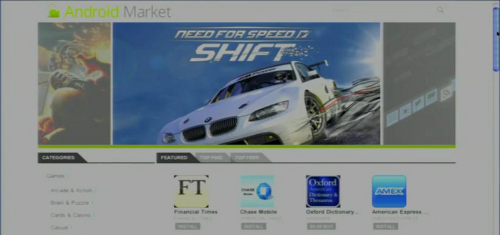
Google on Thursday finally launched a renewed web-based Android Market that integrates with a user's Google account and lets him shop for applications and send them to the various Android-powered devices linked to the account. This new shop marks the industry-wide trend toward comprehensive device-agnostic software shopping solutions.
Amazon's Kindle store was the first major shopping outlet to take such a step. Users can shop for Kindle-formatted e-books on Amazon.com, and push their purchases to their Kindle device, regardless of whether it's a dedicated e-paper reader or a software application.
Nokia's experimental 'Bubbles' lets Symbian^3 users pop their way through common tasks
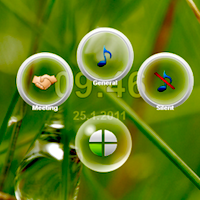
Nokia Labs today revealed a new user interface motif called "Bubbles." It's one the many odd little research projects Nokia pops out. Some of them become real products, while many others do not. But I often see lots of creativity and invention in what these Nokia researchers dream up.
Nokia Bubbles is just that -- bubbles that move around the handset's display. They're essentially shortcuts to other functions, such as unlocking the phone, viewing missed calls, accessing e-mail or viewing text messages.

Hacking Chrome? Google Bets $20,000 you can't
Google has donated $20,000 to a yearly hacking competition to be awarded to the first researcher able to crack its Chrome browser. The Mountain View, Calif. company's move marks the first time a browser developer has contributed money to the contest.
The Pwn2Own competition is in its fifth year and is held at the CanSecWest security conference. Participants are tasked with cracking a variety of other browsers too (Apple's Safari, Microsoft's Internet Explorer, and Mozilla's Firefox) on computers supplied by the contest creators running Windows 7. Those that perform a successful crack win the computer it was done on as well as a $15,000 cash prize.
Does a Microsoft-Nokia mashup make sense, or are its supporters just nuts?
I disagree with TechFlash's Todd Bishop, who today writes that a "wholesale shift by Nokia to Windows Phone 7 from Symbian would be a huge change, similar in magnitude to, say, Apple adopting Intel chips." Oh, no, it would be much bigger than that and way riskier. [Editor's Note: Quote corrected for transposed "by" and "to"; I make that kind of mistake all the time.]
Bishop responds to yet another call for Nokia to enter an unholy operating system alliance with Microsoft or to merge -- this one from Berenberg Bank analyst Adnaan Ahmad. As the TechFlash managing editor rightly observes: "Ever since he went to Nokia, [Stephen] Elop's connection to Microsoft has been viewed as a possible prelude to a tighter relationship." Elop left Microsoft in September 2010, as president of the Business division, to become Nokia's chief executive. As I expressed nearly six months ago, Elop wouldn't be my first choice to run Nokia.
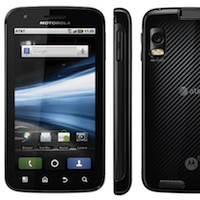
Motorola Atrix 4G notebook: a $500 conundrum
Thursday, AT&T and Motorola announced pricing and availability of the Motorola Atrix 4G convertible smartphone. The public first recoiled at the pricetag --$199 for the phone and $500 for its notebook dock-- but the Atrix is an extremely enticing new type of gadget that could be a good solution for specific users.
The main idea behind the Atrix 4G is that the smartphone acts as a "brain" that can power a notebook computer, a set top box, or stand alone as a phone. It features a dual gigaherz core Nvidia Tegra 2 processor, 1 GB of RAM, up to 32 GB of storage, and features the Android 2.2 operating system with special dedicated interfaces for the notebook and multimedia set top box.

The pressure is on for Apple to think about life after Jobs
Ahead of its planned investor meeting on Feburary 23, Apple is once again having to deal with questions on a succession plan. The Cupertino company might have been able to avoid a lot of publicity surrounding an effort to force it to publicly disclose its plans, but Steve Jobs' indefinite leave of absence couldn't have come at a worse time.
Institutional Shareholder Services, a group that advises shareholders on how to vote on proxy ballot issues, has now said that it is advising a yes vote for the proposal. Under it, the company would be required to publicly disclose its plans for succession, and do so yearly.
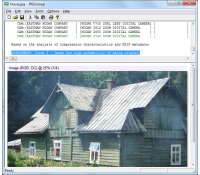
Identify edited images with JPEGSnoop
Are you looking at a digital photo in its raw, original state -- or has it been edited? Under normal circumstances this can be very hard to determine. But if you really need to know JPEGSnoop may be able to help. Just open your image and the program will examine its compression characteristics, compare these against a database of thousands of cameras and photo editors, and deliver its verdict.
So if your image matches the signature of a camera, it's probably an original shot; if it matches a photo editor, it probably has been edited, or at least saved in an editor; and if the signature isn't recognized then JPEGSnoop won't be able to say (though you can add signatures to the database manually to improve its accuracy).

Ancestory 2.0 app brings broader generational view to iPad
Ancestry.com has released version 2.0 of its mobile app for iPhone, iPad and iPod Touch users. Ancestry 2.0 features a major redesign of its user interface, which has been optimised for iPad users to make browsing your online Ancestry.com tree much easier than previously. The app also adds new options for accessing records and source citations linked to individuals in your tree. It also extends access to shared trees.
The Ancestry app is designed to give family historians access to any family trees they've stored online at Ancestry.com. Not only can users browse their own trees, they can also edit selected information, upload photos and even add new family members from scratch while away from a computer and web browser, making the app much more than a simple browsing tool.
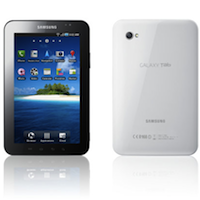
Samsung Galaxy Tab customers are satisfied enough -- return rate less than 2%
There's a reason why Betanews didn't report the ridiculous research report claiming that the return rate on Samsung Galaxy Tab tablets was overly high: It wasn't believable. Finally, Samsung has stepped up with its formal denial.
Samsung posted the statement yesterday (yeah, I missed it; I was celebrating the Lunar New Year on Seoul time): "The return rate of the Galaxy Tab in the US as claimed by an North American market research firm is incorrect. According to Samsung Electronics Mobile Communications Business the return rate is below 2 percent." Now how's that for terse and to the point?