NPD: growth in non-console gaming kept video game industry from sinking
According to estimates from market research organization NPD Group, U.S. consumers spent between $15.4 and $15.6 billion on video games of all types, including boxed software, used games, rentals, subscriptions, downloads, apps, and ad monetized freeware, and in-game microtransactions.
Overall, consumer spending on video games was flat between 2009 and 2010, but the industry underwent a slight shift in where the money was being channeled, and that looks to have actually prevented the industry from posting an overall decline for 2010.
Get one of Windows 7's best features on your Mac desktop
Many people consider the Mac OS X desktop superior to Windows, which perhaps explains why there are so many utilities for Windows users that try to mimic elements like the Mac OS X Dock in Windows. But Windows 7 introduced some nifty new features of its own that suddenly become notable by their absence on the Mac.
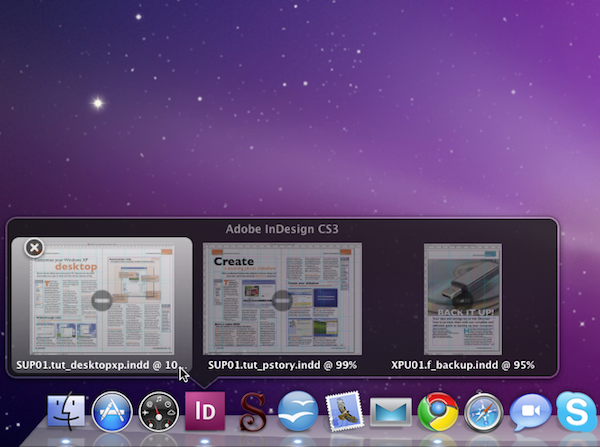
One of the these features is the Live Thumbnail previews of open windows that appear when you roll the mouse over a Taskbar icon, allowing you to quickly view, select and even close individual windows or documents. Mac developers have been quick to plug the gap with the release of shareware programs like HyperDock and DockView, although you'll need the latest Mac OS X (v10.6, or Snow Leopard) release to take advantage of either program.
WMIC: the best command line tool you've never used
Some people say command line tools are obsolete, out of date, no longer necessary when you can "point and click," instead. But the reality is very different. Every version of Windows sees the command line given new powers and abilities, and if you don't explore these then you really are missing out.
Take the WMIC command, for instance. It has astonishing scope and a huge set of features: the program can return useful information about your system, control running programs and generally manage just about every aspect of your PC -- all from the command line or a convenient shortcut.

Google eliminates planned and scheduled downtime for apps
In what could be viewed as a shot across the bow of Microsoft, Google on Friday announced that it had modified its Google Apps service agreements to promise users 99.9 percent uptime. In addition, it removed wording that accounted for planned or scheduled downtime as part of the service reliability promise.
"Unlike most providers, we don't plan for our users to be down, even when we're upgrading our services or maintaining our systems," Enterprise Product Management Director Matthew Glotzbach said. He said Google would be the first company to eliminate maintenance window clauses from its service contracts.
Russian site says Windows 7 SP1 shipped to OEMs, Microsoft denies
A Russian Windows TechNet Blog Thursday evening announced "Service Pack 1 for Windows 7 and Windows Server 2008 R2 Released", and the presumption was that Microsoft had begun shipping SP1 (v. 601.17514.win7sp1_rtm.101119-1850.) to OEM partners.
The update has been slated for a first quarter 2011 release, and in October, RC1 of this incremental service update was pushed out. So the final RTM is expected to be very soon.
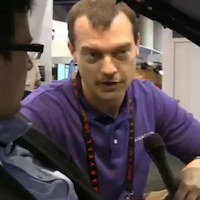
Live from CES 2011: NuVation electric-cooled motorcycle
Rob Wray, from mp3Car, takes a look at the first electric-cooled three-wheeled motorcycle. With 170HP, 0-60 in 5 seconds, 150MPH top speed and weighing in at only 1,800 pounds, it's a surprisingly performance-oriented vehicle. It goes roughly 200 miles on a single charge at slower speeds or about 100 miles at 60 miles per hour. The motorcycle can be charged to about 80 percent in about 20 minutes at a charging station.
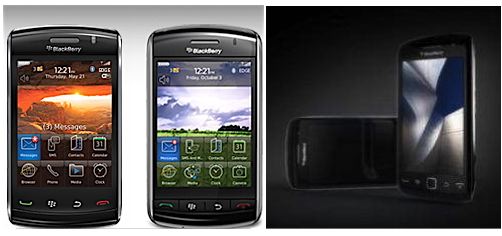
RIM keeping its touchphone alive with Storm 3, says report
In Research in Motion's iconic family of BlackBerry smartphones, there has only ever been one line of products to have no keyboard, the more than two-year old Storm line. Now, leaks obtained by Boy Genius Report purportedly show RIM is trying again with the all-touch BlackBerry in 2011.
The device, which has been referred to as Monaco internally, has a 3.7" (800 x 480) capacitive touchscreen, a 1.2GHz processor, a 5 Megapixel camera with 720p video capture, running BlackBerry OS 6.1.
ChangeWave: 15% of AT&T subscribers are ready to switch, even without Verizon iPhone
In less than 24 hours, three different analyst firms released mobile market findings or projections, just days after Verizon announced it would begin selling iPhone 4 in early February. ChangeWave joins Canalys and ComScore.
I want to thank Betanews reader Ilan Lev for pointing out the ChangeWave study, which I hadn't seen. However, as is typical of ChangeWave data, the blog post presenting it puts the emphasis in the wrong place. In a survey conducted before the Verizon iPhone announcement, 16 percent of US respondents said they would switch from AT&T to Verizon. However, that number isn't nearly as big as it seems. ChangeWave also generally asked the 4,500 respondents their switching intentions from all the major carriers. Fifteen percent of respondents said they plan to switch from AT&T within 90 days. From that perspective, the immediate benefit to Verizon is marginal at best.
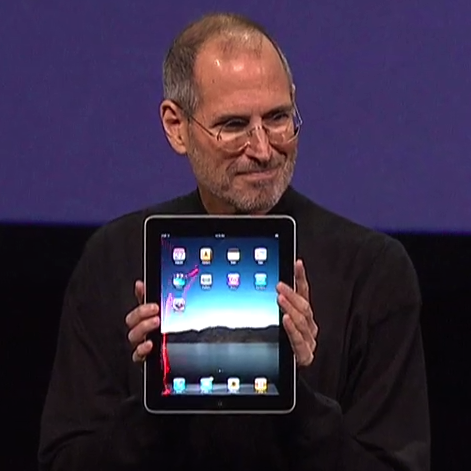
Launch of News Corp's iPad newspaper delayed
News Corp and Apple have decided to delay next week's expected launch of The Daily -- a digital newspaper formatted for the iPad -- according to several news sources. The issue appears to be related to Apple's wishes to tweak its new system for subscriptions in the App Store.
The AFP had reported earlier this week that both companies had planned to launch the paper in an event at the San Francisco Museum of Modern Art on January 19. In any case, a delay would be a matter of "weeks, not months" according to Wall Street Journal sources.
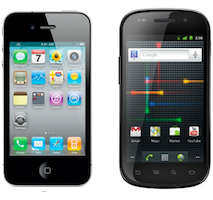
ComScore: Verizon iPhone is likely bad for AT&T, probably not for Android
On the heels of Canalys' report that Android has nothing to fear from Verizon iPhone, ComScore released its own analysis. The question ComScore wouldn't answer is the one everybody seems to be asking: Will many AT&T customers jump carriers for Verizon iPhone? The answer may be moot, because of recent Verizon subscriber gains against AT&T in the market for smartphones.
AT&T's US smartphone market share is 38 percent compared to 27 percent for Verizon; and, of course, iPhone is a major reason. But Android upset the balance in 2010, the first full year after Verizon introduced the Droid line of smartphones. AT&T's smartphone share declined by 7 percent, while Verizon's grew by 4 percent.
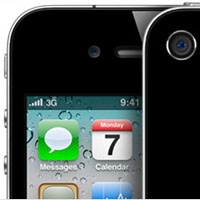
Canalys: Verizon iPhone won't slow Android growth even the slightest
Today analyst firm Canalys asserted that Android handsets would grow at twice the rate of its major competitors during 2011. Canalys only named one, iPhone. The prediction comes two days after Verizon announced that it would carry iPhone 4 starting in early February. Since, and even before, numerous commentaries and punditries claimed victory for iPhone against Android. Absolutely not, says Canalys.
The research firm also said that fragmentation, while greater on Android than iOS, wouldn't stop the Google-created operating system's phenomenal growth. During third quarter 2010, 20 million Android handsets shipped, for 25 percent share of the global smartphone market, according to Canalys. During the first three quarters of 2010, Android shipments grew 1,000-percent year over year.

Sometimes commenters need to be put in their place
Early this afternoon, I was surprised to see that Machead John Gruber had posted "Clam Chowder: Joe Wilcox on Verizon and Apple." He referred to my Jan. 8, 2011 post: "Why Verizon won't let Apple announce iPhone." The headline played off the title to a TechCrunch post I rebutted: "Why Apple Will Let Verizon Announce An iPhone." I disagreed with reasons that put Apple solely in control of the Verizon iPhone announcement, which was then just rumored.
I normally wouldn't bother responding to Gruber's typical slash-and-attack pulpit (Hey, it's free speech and his right). But Gruber quoted a comment posted here at Betanews, and that warrants response because it misquotes or takes out of context my January 8th post. In fact, I wrote a response in comments, but before posting I realized just how long it was and decided to do a separate, full-post response instead. Hence, what follows is my response to commenter iphonedroidberry, whose identity I don't know. But the commenter's first Betanews login was two days ago. You can read iphonedroidberry's full comment following my response. I will address additional issues after the quoted comment.

2011 will be the year these consumer technologies finally unite
Based upon some of the trends we saw at the 2011 consumer electronics show, here are three technology "marriages" that look to be coming into consumer tech in a big way.
Tablets with E-books with College Students

MySpace CEO says that News Corp may be looking to sell
Just a day after former social networking behemoth MySpace announced massive cuts to its workforce, parent company News Corp has now confirmed that it is investigating its options to divest itself of the now struggling service.
The comments came as part of a wider company-wide meeting Thursday held by CEO Mike Jones, and were confirmed by a company spokesperson in an interview with Bloomberg. Among the options being considered is a merger, spin-off, or outright sale of the unit.

Nvidia begins to settle claims of faulty laptop GPUs
Select Apple, HP and Dell laptop or tablet owners who purchased their computers between November 2005 and February 2010 were alerted Thursday that they may begin to file claims to replace faulty graphics processing units produced by chipmaker Nvidia. Final approval of the settlement was reached on December 20, court documents show.
The faulty chips caused video issues with these computers, manifesting themselves in blank screen or scrambled displays. Nvidia was sued, and the suit successfully was granted class action status. As is customary with such settlements, Nvidia is not admitting wrongdoing by agreeing to its terms.