
'Make it simple, stupid' should be the motto for the mobile Web
Ian Betteridge is spot on with today's post: "The era of simplified computing." Simpler defines the current PC market. Simplest defines the next computing paradigm -- anytime, anywhere, on anything, for which the cloud-connected mobile device is the major platform.
"I've come to see that we're entering a new era of computing, one where the paradigms and expectations of the world of the PC won't give us much guidance," Betteridge writes. "This new era is all about simplified computing, technologies where what's important is the ability to sit down, get something done, and put down the device. Fast, simple, and most of all requiring as little knowledge about the underlying technology."
Android growth may give Apple, RIM some pause
In the three month period ending in May, Google's Android was the only platform to measure market share growth according to data from research firm comScore. While Research in Motion and Apple still lead the way, both lost share during the period.
RIM had 41.7 percent of the platform market, down about a half a point from February. Apple's iOS came in second with 24.4 percent, down a full percentage point. Third was Microsoft's Windows Mobile, who fell nearly two percent to 13.2 percent for the period.

After five years, 64-bit editions of Windows make up nearly half of install base
64-bit editions of Windows have been available to OEMs and consumers for five years, and they have finally begun to exhibit command over the PC market, Microsoft reported today.
By June 2010, 46% of all PCs running Windows 7 were running the 64-bit edition. Three and a half years after Windows Vista launched, only 11% of users have installed the 64-bit version, considerably fewer than Microsoft claimed in 2008 when product manager Chris Flores told us "20% of new Windows Vista PCs in the U.S. connecting to the Windows Update were 64-bit..."

Ericsson: 70% of the entire world subscribes to a mobile service
Swedish telecommunications company Ericsson is responsible for all kinds of wireless equipment, from cell site infrastructure to consumer premises equipment to mobile broadband chips. So when they talk about the industry, it would behoove you to pay attention.
Today, Ericsson announced its estimate that the global mobile market contains over five billion subscribers, growing at a rate of 2 million per day.

Google is staying in China with 'unfiltered' services
Google's license to offer search services in China has been renewed after months of restructuring and negotiations with the Chinese government.
In 2005, Google first won a license to operate within China, but to remain available, it had to adhere to strict government oversight and censor search results. Queries related to human rights topics, or to Tibet and the Dalai Lama, for example, would redirect searchers to Government-run sites.

Patent-holding company NTP sues smartphone makers
Six companies were sued by patent holding company NTP on Friday, claiming infringement on the same patents that successfully earned the company a $612.5 million settlement from BlackBerry maker RIM in 2006. The lawsuits were filed in U.S. District Court in Richmond, Va. Thursday afternoon.
NTP said it filed the suit against Apple, Google, HTC, LG, Microsoft, and Motorola to force the companies to pay licensing fees for their technology. The patents include methods to deliver e-mail over wireless connections.

Class action suit in Canada only the latest of Facebook's woes
Facebook's privacy issues have come to a head as it has been sued over its handling of users' private information. The class action suit was filed on July 2 in the Queen's Bench Court in Winnepeg, Manitoba. Merchant Law Group LLP filed the action on behalf of Donald Woligroski, a Winnepeg Facebook user.
The suit accuses the social networking site of misappropriating Woligroski and others' personal information and intentionally using it for commercial purposes. It also says Facebook was careless and dishonest in alerting users to how the information would be used.

Android gaming to get big boost from popular OpenFeint social platform
Android's unabated growth has been a hot topic recently, and comScore's smartphone market share breakdown released today shows that from February to May 2010, it was actually the ONLY major mobile platform to experience positive growth.
Among this growth, a complaint about the Android platform has persisted: it has no good games. While this may be a bit of an overstatement, users frequently compare the Android platform with Apple's iOS in terms of functionality, features, and apps; and iOS simply has more high quality games.

Increased mobile Web demands at the heart of new mobile YouTube
Mobile Web consumption is growing at an explosive rate according to reports from both the PEW Internet and American Life Project and Morgan Stanley, and in as few as five years, our mobile devices could be our primary connection to the Web.
To address this explosion in mobile Web consumption, YouTube last night unveiled a new mobile site with all the features of the traditional YouTube.

Feds look to detect cyberattacks through new early warning system
The National Security Agency is launching a new effort to detect cyberattacks on infrastructure and private companies, sources told the Wall Street Journal Thursday. Raytheon has been awarded the contract for the first phase valued at some $100 million.
"Perfect Citizen" is an application that would be installed on a computer network and look for suspicious activity, although it apparently would not monitor the network continuously. When it detects a possible cyberattack, it would alert the proper authorities.

Did Microsoft hand you a pink slip this week?
If the answer is "Yes," you were laid off, I'd like to tell your story. Please e-mail joewilcox at gmail dot com. I must confirm your identity, but your story will be anonymous to protect your severance package. I must reemphasize: All current or former employees' identities will be kept anonymous. Journalists protect their sources; I am especially protective of mine. You can speak freely, as did the former employees who shared their stories for my February five-part series.
I'm also looking for contractors who Microsoft recently sent packing. I've been hearing some strange things about Microsoft's use of contractors, such as the surprising number, the even more surprising number recently let go and that numerous employees sacked during the last round of layoffs returned as contractors in similar roles. I'd like to tell your story, too.
The Mobile Web is NOW (tough luck PCs)
The mobile Web isn't a future event. It's here today, at least in the United States, according to a 25-page report PEW Internet released this week. The study's findings are hugely significant to companies like Microsoft, which is largely invested in the PC, and Apple or Google, which embrace mobile devices and cloud services.
"Fifty-nine percent of American adults now go online wirelessly using either a laptop or cell phone, an increase over the 51 percent of Americans who did so at a similar point in 2009," according to the key findings. Some of the numbers will seem low, such as 38 percent accessing the Internet from their cell phones. Just the opposite: PEW looked more broadly at cell phones -- not just smartphones, which in other studies ranked higher for Internet and applications use. PEW captures demographic data that is startlingly revealing, though unsurprising. For example, 65 percent of 18-29 year olds access the Internet from their cell phones.
RIM rolls out BES 5 Service Pack 2, preps admins for new BlackBerry 6 features
Today, Research in Motion's middleware for managing BlackBerry devices in enterprise networks, BlackBerry Enterprise Server (BES), was upgraded to service pack 2. The upgrade directly addresses the problem presented to IT when an increasing number of users are using their personal BlackBerries for corporate communications.
"People are buying smartphones for that rich personal experience, but then looking to bring that smartphone into the office to take their work with them as well," Santiago Carbonell, Handheld Software Product Manager at RIM said two weeks ago. "What we're working on is building a platform of coexistence between these two lives on one device...However, this means that in the interests of corporate security, some BlackBerry smartphone users can't add their personal email accounts, access Facebook or download third party applications."
Alcatel-Lucent admits software glitch is slowing 3G speeds on AT&T
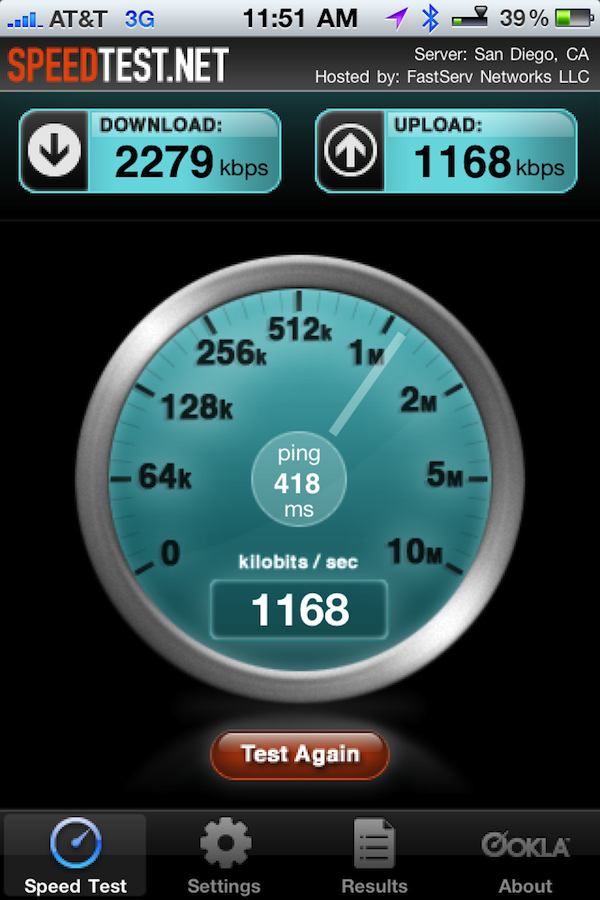
An issue with how the software on wireless equipment provided by Alcatel-Lucent handles advanced 3G data connections is responsible for slower upload speeds on AT&T's network, the two companies admitted on Wednesday.
Speed issues have been reported in several cities including Philadelphia, New York, Seattle and Washington, D.C. It's not everywhere though: earlier this week, BetaNews' Joe Wilcox reported he was unaffected in the area surrounding his residence in southern California.
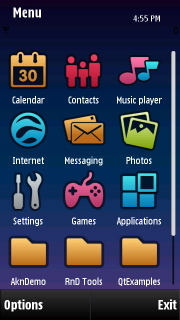
Developers get a crack at first complete Symbian^3 Product Development Kit
Today, just shy of a month after the first functionally complete version of Symbian^3 was released, the first complete Symbian^3 Product Development Kit (PDK 3.0.0) is available for download, including the full build of the platform and complete source code under the Eclipse Public License.
PDK 3.0.0 contains all of the APIs of Symbian^3, and is the first release to support a full UI ROM execution on ARMv5 platforms.