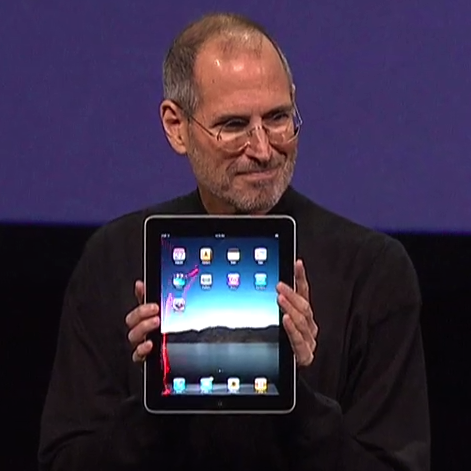
Be smart, don't buy into the iPad hype
The state of the news media is this: Gossip and rumors are rapidly replacing factual reporting -- in large part driven by the Google economy. No company is benefitting more than Apple, and most recently with the launch of iPad. But rumors are no surefire way to sales success. Big hype will energize early iPad sales, but can it sustain them? I wonder, and perhaps you have the answer. I'm not looking for a scientific answer, just your story to tell -- more on that in at the end of this post.
The Mac-obsessed blogosphere, news media and social crowd is a frightening but exhilarating phenomenon. Marketers and public relations companies across the globe are watching the Apple-hype phenomenon and trying to guess how they can imitate it. They can't. There is inherit bias in the products bloggers, journalists and socialwebites are using, or the companies that they invest in.
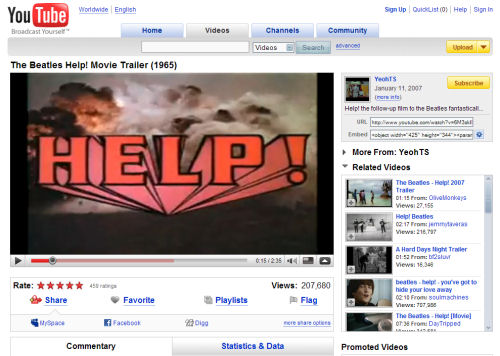
Will Viacom's public airing of YouTube's dirty laundry change the Web forever?
The key issue at the heart of Viacom's case against Google and YouTube, filed in March 2007, concerns whether an Internet service that probably knows that files are traded or shown illicitly or without license there, deserves the "safe harbor" provisions of the Digital Millennium Copyright Act that protect ISPs from liability for their customers' actions. In a summary judgment motion filed yesterday with US District Court in New York and unsealed this morning, Viacom is bidding to have the judge wrap up the case -- an obvious signal that it believes its case is already strong enough.
As US law stands now, a service such as Grokster or the original Napster (not the Best Buy division that today uses that name) is liable when it intentionally establishes its service for the express purpose of trading in illicit files. It's especially liable when it finds some way to advertise itself for that purpose. An Internet Service Provider such as Comcast or Cox is not liable when its service is used for accessing one of these sites, when it doesn't advertise or offer these services explicitly, and when a customer can access them without direct intervention from the ISP. And a video site such as Veoh is not liable when any measure it might take to stop customers from sharing illicit files may also conceivably infringe upon the free speech rights of other customers who may not be trading such files.

Let the rejections begin: Apple opens first round of submissions for iPad App Store
In a message sent to developers today, Apple announced that it is now accepting iPad apps for the iTunes app store.
To have apps approved (or rejected) in time for the iPad launch, they must be submitted to Apple by 5:00 pm PDT on Saturday, March 27. Only apps built with the iPhone SDK 3.2 beta 5 are going to be accepted in this round of reviews.

Viacom and YouTube: Timeline of pertinent events
This week, documents from Viacom's billion dollar lawsuit against YouTube for copyright infringement were published, and the three-year-long-and-counting lawsuit has again been brought to the public's attention. In case you haven't been following the case, here's a quick timeline of the major events that led up to the lawsuit, and those that occurred since the original complaint was filed:
May 24, 2005- Viacom subpoenas YouTube for information about a user who uploaded clips from Paramount Pictures' "Twin Towers."
A tale of two "red alerts:" Which Windows warnings should you heed?
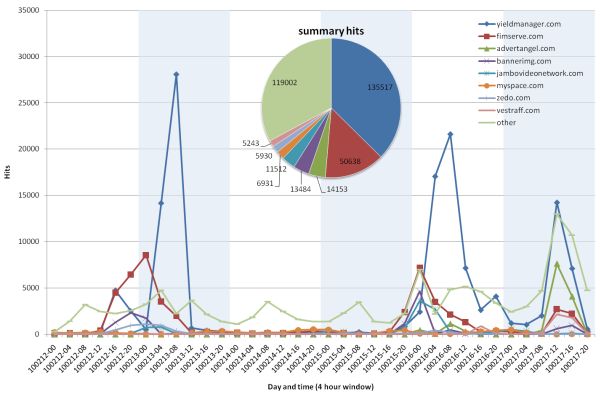
Literally every day at Betanews, we get at least one security vendor "alert" of some type, warning us to be on the lookout for the latest malware. The message is always the same: Advise users to stay vigilant, to keep patching, to upgrade their antivirus to the latest editions. But the profiles of the malware typically look the same, too -- stuff you might click on by accident, links pretending to be from your "best friend" in an e-mail message, ads for products that look too good to be true.
For many of us, the situation is getting to be like the US' terror alert level, which has remained at "Yellow" since the fall of 2007. We starting to forget what "elevated" vigilance means. And maybe that's a problem, because lack of attention to advice about real threats could become as dangerous as lack of attention to any one of those miracle weight-loss links.
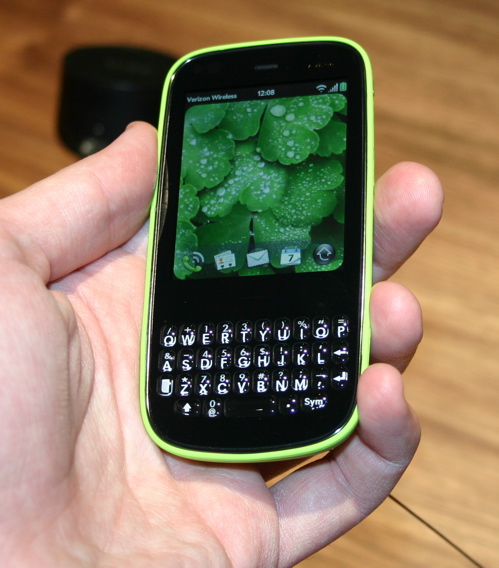
Palm posts third quarter results: disappointing sales, more net loss
In late February, Palm issued a shareholder warning which said that profits for the full year were going to be "well below" expectations due to a surprisingly slow demand for Palm's smartphones.
Thursday evening, the company issued its third quarter earnings report, and though the numbers were actually up against the same quarter last year (when Palm posted a net loss of $98 million), the company is still losing money; $22 million, to be exact.

Nvidia admits GeForce drivers responsible for fan problems, issues updates
Download Nvidia ForceWare Drivers for Windows version 197.13 from Fileforum now.
Version 196.75 of Nvidia's GeForce/Ion drivers were indeed responsible for fan overheating problems reported by users. That's the verdict from Nvidia, which in a second round of responses to customer concerns has released version 197.13, which it assures users doesn't have the problem.

Netflix axes 'friends' feature due to unpopularity
For more than five years, Netflix has had a feature called "Friends" which lets users connect their Netflix account with others so they can view each other's queues, suggest movies to each other, or see how a movie ranks against their peers' ratings.
Todd Yellin, Netflix VP of Product Management said that after six years, only two percent of subscribers actually used the feature, so it is going to be phased out in the coming months.
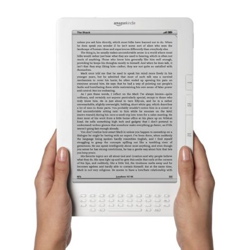
Kindle for Mac released: Is Amazon's e-reader moving away from hardware?
When Amazon debuted its first Kindle e-reader just over two years ago, we asked "...but will anyone buy it?"
We still can't say for certain.
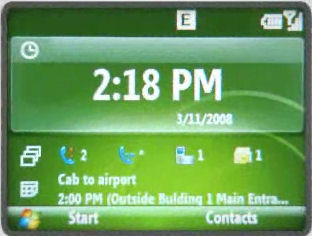
Microsoft cuts and pastes an egg
Ever since she brought me into the world, my mother has taught me many things, namely to not only learn from my own mistakes, but also from the mistakes of others.
Microsoft clearly never spoke to my mom, as evidenced by its decision to leave cut, copy, and paste capabilities out of the new Windows Phone 7 Series platform, at least in the early rounds. If they had paid Mom a visit, they would have been told -- after being offered some tea, of course -- to fix all the boo-boos of earlier smartphone operating systems before releasing their own updated version. She would have advised them to understand the rough spots encountered by competitive offerings, and do everything in their power to avoid them.

Google improves Maps for Android, rolls in bonus features
Today, Google has rolled out a significant update to the Google Maps application for Android 1.6+ devices, which now includes a new search results page, support for multiple accounts, a new Latitude home screen widget, and a new Maps live wallpaper for 2.1 devices.
Previously, when you performed a search in Maps, you would have to choose a result from a list of markers on the map. When you clicked the marker, it would open a page with three tabs: Address, Details, and Reviews. Under the Address tab, there were options to Show the result on the map, get directions to it, call it, look at it in Street View, or add it as a contact. The other two tabs contain exactly what you'd expect, details and reviews. If you wanted to pick a different listing, you'd have to go back to the map view and pick a different marker.
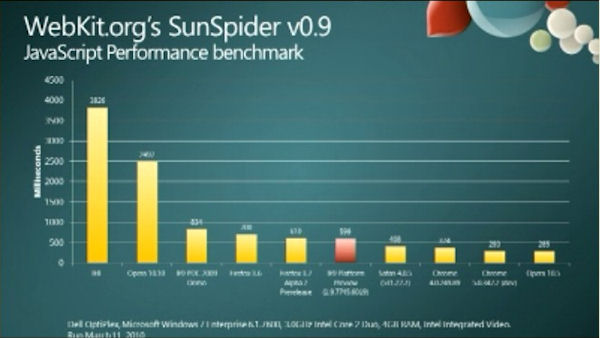
Preliminary results: IE9 tech preview performs 7.8 times better than IE8
In the first series of comprehensive performance tests comparing Microsoft's Internet Explorer 9 technical preview, released yesterday, to stable Web browsers in current use today, Betanews confirmed superb speed gains by the IE9 chassis in specific categories. Not everything in the new IE9 was faster than IE8, but in the computational department, the development team's Chakra JavaScript engine shows much-needed gains.
In anticipation of IE9, Betanews has been developing a radically improved set of performance tests to complement (and, in a few categories, replace) those we've used in recent months. Our objective is to determine not just how much faster IE9 is, but how much better and more efficient it will be, in computing data, in rendering on-screen objects, and in adapting to varying workloads.
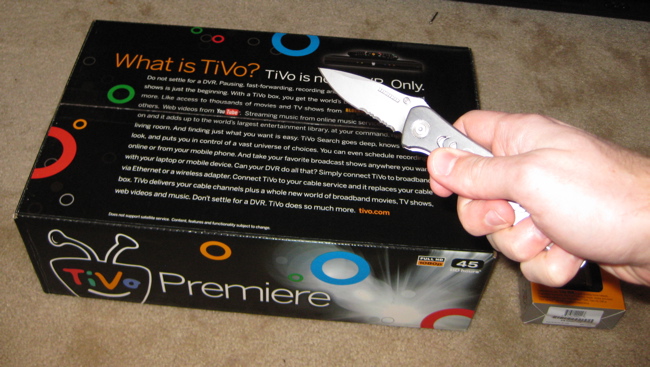
Unboxing: TiVo Premiere
Though you might come to Betanews expecting an article with either performance testing and graphs or inflammatory diatribes, we're not above a good unboxing; especially when it's a brand new piece of hardware that we intend to thoroughly test (or just very seriously play with.)
Today, we're fortunate enough to have received a new TiVo Premiere, the first TiVo DVR with an HD interface designed especially to unite content from multiple sources under a single experience. They call it "The One Box."
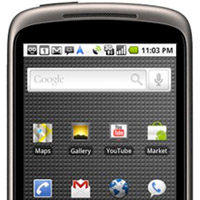
Sprint assures that it's getting the Nexus One, too
Yesterday, an updated version of Google's Nexus One Android smartphone was released, compatible with AT&T and Rogers Canada's 3G networks. Today, Sprint is letting everyone know that it is getting the device too.
This means that all four major wireless carriers have secured a spot for the Nexus One this year. Google sells versions of the device optimized for T-Mobile and AT&T's wireless networks, and a version for Verizon's network is still expected some time in the Spring, but the operator has not put out any further notices about its availability.

Things to look for at CTIA: America's first 4G smartphone
Sprint is making the bold first move into 4G smartphone market next week, a Wall Street Journal report said today. At that time, the carrier is expected to show off its new WiMAX-enabled HTC Supersonic.
The Supersonic has been a pretty big blip on the Android community's radar for several months, after a whole list of HTC device names was uncovered in a leaked Sense UI ROM last December. Since that time, a few more details have been discovered, and a few blurry spy camera shots and renders have surfaced; but as far as official specs go, there are none. It looks to have the same massive 4.3" screen that the HD2 has, run on the Android platform, and possibly contain a Snapdragon processor.