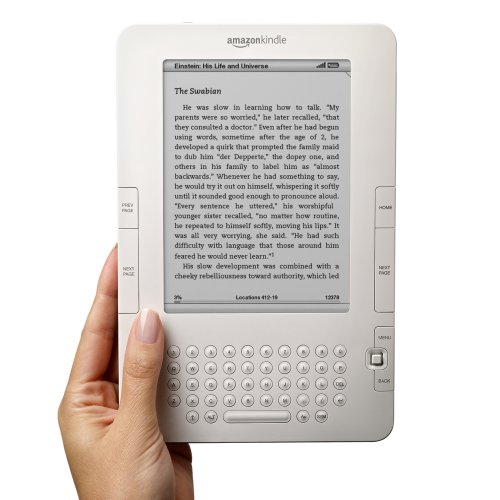
Amazon CEO: We sell 6 Kindle books to every 10 books
Online retailer Amazon.com had quite a year. Yesterday, the company reported a 42% year-over-year increase in fourth quarter net sales, and a 71% increase in net income. For the full year 2009, Amazon's net sales increased 28% to $24.51 billion, and its net income increased 40% to $902 million.
This increase in profits and revenue is attributable to a number of factors, among them were the drop in price for its EC2 and S3 cloud services in October, for the November acquisition of Zappos.com, and of course, the launch of the Kindle 2 in the beginning of 2009.
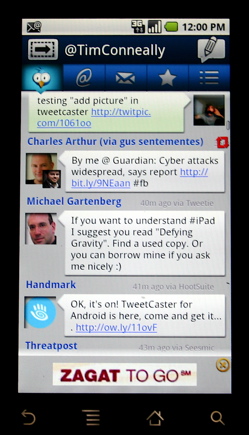
Hands-on with TweetCaster for Android
Those who say there are no decent Twitter apps for Android simply haven't found the right one. When the Android Market first opened, you could sign in, watch the handful of new apps being uploaded every day, and generally know everything that was available on the platform. There really were only a couple of Twitter clients.
But now that the Market has been revised, and there are more than 25,000 apps by the last unofficial count from Androlib, there are plenty of Android Twitter clients to choose from.
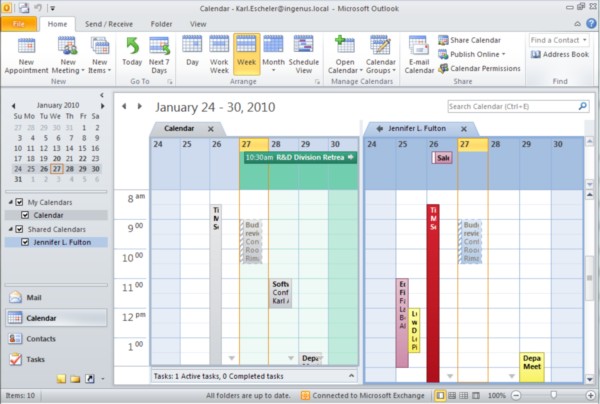
Beyond obsolescence: What Microsoft Office can become
The original reason for Microsoft Office's existence was to provide retailers with an incentive to move product that wasn't moving. The bundle created a discount deal that enabled the momentum behind Excel, which was hot, to help push Word, which was not. It had hardly a tenth of the sales volume of WordPerfect, and Word was a product that retailers had to actively work to sell. This was at a time when software consumed shelf space in stores and was sold like automobiles -- a time which is now essentially gone.
The idea that Office could be a platform came later, with Microsoft's realization -- albeit a late one, and a hard sell for a lot of us outside the company to have made -- that there was more to this multitasking thing than linked and embedded objects. I was a very early believer in the ideal that an application could be customized to suit the functions, requirements, and even tastes of the businesses that use it. I'm proud to say I've had more than just a voice in helping to bring that reality about. It would be a false statement for me to say I predicted this from my seat on the sidelines and it came about; I got off the sidelines, took my tools with me, and worked to bring it about.
Microsoft reports $19 billion quarter, lifted by $1.71 billion deferral
A year after global recession sapped Microsoft sales and the company announced its first-ever massive layoffs, real signs of recovery can be seen. The holiday quarter was as good to Microsoft as could be expected, given how much sales are dependent on large businesses -- the majority of which are still tightfisted with IT spending or are renewing licenses for fewer seats because of layoffs.
"We reported record revenue and record profits," Peter Klein, Microsoft's new CFO, asserted during a conference call this afternoon. He praised consumer sales, particularly for Windows 7 PCs. But Klein warned that "we have not seen a return of enterprise spending growth."
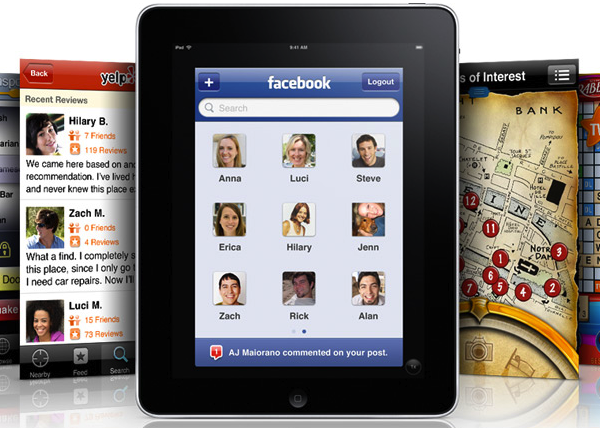
Let's stop the iPad whining: It's not about the hardware
It's almost embarrassing...Correct that, it's big time embarrassing, for me to read some of the public's response to yesterday's announcement of the Apple iPad.
Yes, we know that the name is thematically close to a certain feminine hygiene product. No, we don't need to read the obvious over and over in the comments section of every tech and mainstream Web site, blog, Facebook page, Twitter stream, and (gee, thanks, Brian Williams) nightly newscast. We get it. It may have been funny when we were in the second grade, but now that we're all supposedly adults, it strikes me as needlessly juvenile.
Cable, wireless industry propose another DTV transition, broadcasters object
As time steadily runs out for the US Federal Communications Commission to present to Congress its proposal for federal investment in broadband Internet communications -- a proposal that's expected to be heavily focused on wireless, which falls under the FCC's purview -- major players in the debate keep dropping show-stopper bombs into the debate. One such bomb, which erupted last December, was AT&T's plea to set a firm timetable for the discontinuation of wireline telephone service in the US.
As it turns out, another bomb was dropped at around the same time, though with a longer fuse: The wireless industry association CTIA last month joined with the Consumer Electronics Commission to propose to the FCC what they characterized as an alternative solution to the problem of finding room in the nation's wireless spectrum for broadening broadband. Specifically, the two groups suggested that DTV broadcasters don't really need all the spectrum they were given during the transition process, which finally ended last year.
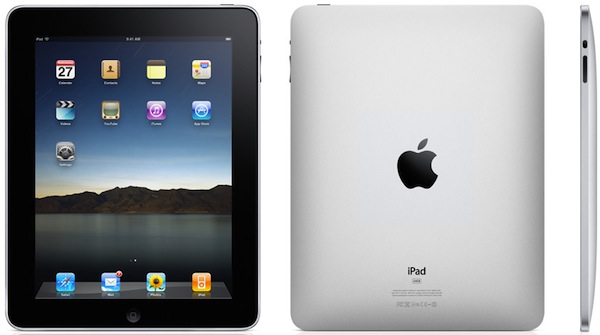
12 reasons why I won't buy an Apple iPad
Yesterday, I asked Betanews readers if they would buy and Apple iPad. You responded with a resounding, "No!" I won't buy one either, and I've got 12 reasons why. I couldn't limit the list to the usual 10. I've got a dozen.
For me, there's relief in yesterday's iPad announcement. After nearly a month of insanity -- with geekdom acting like Jesus was coming on the clouds to set up his heavenly kingdom -- the aura is fading. Apple's tablet didn't live up to the hype or the lofty "it will change the world" expectations so many people attached to it. Some pundits called Apple's smartphone the Jesus phone. I don't expect that many will assign such aspirations to iPad, which isn't the slightest bit category changing.
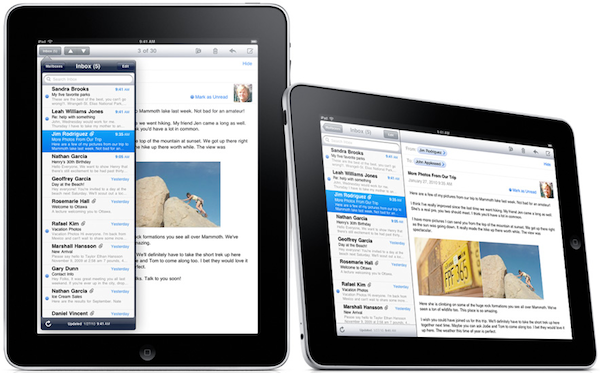
A look at the iPad's competition by operating system
The iPad.
It's not a Tablet PC, despite the exclusive version of iWork it will be getting, and it's not an E-reader despite the iBooks and Kindle reader software it will also feature. The device is really a jack-of-all-trades device meant to grow Apple's iTunes-based ecosystem, by providing another screen for applications developers to publish on.
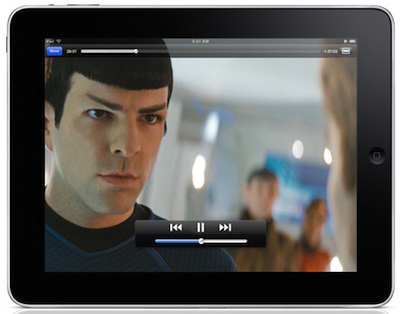
Betanews readers say 'No!' to Apple iPad
Mid-afternoon today, I asked Betanews readers: "Will you buy an Apple iPad?" The responses are in, and the majority of readers say: "No!" I'm with you. Apple's iPad does absolutely nothing to advance the tablet category. The category is part of the problem. Twenty-five days ago I asserted that the "world doesn't need an Apple tablet, or any other." The iPad, like other tablets, suffers the middle child syndrome. The device overlaps features of smartphone below and laptop above.
Perhaps iPad would make more sense if it could replace either smartphone or laptop -- although I expect some early adopters to try the latter. To you I say, "Good luck!" You'll need it if for no other reasons than the virtual keyboard and limited storage -- 16GB to 64GB. I don't see these reasons as limitations on a smartphone, because it's always carried and has constant data connection. The iPad is an extra carryall with overlapping functionality and either no constant connection or 3G service for extra $30 monthly cost. Sadly, iPad is exactly what I expected: Traditional tablet form factor with a prettier user interface. Yesterday I pined for more, but Apple didn't deliver it.
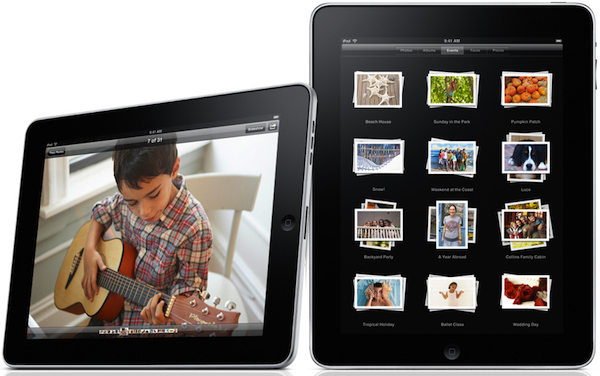
Will you buy an Apple iPad?
After months -- years, really -- of rumors, Apple has unveiled its slate computer, the iPad. Apple says that two models will be available, one within 60 days, with Wi-Fi. The other will come within about 30 days later, with Wi-Fi and 3G. Will you buy one? That's a question I ask you to offer in comments.
Some quick details: The iPad uses an Apple 1GHz processor, packs a 9.7-inch LED display, weighs 1.5 pounds, is one-half inch thick and runs iPhone OS. Apple claims battery life up to 10 hours. The iPad will run most of the applications currently available from the App Store. The device supports iTunes store and Apple's new iBookstore for ebooks. Most of the features will be familiar to iPhone and iPod touch users, although there are numerous improvements to the user interface (changes I would like to have seen in Mac OS X 10.6 "Snow Leopard" instead).
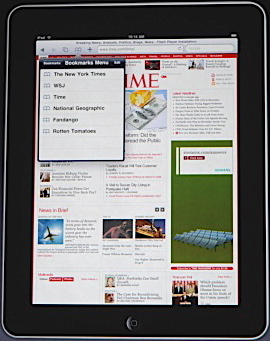
Here it is: Apple's iPad
Now we can finally put the rumors to rest. Apple has finally unveiled its new tablet product, called the iPad. Apple CEO Steve Jobs today said the company aimed to make the product better than a laptop at browsing the Web, sharing photos, videos, music, playing games, and reading e-books; but in an all-touch form factor smaller than a notebook, and just larger than an iPhone.
As expected, the device is actually quite a lot like a big iPhone; as such, it can run all of the existing apps in the iTunes app store. The added bonus is that it can run them in their normal mode or in "2x" mode to fit the larger screen. The device has a custom user interface and will launch with its own exclusive software such as e-reader application "iBooks," touch-paint program "Brushes," and a totally re-designed touchscreen version of iWork.
Live from the real world: It's the iPad
Scott Fulton, Managing Editor, Betanews: We fully anticipate that you'll be following this morning's Apple premiere news from any one of the many gadget blogs with reporters on the scenes, working hard even as we speak to tweak the geek connections on their 3G iPhones. (Or, if they're lucky, on their Droids.) But at some point, you'll want to be able to step back out of the wilderness, as it were, to catch a breath of reality before going back in.
This is why Betanews contributing analyst Carmi Levy and I have opted, just for your sake, to stay behind with you in the real world today, to bring you our thoughts as to what Apple's move today will mean for those of us out here -- people who prefer to improve technology rather than allow technology to try to improve us.

The one reason why I would buy an Apple tablet
For a month, I've grappled with the "Why?" of an Apple tablet. Why should Apple make a tablet? Why could Apple succeed in a category where so many other companies have failed? Why would I --or anyone else -- want to buy an Applet tablet? No answer, despite all the plausible rumors about the device, could convince me "Why?" Until tonight. I thought of a "What?" that would make me interested in a portable tablet: Delivery of a unified content platform, mixing different media types and live information.
The rumors about Apple's tablet have focused on disparate content consumption (or creation) -- videos, music, ebooks and games among others. Big deal. These capabilities are available on PCs and smartphones or single-function devices. Disparate content on a slate does not excite my gadget geek cortex.
McGraw-Hill CEO confirms Apple Tablet will run iPhone OS, be geared for 'higher education market'
Just one day before Apple is expected to unveil its magical new product, the tech media is absolutely infested with "news" and speculation about it. CNBC tonight spoke with Terry McGraw, Chairman and CEO of McGraw-Hill, the major textbook publisher and parent company of J.D. Power and Associates, who said that yes, there is a tablet coming tomorrow, and it does run the iPhone OS, more or less confirming earlier rumors.
McGraw's quote in full:
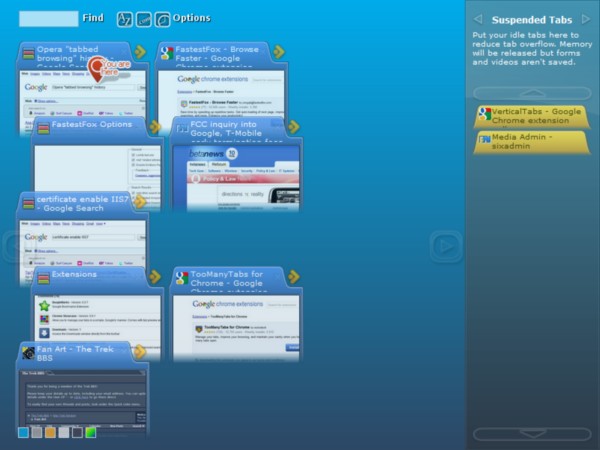
Google Chrome 4 goes live with extensions: How much closer to Firefox now?
After a few months' development time, supporters of Google's Chrome browser -- based on the open source Chromium platform -- have had only a narrow window to produce a full library of extensions and add-ons for the grand opening of Chrome's new gallery. That apparently didn't weigh too heavily on developers' minds, as yesterday's ribbon cutting on the first stable Chrome 4 release featured a very well-stocked gallery.
As I've stated here before, it's Mozilla Firefox's adaptability that gives users who work on the Web -- as opposed to just browsing -- the functionality they need to do their jobs. In the absence of a "professional" Web browser that caters to those of us who make the Web their virtual offices, not only Firefox's extensions but its extensibility -- as a JavaScript interpreter that runs on JavaScript itself -- enables others to fill in the functionality gaps. That fact may be the only thing that binds me to Firefox, since the underlying chassis of Chrome has proven itself in my tests to not only be faster but more stable.