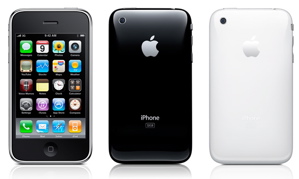
Nokia sues Apple, claims iPhone is stealing its innovations
This is no patent troll lawsuit. This is the world's largest mobile phone maker calling out one of the most beloved devices of recent history on ten counts of patent infringement.
The patents that Nokia cited in its complaint to the Delaware District Court today are related to wireless standard compatibility, speech coding and wireless data, as well as security and encryption. Nokia says it has licensed these patents out to more than 40 other companies and that every model of iPhone since the device's introduction in 2007 has infringed on them.
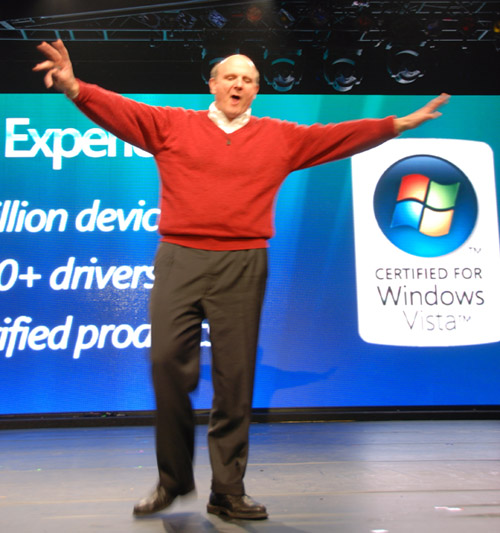
Live from the NYC Windows 7 press event
The world pretty much knows what Windows 7 contains, thanks to technology previews and early releases to developers. So what's left for anyone to be surprised about? Microsoft CEO Steve Ballmer gave a hint as to a possible answer this morning on NBC's Today program, telling host Matt Lauer that one of the most noticeable new features of the operating system will be multitouch. With Apple premiering its "multitouch mouse" a few days early, did Ballmer have something similar in mind?
Betanews' Jacqueline Emigh is with the press contingent in New York City, and is filing live updates from the scene.
The Crook in the Nook: Barnes & Noble ebooks are overpriced compared to Amazon
Yesterday, I excitedly preordered Barnes & Noble's "Nook" ebook reader. Today, I cancelled the order -- and I'm none to happy about it. Why can't Barnes & Noble learn from its past mistakes? The bookseller's digital titles are way overpriced -- at least compared to Amazon (Sony charges even more than both booksellers for many titles).
Quick examples -- and more will come later in this post: Twilight by Stephanie Meyer: $6.59 from Amazon; $8.79 from B&N. Philip K Dick's Do Androids Dream of Electric Sleep?: $8.38 from Amazon; $11.20 from B&N. (Sony charges $9.89 for the first and $9 for the second.)

Twitter hooks up with Google, Bing
WIthin hours of one another, Microsoft and Google announced that their respective search engines would begin indexing tweets from popular microblogging service Twitter.
Microsoft was first on the scene, when Redmond's President of Online Services Division Qi Lu announced the beta of Bing.com/twitter had opened at the Web 2.0 summit today. The beta provides a real-time index of tweets, and the ability to rank tweets according to its relevance.

Mozilla aims to revolutionize Web layout with new Firefox font support
One area of Web standards where both Mozilla Firefox (version 3.5.3 CRPI: 7.34) and Opera (version 10 CRPI: 6.38) have an edge over Google Chrome (build 3.0.195.25 CRPI: 15.85) is in the field of page-designated font rendering. It's where the code for the Web page specifies which fonts to use, and even triggers the downloading of those fonts where necessary. Actually, Opera 10 has led the way in scalable Web fonts support although Firefox 3.5 has followed close behind.
The problem here has been with the extremely proprietary nature of the fonts used for the Web. They actually are TrueType and OpenType fonts, the majority of whose licensing prohibits their use for anything other than installation in commercial operating systems on a per-desktop basis. Even though some typographers have created free renderings of their commercial font products (here's a favorite of mine: Museo Sans by Exljbris), there's some question as to whether type designers are technically allowed to use the proprietary underpinnings of font technology (mostly contributed by Adobe, Microsoft, and Apple) for use on the Web.
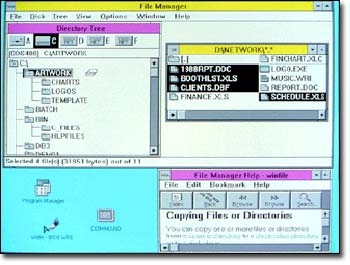
Flashback 1990: The debut of Windows 3.0
Yet if we follow the pattern, we miss the real story...
It is May 1990. For several months, reporters had been prepared by Microsoft to cover what was being billed as the most important event in the history of software. It was the beginning, we were told, of the end of DOS, and the birth of a new software "ecosystem" that enabled independent developers to build graphical applications for the first time, without having to jump through the many hoops and stroke the countless egos of Apple. Microsoft would have a hands-off policy in the development of software that supports what was being called, for the first time, the Windows Operating Environment.

A Sidekick crisis post mortem on cloud confidence
I was sitting in the dentist's chair getting my teeth drilled, while the technician complained about her now-worthless Sidekick. With no way to access her contact lists, she couldn't get in touch with her family due to arrive in DC for a reunion, and had to rely on the frequently failing device as a simple inbound line for family members to contact her. When that failed, she had to use a payphone.
It was a pretty sad story, and thousands of users were faced with a similar communication breakdown...for more than a week.

Windows 7: Vista without the crap
Download Microsoft Windows 7 Upgrade Advisor 2.0 from Fileforum now.
Here is the essential information you need to know if you're a Windows Vista user considering whether to upgrade to Windows 7: Yes.
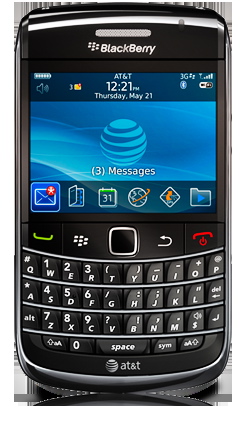
RIM tries a do-over of 2009 for next year
This month, Canadian smartphone leader Research in Motion has debuted two new handset "sequels," which keep the name and form factor of their 2008 forebears, but update the experience slightly with minor upgrades. Last week, RIM unveiled the Storm 2, which improved upon the original Storm's Surepress touchscreen, and equipped it with Wi-Fi.
Today RIM has debuted the Bold 9700, the updated version of the Bold 9000 which had a rather problematic launch in 2008 with battery overheating issues, purported software problems, and delays related to AT&T's 3G network.
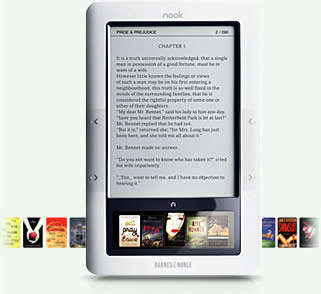
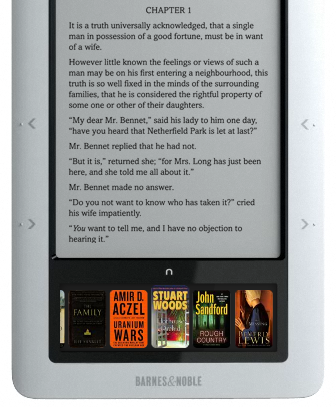
Barnes & Noble mashes up iPhone & Kindle for 'nook' e-reader
Bookseller Barnes & Noble has finally unveiled its e-book reader, which many have already slated to be the Amazon Kindle's biggest competition yet. Called the nook, Barnes & Noble's $259 e-reader includes a full-color touch panel interface in addition to its 6" e-ink display, and is the first e-reader to run on Google's Android Operating system.
There is something instantly amazing about the nook, but it's not because of a single, readily visible feature. It's the fact that Barnes & Noble has combined the feel of two extremely popular devices both regarded as total "walled gardens" -- Apple's iPhone and Amazon's Kindle -- and effectively mashed them up in the open source Android framework. The result is a compelling new take on the e-book experience that has been more or less homogenous across the many devices currently available.
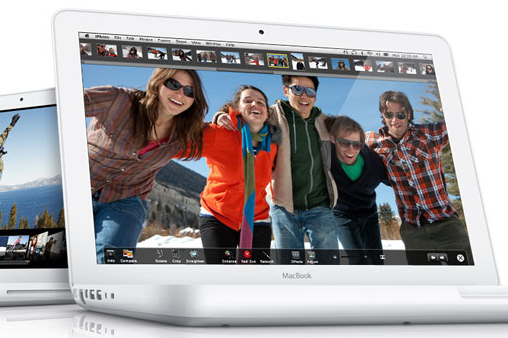
Apple declares war on the entire PC industry
There is absolutely nothing coincidental about Apple launching new products today. The big product launch is Apple's first preemptive marketing strike against Microsoft, Windows 7 and the entire PC industry. It's a bold move exploiting a position of strength against an industry weakened by low-margin, low-priced netbooks.
Windows 7 officially launches in two days. Best Buy already has Windows 7 PCs on sale, but not for purchase. Dell started taking Windows 7 over the weekend. Gartner is telling businesses they must upgrade to Windows 7, despite any hardships migrating from Windows XP. Microsoft is priming the marketing pumps. The PC industry is collectively turning its attention to Windows 7, which Microsoft is trying to launch with some bang rather than a whimper.
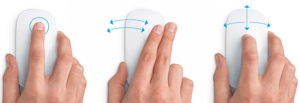
Now, even Apple's mouse is multi-touch
Continuing Apple's incremental shift away from button-based interfaces and toward multi-touch everything, Cupertino today unveiled the Magic Mouse, an acrylic Bluetooth mouse where "the entire surface is a button."
Apple has done to the mouse almost exactly what it did to the trackpad in 2008, it has turned it into a multi-finger reactive surface, where common navigation tasks are given iPhone-like gestures.
Giving it all to Google: It may be too late to complain
The problem is not so much Google itself. The problem is with the self-absorbed-yet-insecure nature of a plurality of industries, media being just one among them, whose collective inability to plan how they would conduct business in the era of digital multimedia communication, led them to essentially give up, give in, and let Google build it all for them.
Conducting business is all about staying visible, not just in front of the public's eyes but in its conscience as well. It's why Coca-Cola continues to advertise itself even though folks are likely to go on drinking it anyway (there's a great gag about this fact in Ricky Gervais' latest film, The Invention of Lying). At a time during the evolution of the Internet when businesses were busy trying to construct analogs for physical business entities -- such as online shopping malls with 3D virtual escalators, online business directories that were alphabetized, and "portals" that sought to become the world's centers for particular industries, such as dog grooming -- along came an Occam's Razor that appeared to make everything much simpler: It was the idea that visibility, that critical ingredient of all business relationships, can be engineered.

Best Buy's Blu-ray players now stream Netflix
In the last year, Netflix on-demand video streaming has made its way into connected optical media players by LG, Samsung, and Sony, and at the beginning of the last quarter, CEO Reed Hastings said the public could expect new Netflix-enabled consumer electronics products every quarter. Today, Best Buy's Insignia brand became the latest to support Netflix streaming with a firmware update to two of the brand's connected Blu-ray players.
This is another important partnership to differentiate Best Buy's exclusive store brand from lower-quality department store brands, which often have more in common with Chinese knock-offs than with products by major manufacturers. In July, for example, Best Buy announced a partnership with TiVo that would improve the interface and search in Insignia and Dynex televisions.
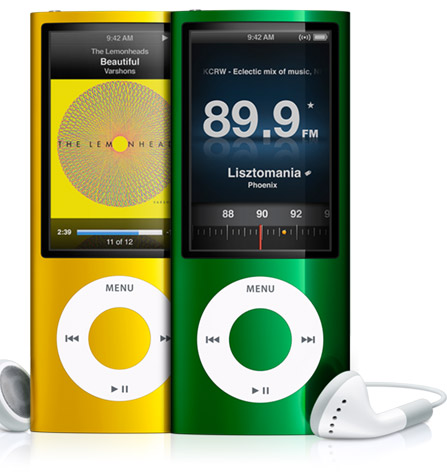
The new iPod nano: A flop?
The good news in Apple's earnings call this afternoon, according to CFO Peter Oppenheimer, is that the Cupertino company has sold more Macs and iPhones than it ever has in the past, beating previous Mac sales records by 444,000 or 17% year over year and beating iPhone records by 7% unit growth year over year.
The bad news is that the MP3 player product class where Apple has actual market dominance, not just dominant mindshare (as with the iPhone), has begun to slide, despite a 100% increase in iPod touch sales year over year.