![A network application that requires Windows XP appears to run fine in Windows 7 under 'XP mode' virtualization. [Photo credit: Microsoft Corp.]](https://betanews.com/wp-content/uploads/media/32/3209.jpg)
Is 'XP Mode' in Windows 7 something you'd want to use?
Since Microsoft's acquisition of SoftGrid application virtualization two years ago, the company's engineers have known that this technology could present an attractive and even preferable shortcut to the perennial problem of downward compatibility. If you set aside the problem of affordability for a moment, the other key reason businesses remain hesitant to adopt Windows Vista at present is because of the uncertainty that existing business applications will be seamlessly portable into the new environment.
This is much more of a problem for businesses than consumers, although a lot of the excitement around what Microsoft's calling "XP mode" in Windows 7 (whose first and probably only Release Candidate should be available to the general public tomorrow) came from everyday users who perceived the company's move as a nod toward the efficiencies of the past, as opposed to the planned obsolescence of the future. The fact is, businesses continue to invest in software up front with the expectation that it will pay off in the long term, depreciating it like an asset rather than supporting and nurturing it like a resource. And it is for those businesses that Microsoft must ensure that it facilitates and ensures the same general infrastructure over time.

Adopt a line of code: The makers of Miro have a unique funding model
The multiplatform video downloader-and-viewer combo formerly known as Democracy Player is taking a cue from Sally Struthers and offering you, the Windows or Mac or Linux viewer at home, the opportunity to adopt a line of code in their software. "If enough of our users adopt lines of Miro code," says co-founder Nicholas Reville, "we can create an organization that is funded from the bottom-up and not dependent on the top-down."
Miro's parent organization, the Participatory Culture Foundation, has received grants for its work over the years from the Mozilla Foundation, the Open Source Application Foundation (Mitch Kapor's project), the Knight foundation, and similar celebrants of open source and open democracy. Times being what they are, the funding's not what it once was, and so in the wake of its recent Miro 2.0 release (which, according to Reville, tripled the product's user base) the PCF is thinking creatively about funding its creativity.

LimeWire CEO responds to congressional inquiry
Thanks to the slow-moving United States legal process and the glut of copyright litigation, the names of P2P services often live on long after their actual services die in popularity. Limewire is one of those, thanks to the high profile cases it found itself wrapped up in.
One of those cases was a House Oversight and Government Reform Committee hearing in 2007 that focused on security holes opened by LimeWire, and showed that over 200 classified government documents were available for download via the service. General Wesley Clark said, "It's just totally unacceptable. The American people would be outraged if they were aware of what's inadvertently shared by government agencies on P2P networks."

Lawsuit against Sprint-Clearwire joint venture stands
One year ago, Sprint affiliate iPCS sued Sprint over its WiMAX venture with Clearwire, claiming that Sprint violated exclusivity agreements and willfully withheld the 4G technology from affiliates like iPCS.
The Circuit Court of Cook County, Illinois denied Sprint's motion to dismiss the claims by iPCS, which seek to block Sprint from "obtaining directly or indirectly the benefits of advanced technology without providing that technology and sharing its benefits with its affiliates."
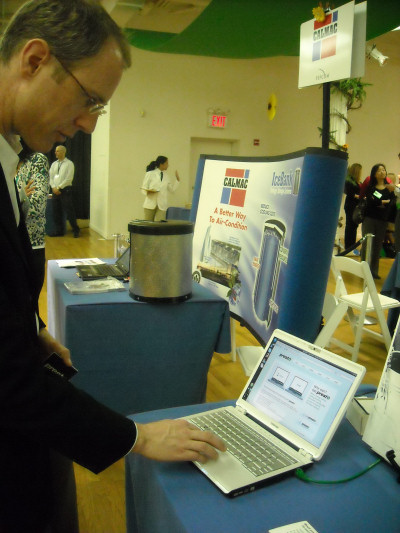
EcoFocus: Linux maven Xandros demos Presto dual-boot Windows/Linux software
In a demo at this week's EcoFocus press event
in New York City, Jordan Smith, product marketing manager for Xandros, showed how his new downloadable Presto dual-boot software allows fast power-up to either Windows or Linux.
If you choose Linux at boot time, you get access in something like five to 20 seconds to a Xandros desktop Linux environment that includes Skype, FireFox, the the Pidgin "universal chat client," Thunar file manager, Windows List, and Xandros' online Presto Application Store. Here you'll find the latest Sun Java 6 runtime, Adobe Reader, Picasa photo management software, the Last.fm audio player, games, and lots of other additional software.

Verizon needs more time to complete the Alltel merger
To ensure Verizon's merger with Alltel was a pro-competitive move, the Federal Communications Commission and Department of Justice required that Verizon divest from 105 mobile markets where Verizon and Alltel services overlapped. The merger will make Verizon the largest mobile carrier in the United States, and this mandate constitutes the biggest divestiture Verizon Wireless has had to execute in its nine years of existence.
Because the action is so large and complex, (each marketing area has approximately 200 pages worth of assets to auction off) Verizon has filed for an extension with the Wireless Telecommunications Bureau, asking for another 60 days to complete the divestitures.
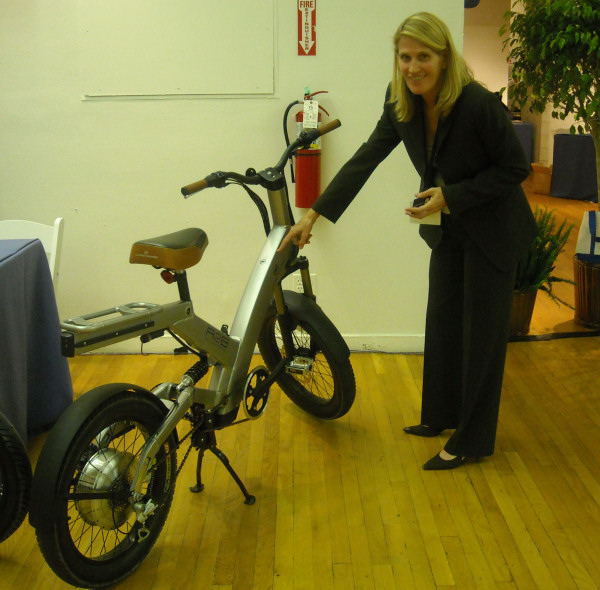
EcoFocus: PCs and software meet bikes, paint, and other green goods
At Pepcom's EcoFocus press event this week, HP launched new notebooks featuring HP Smart AC Adapters for automatically making power adjustments when needed. Available preloaded with a choice of Microsoft Windows or Novell SuSE Linux Enterprise Desktop 11, the five new HP ProBook models also come with HP Mobile Broadband, a system combining an HP m2400 module with built-in Qualcomm Gobi technology to support wireless connectivity to multiple broadband networks and operators.
Priced starting at about $529, the ProBooks come in 14-, 15.6-, and 17.-3-inch widescreen flavors. All five ProBooks are also outfitted with a new keyboard design, in which the keys are raised in an attempt to prevent dust and dirt from settling underneath. The notebooks offer a mercury-free design and high-definition backlit displays. A compatible USB 2.0 docking station is slated to ship in June, Betanews was told.
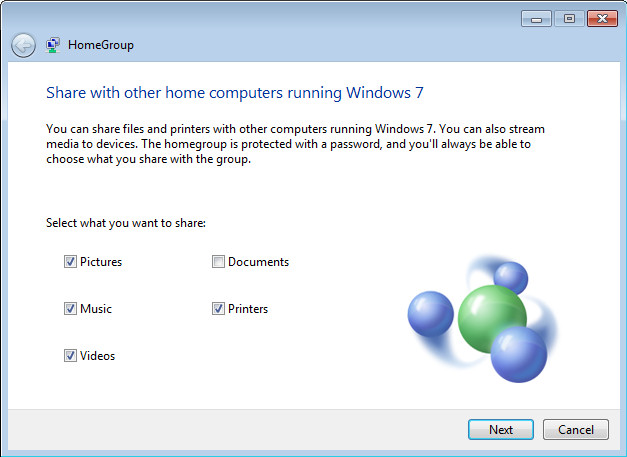
Top 10 Windows 7 Features #10: Homegroup networking
Beginning now, Betanews is going to get a lot more intimate with technology than you've seen us before, particularly with Microsoft Windows 7 now that it's becoming a reality. Next Tuesday, the first and probably only Release Candidate of the operating system will become available for free download.
It's probably not so much a testing exercise as a colossal promotional giveaway, a way to get Windows 7 out in the field very fast...and use that leverage to push Vista out of the way of history. So much of what you'll see in the Release Candidate in terms of underlying technology is finalized; any tweaks that will be done between now and the general release date (which PC manufacturer Acer blabbed last night will be October 23) will likely be in the looks department.

Obsolete New Zealand copyright law faces total rewrite
Having a copyright law that was drafted before the Internet Age has proven too problematic for New Zealand, and after trying a number of incremental updates, the government is considering a total rewrite.
Prime Minister John Key took office in November, and his center-right National Party ended a nine-year Labor Party incumbency. Controversy arose shortly thereafter as The Copyright (New Technologies) Amendment Act 2008, which was passed before Key's election, came into force. A clause in the act allowed ISPs to terminate a user's account based upon suspected illegal file sharing, similar to theThree Strikes Rule being drafted in France at the same time.

Copyright Office holds hearings on proposed DMCA exemptions
Every three years, copyright activists see a glimmer of light in the dark tunnel of the Digital Millennium Copyright Act. That's when US Copyright Office throws open its exemption process, in the ongoing effort to make the 1990s-era rules fairer and better adapted to modern usage. Whether that's a successful effort or simply another leap in front of a train... well, what would a bunch of activists be if they didn't even try?
To that end, the Copyright Office heads to Stanford on Friday for public hearings on the formal comments received by that office, and will continue the Rule Making process -- the fourth since the DMCA was approved -- in Washington DC next week. The nineteen comments received have been grouped into eleven documents.

Microsoft's deep-rooted Vine isn't just another social network
Let's get something clear up front: Whatever you've heard elsewhere, Microsoft doesn't intend for their Vine service to take over your Twitter or your Facebook or your texting or any of your other social networking tools. They've got bigger fish to fry.
Back in 2005, as we watched Hurricane Katrina upend our faith in America's emergency response system, some Microsoft folk started asking what software development might bring to the table in future crises. Tammy Savage, general manager for Microsoft's public safety initiatives, says that the original Vine team spent a lot of time thinking about "all aspects of crisis, from preparation to recovery -- all kinds of organizations, asking what Microsoft might uniquely be able to provide."
XP Mode is for real: First 'Windows Virtual PC' beta accompanies Windows 7 RC
Validating the news we received last week of the existence of a virtualization layer, Microsoft this morning unveiled for MSDN and TechNet subscribers the first beta a new and special edition of its virtualization software specifically for Windows 7. Its first release candidate went live to those subscribers also this morning, and will be available to the general public next Tuesday.
Windows Virtual PC already has its own Web site. It's the next edition in the chain whose current version is called "Virtual PC 2007," although this time, the software is specifically geared for Windows 7, and for computers with virtualization support in hardware. That covers nearly all modern CPUs anyway, but specifically Intel-brand CPUs with Intel-VT and AMD-brand CPUs with AMD-V.

Mobile broadband speeds creep up on fixed with HSPA growth
One year ago, market research firm In-Stat released a study that established the average home broadband connection in the United States. The study found that the comparatively small number of residential fiber customers against the high number of narrowband customers amounted to a national downstream average of 3.8 Mbps. Several months later, Broadband Expert released similar research data for the UK, which found the average fixed line broadband speed was 3.61 Mbps.
Similarly, results from Analysis Mason's Fixed Broadband Research Program published this week find that nearly 60% of the broadband connected homes within the 30 OECD member nations are connecting via DSL, where only "a small proportion" can achieve speeds around 8 Mbps.
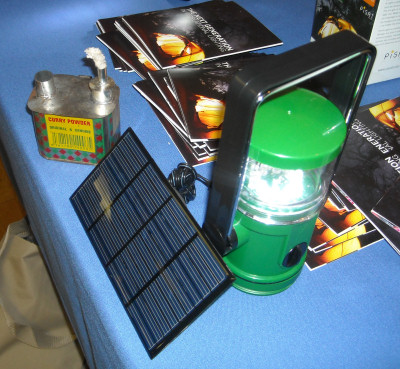
EcoFocus: PiSAT launches solar-powered 'green' lantern
PiSAT and its partner the Koinonia Foundation gave the K-Light its first big push at last night's EcoFocus show in Manhattan, demoing how the soda can-sized solar device can morph from a lantern to a flashlight in just a few seconds when you remove the side handles and the piece on top.
Like SunNight's solar flashlight, touted during the CEA's Greener Gadgets Expo last month, PiSAT's K-Light is set for distribution in a couple of different ways: through foundation subsidies in developing nations, and commercial sales in the US and elsewhere.

This week in ZigBee: The low-power wireless standard gets a boost
ZigBee is one of several brand name specs for the 802.15.4 wireless personal area network standard that concentrates on simple, low data rate connections. In the roughly five years it has existed, it has found its place in home automation, smart metering and remotely controllable embedded systems.
Openness: As carbon waste reduction becomes a greater interest to the public, ZigBee has enjoyed improved adoption, and this week the ZigBee Alliance announced its latest spec will be even more diverse. The next draft will include Internet Engineering Task Force (IETF) standards, which will add native IP support to ZigBee and in turn open the low-power wireless technology to new potential uses.