
How the cyber crime business model is changing
Cyber crime is an increasingly serious business and a new report released today by Trustwave looks at the top trends from the past year based on real-world data from data breach investigations.
Key findings from the report include that 97 percent of applications tested by Trustwave in 2015 had at least one vulnerability. In addition 10 percent of the vulnerabilities discovered were rated as critical or high risk.
Attack by cyber terrorists feared by 63 percent of US security professionals
Key concerns of information security executives include the growing threats of global cyber terrorism, the current state of security within the US and the ability of organizations to prevent such attacks.
These are among the findings of a new study by account management solutions provider Thycotic of more than 200 security industry attendees at RSA.
New program ensures enterprises are prepared for cyber attacks
If a data breach happens customers expect a fast and reassuring reaction from the company affected. It's therefore crucial for businesses to have an incident response plan, but often those plans are only tested when a breach occurs.
According to an upcoming survey from customer security company AllClear ID the two most common challenges during a breach response are people related, with 66 percent citing internal politics and 60 percent "too many cooks in the kitchen".
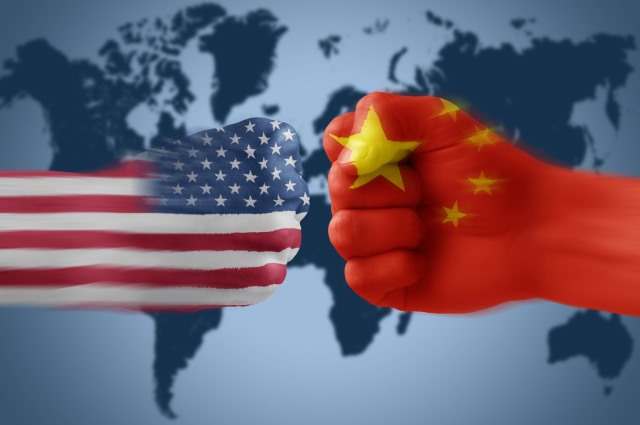
China praises hacker who tried to steal US military secrets
Tensions could be set to mount between the US and China after the Communist government's Global Times newspaper praised Su Bin, the Chinese "government soldier" who pled guilty to trying to steal military secrets from US defense contractors.
Despite the Chinese government having previously said that it does not support cybercrime or online espionage, the state newspaper used an editorial to say "Su Bin deserves respect whether guilty or innocent". The hack was designed to gather data about, amongst other things, the F-22 and F-35 fighter jets and C-17 military transport aircraft.

Unsurprisingly, cyber criminals are using the Zika virus to their advantage
The Zika virus has been all over the news lately and people are treating it as if it is something new. In fact, the virus named for the Zika Forest in Uganda, was first discovered way back in 1947. During the time since then, it was isolated to a narrow region near the equator, but several years ago it began to spread, jumping to south Pacific islands and finally landing in Mexico and South America.
Of course, anytime something is making news and playing to people's fears then there are at least two sectors you can count on to try and latch onto it – the media and cyber criminals. Three if you care to lump in politicians, four if you include recent statements from the Pope.
New solution protects enterprise websites from attack
Some of the latest cyber attacks seek to steal information using man-in-the-browser (MITB) attacks. These represent a dangerous trend because they circumvent even the strongest authentication techniques by hijacking the session after the user has authenticated a bank or other site.
Threat intelligence start up buguroo is looking to combat this with its new online fraud detection solution that can detect hijacked sessions in real time and stop them before any money leaves the bank.

Electronic toys maker wants to blame parents for data breaches
Electronic toys maker VTech has recently been a victim of a cyber-attack, which has seen the data of more than 6.3 million children exposed. The hackers got access to chat logs and photos.
Following the breach, VTech has updated its End User License Agreement, saying the company can’t provide a 100 percent guarantee that it won’t be hacked. It also shifts the responsibility back to the parents:
The top threats to watch for in 2016
Messaging and infrastructure security specialist Cloudmark has released its Annual Global Threat Report for 2015 which reveals the biggest current threats based on its crowd sourced security platform, which analyses user behavior from more than a billion subscribers.
Top of the list is the Swizzor malware which delivers unsolicited ads, modifying browser settings without user permission. This silent threat delivers booby-trapped emails to unsuspecting users with varying subject lines. Each email contains a zip file carrying the malware payload, this uses a simple domain generation algorithm for command and control synchronization to create a large number of domains that then clash with legitimate websites and make it difficult for them to be taken down.

The economic cost of being hacked
We all know that hacking is big business, 2015 proved to be a record year for cyber crime, and it's predicted that 2016 could be even worse. But aside from the worry of putting customer and employee information at risk, what are the financial penalties of being hacked?
Cyber security specialist Praesidio has put together an infographic looking at just how expensive a cyber attack can be.
Data breaches and cyber-attacks are often caused by failing to patch known (and fixable) vulnerabilities
Data breaches were rarely out of the news last year, with the likes of VTech, OPM, Experian/T-Mobile, Ashley Madison and even Hello Kitty all admitting to data leaks.
While you might expect attackers to be using sophisticated methods to get at user data, a new survey from software solutions firm BMC and Forbes Insights reveals that in many cases, it’s known but unpatched vulnerabilities that are being exploited.

SMBs lack the resources to protect themselves from cyber attacks
Only 37 percent of SMBs believe that their organizations are fully equipped to handle IT security according to a new survey.
The study by security company Webroot reveals that in most small to medium businesses, IT teams are expected to handle all cyber security management and concerns. IT employees at almost one in three companies (32 percent) juggle security along with their other IT responsibilities, which leaves them limited time to cope with security tasks.
JD Wetherspoon's customer details leaked after cyber attack
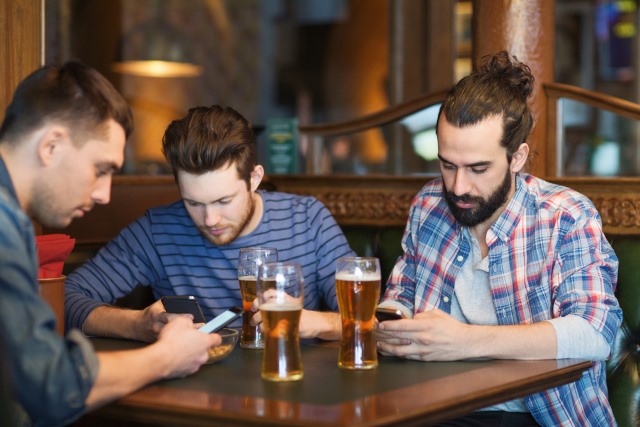
Personal details of hundreds of thousands of JD Wetherspoon customers have been accessed and leaked following a hack of its database. The cyber attack affects more than 650,000 customers, the UK pub chain has announced.
The leaked data includes names, birth dates and email addresses, as well as the partial credit and debit card details of some customers who bought gift vouchers. Although the attack occurred back in June, JD Wetherspoon has only just gone public about it.

Companies want to go after their attackers
Corporates on both sides of the Atlantic are calling for changes in the law to allow them to fight back against the current wave of cybercrime.
As things now stand, corporates are discovering that the very laws meant to protect individuals against being hacked are now serving to protect the organized criminal gangs (OCGs) who are stealing billions from their accounts, compromising sensitive customer data and ransoming their most confidential data.
The cost of cybercrime in UK reaches £1.6 billion
Norton by Symantec has released the findings from its Cybersecurity Insights Report. This online survey was conducted across 17 markets and took into account the responses from 17,125 consumers over the age of 18.
Norton’s report has revealed how heavily British consumers have been affected by cybercrime and the stark differences between the ways in which Baby Boomers and Millennials protect themselves online.

UK's Trident nuclear weapons could be hit by cyberattacks
The UK's former defense secretary Des Browne has issued a stark warning that the country's nuclear weapons could be vulnerable to cyberattacks. The Trident program is already a highly-divisive subject, and Browne is seeking assurance from the Prime Minister that it is secured against attacks from hostile states such as China and Russia.
He has called upon the government to perform an end-to-end assessment of the system. The US had previously warned that it could not be confident that its own defenses and those of its allies would be capable of withstanding a cyberattack from a "sophisticated and well-resourced opponent".