
Now that 5G is becoming widespread what can we expect from 6G? [Q&A]
The 5G rollout is continuing, but technology companies, academics, service providers, and even governments are already starting to look ahead to the next generation of mobile technology.
So, what is 6G and what benefits will it offer over earlier standards? We spoke to Roger Nichols, 6G program manager at Keysight Technologies, to find out.

Wordle finally offers to sync your game stats between devices
Word-guessing game Wordle took the world by storm, so it was little surprise when it was snapped up by a big name -- the New York Times. There were promises that the game would not be changed and that it would remain free, and players raised a collective eyebrow skeptically.
Anyone playing the game in the last few days will probably have noticed something. While the NYT is not going back on the promises it made, players are being encouraged to create a New York Times account. The carrot being dangled as an incentive is the ability to have game statistics synchronized between devices.

Ten years of IPv6 and how it's changed the internet [Q&A]
The IPv6 protocol reached its 10th birthday in June this year. By using more address bits than the earlier IPv4 it opened up the way for more connected devices.
But IPv6 has other benefits too. We spoke to Akamai fellow and chief architect Erik Nygren to find out more about them and how they've changed the internet.

5G could boost the UK economy by billions but more investment is needed
The benefits of 5G could be worth up to £7bn ($8.5bn) a year to the UK economy by 2030, but more needs to be done to ensure the country doesn't miss out on the benefits.
Research from Vodafone shows that while the 5G rollout has so far focused on major cities, towns and smaller cities are at risk of losing out.

How web scraping has gone from niche to mainstream [Q&A]
Web scraping -- collecting data from websites -- has been around almost as long as the internet has existed. But recently it's gone from a little-known niche to a serious activity, using automation to collect large amounts of information.
We spoke to Julius Černiauskas, CEO of data acquisition company Oxylabs to find out more about web scraping and how it has evolved.

New UK data laws set to make annoying cookie pop-ups crumble
Website pop-ups asking you to consent to cookies have become a regular -- if irritating -- feature for European internet users since the introduction of GDPR in 2018.
As part of a post Brexit shake up of data law the UK government has announced that its Data Reform Bill will cut down on the number of times these 'user consent' boxes will be shown.

How to enable the secret side search feature in Chrome
It is easy to perform searches in Chrome, but you can make things easier. You probably currently either launch Google (or your preferred search engine) in a new tab, or just type a search term in the address bar, but there is another somewhat secret option.
Google’s browser has an optional search sidebar that not very many people know about. Called simply Side Search, this useful left-hand panel makes it easy to explore search results at speed.

DuckDuckGo has been quietly permitting Microsoft trackers in its 'private' web browser
Many internet users with concerns about online privacy have turned to DuckDuckGo with the impression that the browser will enable them to enjoy the web without having their activity tracked. But a discovery by a security researcher reveals that things are not as private as users would have hoped and expected.
DuckDuckGo was spotted allowing data to be transmitted via Microsoft trackers to LinkedIn and Bing ad domains. What's more, DuckDuckGo admits that an agreement exists between itself and Microsoft that allows trackers from the Windows-maker on third-party sites.

Consumers want digital identity verification from online brands
Providing a digital identity to create an online account or complete a transaction is becoming more commonplace globally and consumers are now expecting this as part of their engagement with a business.
Research carried out by Opinium for Jumio surveyed 8,000 adult consumers split evenly across the UK, US, Singapore and Mexico. It finds that 57 percent now say they have to use their digital identity 'constantly' or 'often' to access their online accounts.

Rise of the bots -- 42.3 percent of internet traffic in 2021 wasn't human
The latest Bad Bot Report from Imperva shows that bots are an increasingly significant part of the web, accounting for over 42 percent of traffic overall.
More concerning still is that bad bots accounted for a record-setting 27.7 percent of all global website traffic in 2021, up from 25.6 percent in 2020. The three most common bot attacks are account takeover, content or price scraping, and scalping to obtain limited-availability items.

How you can take back control of your online data [Q&A]
If you use the internet then it's certain that some organization somewhere is storing data about you. Indeed research shows that people are happy to share information in exchange for a better consumer experience.
However, that data is still yours, so how can you understand what information you're giving away and how can you take better control?

Why networking technologies remain at the heart of online security [Q&A]
Networks and the internet are reliant on domain name servers, dynamic host control protocol, and IP address management. These three technologies -- grouped together as DDI (DNS, DHCP, IPAM) -- are central to the way things work but that also makes them a tempting target.
We spoke to Ronan David, chief of strategy at EfficientIP to find out why DDI is so vital to online security and how automation can help with defense.

SaaS and what it can teach us about human behavior [Q&A]
Software-as-a-service has become increasingly popular and the market for it is still growing -- expected to reach $264 billion (£207 billion) by 2026.
SaaS sales are being driven by more companies continuing to digitize their operations in a post-COVID-19 world. We spoke to Paul Quigley, CEO and co-founder of predictive, real-time media monitoring platform NewsWhip, to discover how using SaaS can improve operations for a company, help grow the business, and even offer insights into human behavior.
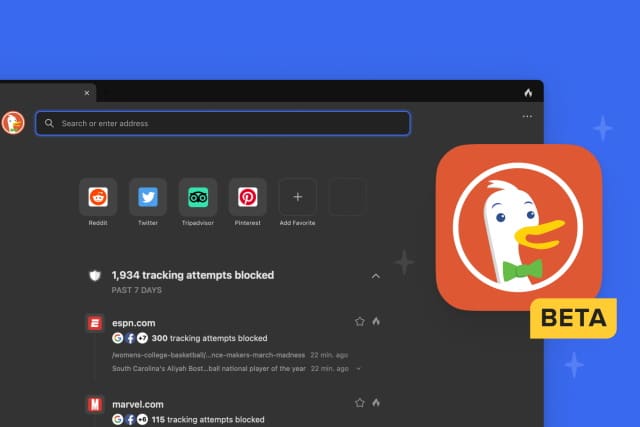
DuckDuckGo brings its private web browser to Mac in beta
Towards the end of last year, we learned that 2022 is the year that DuckDuckGo's privacy-focused web browser is coming to the desktop.
Today the company has launched the beta version of DuckDuckGo for Mac -- meaning macOS users will have another alternative to Chrome et al before people running Windows 11. The DuckDuckGo browser is billed as offering a high level of security, fast performance, and privacy by default which is more than just a replacement for Incognito Mode.

US among the most expensive for fixed-line broadband
The US ranks 134th in the world for fixed-line broadband costs with an average package price of $55 per month making it one of the more expensive developed nations.
If you want a cheap service you need to head to Syria with an average monthly cost of just $2.15 according to a study from comparison site Cable.co.uk. At the other end of the scale the African state of Burundi tops the chart with an eye-watering monthly cost of $429.95.